
Container Gardens
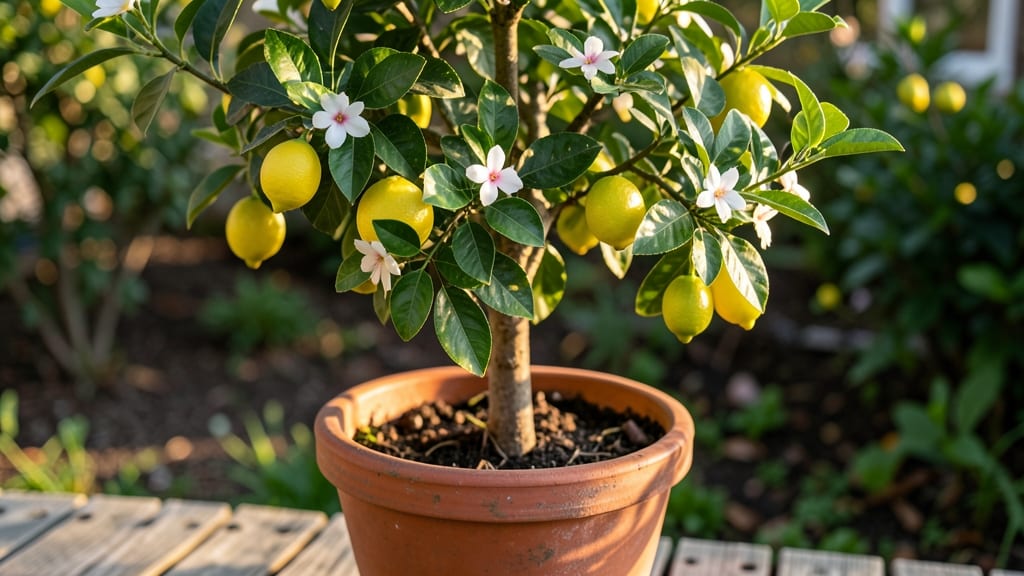
You can keep a lemon tree in a pot with the right setup: use a container at least 12-15 inches deep, prioritize well-draining soil, and place it in full sun. Dwarf varieties adapt well to pots, while standard trees need repotting every 2-3 years to prevent root crowding.
Container gardening lemon trees works beautifully when you account for their root systems and nutrient needs. 🌱 The key is mimicking their natural growing conditions—citrus trees thrive in loose, sandy soil with excellent drainage, so avoid heavy clay pots that trap moisture.
I've found that adding perlite or coarse sand to commercial potting mix creates the ideal aeration balance. For fertilizer, a slow-release citrus blend applied every 3-4 months keeps these sun-lovers happy without overwhelming their limited root space.
What many beginners overlook is the importance of seasonal adjustments. 🍋 During winter, when growth slows, reduce watering and move pots to slightly cooler locations, while summer demands more frequent hydration and afternoon shade in hot climates.
The trade-off? With proper care, your potted lemon tree can produce fruit for years—just don't expect the same yield as a full-size tree.
💡 In This Article
- Optimal Pot Size and Soil Requirements for Potted Lemon Trees
- Pruning and Fertilizing Tips for Container-Grown Lemon Trees
Optimal pot size and soil requirements for potted lemon trees
Lemon trees need 12-15 inches of depth in their container because their root systems grow downward in search of moisture and nutrients. Shallow pots restrict root expansion, leading to root binding—when roots circle the pot instead of growing outward.
This creates a vicious cycle: crowded roots compete for oxygen, leading to poor nutrient uptake and increased susceptibility to root rot. 🌱 The wider the pot (ideally 18-24 inches in diameter for mature trees), the more surface area roots have to spread, mimicking their natural growth in Mediterranean soils.
The soil composition is equally critical—citrus trees demand a well-draining mix with a pH between 6.0-7.0. A blend of 60% organic matter (like peat moss or coconut coir), 20% perlite or pumice (for aeration), and 20% sand prevents compaction while retaining enough moisture.
Heavy garden soil or clay pots trap excess water, suffocating roots and inviting fungal diseases. I’ve seen potted lemon trees thrive in fabric grow bags because they allow roots to breathe while preventing waterlogging—perfect for urban balconies or patios.
Drainage isn’t just about holes in the pot—it’s about the layering system beneath. Place a 2-3 inch layer of gravel or broken pottery at the bottom to create an air pocket, then add a 1-2 inch layer of coarse sand to filter water slowly.
This two-step approach prevents soil from clogging drainage holes over time. Without it, even the best-draining soil can turn into a swamp, especially in humid climates where evaporation slows. 💧 Pro tip: Elevate pots on caulk feet to improve airflow underneath and reduce moisture buildup.
Nutrient retention becomes a challenge in containers because water drains away faster, leaching essential minerals. To compensate, mix in composted manure or worm castings (5-10% of the soil volume) for slow-release nutrients. These amendments improve soil structure while providing a steady supply of nitrogen, phosphorus, and potassium—critical for fruit development.
Avoid synthetic fertilizers in the first 3-4 months after repotting, as they can burn young roots still adjusting to their new environment.
Seasonal adjustments to soil care are non-negotiable. During spring and summer, when growth is rapid, lemon trees in pots need weekly watering (check soil moisture 2 inches down—if dry, water thoroughly).
In fall and winter, reduce watering to every 2-3 weeks and top-dress with slow-release fertilizer to sustain dormancy. The contrast in moisture levels helps prevent root rot while keeping the tree hydrated enough to support new growth when temperatures rise again. 🍊
For those in colder climates, consider insulated pots (like those wrapped in bubble wrap or filled with expanded polystyrene) to protect roots from freezing. Lemon trees are tropical and can’t tolerate temperatures below 40°F for extended periods.
Even a 10°F drop can stunt growth or cause leaf drop, so indoor wintering near a south-facing window (with supplemental grow lights if needed) is often necessary. The trade-off? With these adjustments, your potted lemon tree can live for decades, producing fruit year after year.