
Pruning
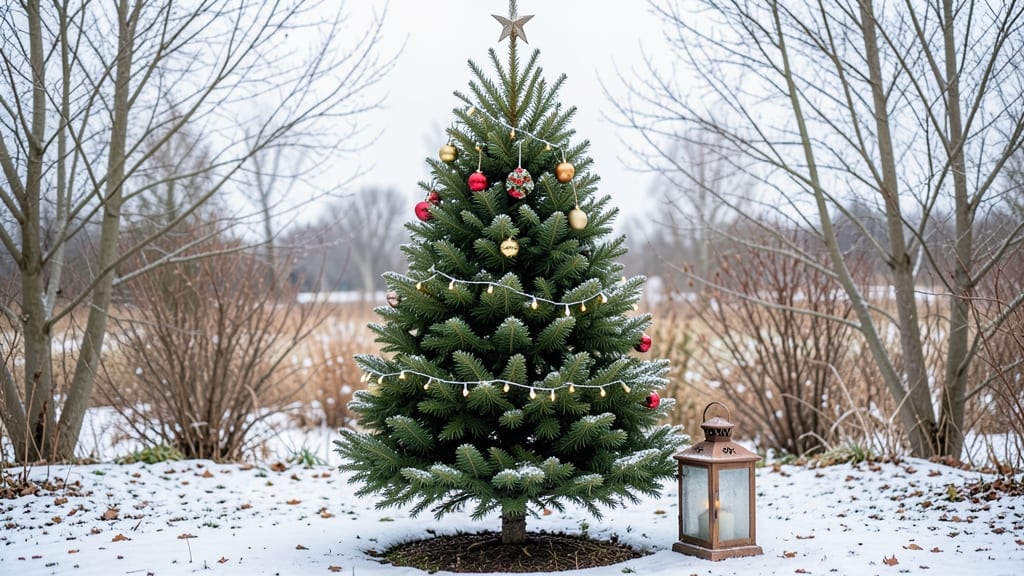
Your Christmas tree outside house can be more than a holiday centerpiece—it's a year-round evergreen drama that transforms your yard into a four-season showstopper. 🌲 I used to think outdoor trees were just for December, but the right placement and plant pairings turn it into a living sculpture that steals the show in every season.
Start by choosing a location that works year-round: near your front door for curb appeal, or tucked into a corner where it becomes a natural focal point.
Pair it with spring bulbs like daffodils or tulips that bloom at its base, then layer in summer annuals like impatiens for color contrast. The key is balancing the tree's height with surrounding plants so it never looks lost.
By winter, you'll have a tree that's already decorated—its natural shape framed by twinkling string lights or solar-powered lanterns. The drama comes from the contrast: dark green needles against snow, or silver-blue foliage catching the morning light. Even in summer, it provides shade and structure to your garden design.
This approach works for any yard size—whether you're working with a small city lot or a spacious rural property. The secret is treating your Christmas tree like a permanent garden feature, not just a temporary guest.
📚 In This Guide
- What you need
- Instructions
- Tips and common mistakes
- Wrapping up and next steps
What you need
- ● Evergreen Tree: 1 mature Picea (Norway spruce), Abies (fir), or Thuja (arborvitae)—height: 6–10 ft, width: 3–5 ft (adjust based on space).
- ○ Optional: Pre-planted balled-and-burlapped (B&B) tree for instant impact.
- ● Soil & Fertilizer: 50 lbs acidic potting mix (pH 5.0–6.0) or native soil amended with peat moss.
- ● 1 lb slow-release evergreen fertilizer (e.g., 12-4-8 ratio).
- ● Mulch: 2–3 bags pine bark mulch (3–4 inches deep) to retain moisture.
- ● Shovel (for digging)
- ● Garden gloves (heavy-duty)
- ● Pruning shears (bypass, sharp)
- ● Wheelbarrow (for soil/mulch)
- ○ Optional: Stakes & twine (for support if needed).
- ● String lights or solar-powered LED lights (for seasonal flair).
- ● Sunlight: Full sun to partial shade (6+ hours/day for best growth).
- ● Space: Minimum 4 ft from house/sidewalk (account for mature spread).
- ● Water source: Hose with sprinkler or drip irrigation (evergreens need consistent moisture).
- ● Pro Tip: 💡 Check local frost dates—plant 4–6 weeks before first frost for root establishment!
How to create a year-long Christmas tree focal point outside your home
Transform your holiday tree into a four-season statement with evergreen drama that never fades.
🌲 Step 1: Select the Perfect Evergreen Tree
Choose a mature evergreen tree that reaches 12-15 feet tall at maturity—this ensures it becomes a true focal point. Blue spruce, Norway spruce, or Colorado blue spruce are ideal choices because they maintain dense foliage year-round. I always look for trees with a naturally conical shape, as they require minimal pruning to preserve that classic holiday silhouette.
Plant your tree in full sun to partial shade where it will receive at least 6 hours of sunlight daily. The soil should drain well but retain moisture—amend heavy clay with 2-3 inches of organic compost before planting. You'll want to position it 10-15 feet from your house for safety and visibility from all angles.
🪴 Step 2: Plant Strategically for Year-Round Impact
Dig a hole twice as wide as the tree's root ball but only as deep. This prevents soil compaction around the roots. Gently remove the tree from its container and loosen any circling roots with your fingers—this encourages outward growth. Place the tree in the hole so the top of the root ball sits 2-3 inches below ground level.
Backfill with native soil mixed with 1 part compost, tamping lightly as you go to eliminate air pockets. Create a watering basin around the base by mounding soil outward, then water deeply to settle everything. Mulch with 3 inches of pine straw or shredded bark, keeping it 6 inches away from the trunk to prevent rot.
☀️ Step 3: Maintain Year-Round Health and Form
Water newly planted trees 2-3 times per week for the first year, ensuring 1-2 inches of water per week. You'll know it's enough when water drains freely from the basin. After establishment, most evergreens need water only during prolonged dry spells—watch for needle browning at branch tips, which signals thirst.
Prune in late winter or early spring before new growth begins. Remove only dead or crossing branches, cutting back to the branch collar. Never "shear" evergreens into geometric shapes—this weakens the tree and invites pests. Instead, let it grow naturally while shaping lightly to maintain that classic triangular form.
✂️ Step 4: Seasonal Care for Evergreen Drama
In fall, rake up fallen needles to prevent thatch buildup, which smothers roots. Apply a ½-inch layer of slow-release fertilizer in early November to fuel winter hardiness. I always check for spider mites after the first frost—spray with water if you see webbing between needles.
During winter, avoid heavy snow accumulation on branches. Gently brush off excess snow with a broom to prevent breakage. In spring, prune any winter-damaged tips and apply a 2-inch layer of mulch to retain moisture. By summer, your tree should show vibrant green needles and a sturdy structure—proof it's thriving year-round.
🎄 Step 5: Holiday Decorating Without Damage
Wait until December 1st to decorate, after the tree has fully hardened off. Use LED string lights only—incandescent bulbs generate too much heat and can scorch needles. Space lights 12 inches apart along branches, never wrapping them tightly.
For ornaments, stick to lightweight, non-breakable decorations and avoid heavy icicles or snow machines. I always decorate from the bottom up, starting with the trunk and working outward. Remove all decorations by January 2nd to prevent needle drop and pest attraction.
Tips & tricks for perfect year-long Christmas tree focal points
Creating a tree that thrives beyond the holidays takes careful planning—here’s how to ensure your evergreen stays stunning through every season.
Tree Selection Wisdom: When choosing your 12-15 foot tree, examine the needle density at the base—some trees look full at the top but thin out lower down. Blue spruce varieties hold their color best in winter, while Norway spruce offers excellent cold hardiness. I’ve seen Colorado blue spruce maintain vibrant foliage even in harsh winters, making it my top recommendation for year-round drama.
Planting Depth Matters: The instructions specify placing the root ball just 2-3 inches below ground level, but here’s the trick: use a level to ensure the tree sits perfectly upright before backfilling. Uneven planting causes stress that weakens the tree over time. After planting, create a watering well around the base by mounding soil outward—this prevents water runoff during those critical first weeks.
Seasonal Care Calendar: Mark your calendar for these key dates: November 1st for fertilizer application, December 1st for decorating, and January 2nd for cleanup. In spring, prune only damaged tips—never remove healthy growth. This preserves the tree’s natural shape while maintaining that classic holiday silhouette. The 2-3 inch watering schedule in the first year is non-negotiable; even slight drought stress shows up as brown needle tips within weeks.
Lighting Strategy: For holiday decorating, space LED lights every 12 inches along branches—but here’s the pro move: weave them through the tree rather than wrapping them around branches. This creates a more natural look and prevents light buildup that can scorch needles. Always use outdoor-rated extension cords and secure them with zip ties to avoid tripping hazards.
Pro Tips for Christmas Tree Outside House
- Creating a tree that thrives beyond the holidays takes careful planning—here’s how to ensure your evergreen stays stunning through every season.
- Tree Selection Wisdom: When choosing your 12-15 foot tree, examine the needle density at the base—some trees look full at the top but thin out lower down.
- Planting Depth Matters: The instructions specify placing the root ball just 2-3 inches below ground level, but here’s the trick: use a level to ensure the tree sits perfectly upright before backfilling.
Frequently asked questions
Got questions about keeping a Christmas tree outside your home? Here are some answers to help you navigate the process with ease!
Can I leave a real Christmas tree outside all year?
A real Christmas tree can stay outside for months, but it won’t last forever. If kept in good condition (watered, pruned, and sheltered from harsh weather), it can thrive as a year-round focal point. However, expect some needle drop and potential pest issues over time. For best results, choose disease-resistant species like Douglas fir or Ponderosa pine.
How do I protect my outdoor Christmas tree from winter damage?
Winter can be tough on trees! Wrap the trunk in tree wrap to prevent sunscald, and use a breathable burlap sack to shield it from snow and ice buildup. Avoid heavy mulch piles near the base, as they can trap moisture and harm roots. A lightweight layer of straw or pine needles works better for insulation.
What’s the best time to plant a Christmas tree outside?
The ideal time is late fall or early winter (November–January), when the tree is dormant. This gives roots time to establish before spring growth. If planting in summer, water deeply and frequently to prevent shock. Avoid planting too close to your house—keep it at least 10–15 feet away for proper growth and maintenance.
How do I keep pests away from my outdoor Christmas tree?
Pests like spider mites and aphids love Christmas trees! Spray with neem oil or insecticidal soap in early spring and fall. Encourage natural predators like ladybugs by planting companion flowers nearby. If you notice sawdust-like frass (a sign of bark beetles), treat immediately with a borax-based solution.
What if my outdoor tree loses too many needles?
Needle drop is normal, but excessive loss could mean stress from drought, disease, or poor soil. Water deeply once a week (unless it rains), and fertilize with a slow-release, acidic fertilizer in early spring. If the problem persists, test your soil’s pH—Christmas trees prefer acidic soil (pH 4.5–6.0).
Wrapping up and next steps
Transforming your Christmas tree outside house into a year-round masterpiece is all about embracing the drama of evergreens while keeping care simple.
With the right pruning, lighting, and seasonal touches, you’ll create a stunning focal point that brings joy beyond just the holidays. Now’s the time to take action—start small, experiment with styles, and let your creativity shine!
- 🌟 Next step: Pick one tip from this guide and try it this weekend—whether it’s a fresh trim or adding twinkling lights.
- 📸 Share your progress! Tag us or your local gardening community for inspiration and feedback.