
Diseases
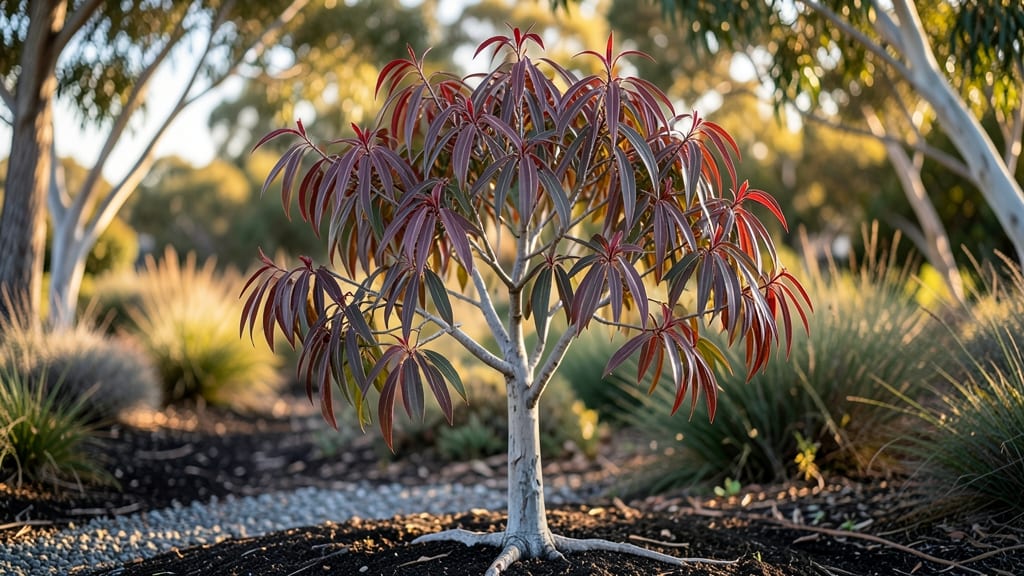
Your eucalyptus tree’s red leaves signal a nutrient crisis—often iron, magnesium, or nitrogen deficiency—that can stifle its growth if ignored.
Picture this: your 🌳 eucalyptus tree thriving in full sun, then suddenly developing bright red or purple hues on its leaves. That’s not just a cosmetic issue—it’s a warning that its roots aren’t getting the essential nutrients they need to stay vibrant and healthy.
In this guide, I’ll break down the three most common causes behind red leaves in eucalyptus trees, from soil deficiencies to environmental stressors, and share three immediate fixes to restore that lush green color.
Whether you’re dealing with poor drainage, overwatering, or a lack of key nutrients, these solutions will help you diagnose the problem and take action—fast—to keep your eucalyptus tree thriving in USDA Zones 8-11.
Why your eucalyptus tree has red leaves: 3 root causes and how to spot them
Eucalyptus trees are known for their striking silver-blue foliage, but when those leaves turn bright red, it’s a clear sign of distress. The red discoloration isn’t just cosmetic—it’s your tree’s way of signaling nutrient deficiencies or environmental stress.
Without intervention, this can stunt growth or even lead to leaf drop or death. The good news? Most cases are fixable with the right diagnosis.
Red leaves in eucalyptus trees typically stem from three primary causes: iron deficiency, magnesium deficiency, or phosphorus deficiency. Each deficiency triggers unique visual symptoms, and distinguishing between them is key to applying the correct nutrient solution.
Let’s break down how to spot these issues and confirm your tree’s exact problem through simple leaf inspection techniques.
🌱 Pro Tip: Always inspect the youngest leaves first—they show deficiency symptoms before older leaves do. Use a magnifying glass if needed to spot subtle color changes or patterns.
| Deficiency Type | Leaf Symptoms | Affected Areas | Diagnostic Tip |
|---|---|---|---|
| Iron (Fe) | Bright red or orange new growth; yellowing between veins | Young leaves (top of tree) | Check soil pH—iron locks up in alkaline soil (pH >7) |
| Magnesium (Mg) | Red or purple edges on older leaves; yellow patches between veins | Lower leaves (first signs) | Look for crinkled or cupped leaves—classic Mg deficiency |
| Phosphorus (P) | Dark red or purple entire leaf; slow growth | All leaves (uniform color) | Check for stunted roots—P deficiency weakens root development |
🌿 Key Takeaway: Iron issues hit new leaves first; magnesium targets older leaves; phosphorus affects the whole tree.
Iron deficiency is the most common cause of red eucalyptus leaves, especially in alkaline or sandy soils. When iron becomes unavailable—often due to high soil pH—your tree can’t produce enough chlorophyll, leading to red or orange new growth.
The easiest way to confirm this is to test your soil’s pH: if it’s above 7.0, iron deficiency is likely the culprit.
Magnesium deficiency, on the other hand, shows up as red or purple edges on older leaves, often accompanied by yellow patches between veins. This happens when magnesium—essential for chlorophyll production—is leached from the soil or not absorbed properly.
Eucalyptus trees in well-drained, sandy soils are particularly prone to magnesium issues because these soils lack organic matter to hold nutrients.
Phosphorus deficiency is less common but equally damaging. Unlike iron or magnesium, phosphorus deficiency causes entire leaves to turn dark red or purple, not just edges or new growth. Your eucalyptus tree may also exhibit stunted growth or weak stems, as phosphorus is critical for energy transfer in plants.
This deficiency often occurs in cool, wet soils where phosphorus becomes locked up and unavailable.
Environmental stressors like drought or excessive heat can also trigger red leaves, but these usually appear alongside other symptoms like wilting or leaf scorch. To rule out environmental causes, check the soil moisture—if the top 2–3 inches are dry, watering issues may be the root cause.
However, if the soil is moist but leaves are still red, focus on nutrient deficiencies first.
One surefire way to confirm a deficiency is the "leaf burn test". Take a healthy leaf and an affected leaf, then gently rub them between your fingers. A deficient leaf will feel thinner or brittle due to poor nutrient absorption.
For magnesium deficiency, you might also notice interveinal yellowing (yellowing between the leaf veins), which is a classic sign.
Don’t overlook the role of competing plants in your garden. If your eucalyptus is surrounded by heavy feeders like vegetables or grasses, they may be stealing nutrients from the soil, leaving your eucalyptus starved.
In this case, mulching with compost or applying a balanced fertilizer can help restore nutrient levels quickly.
Finally, remember that eucalyptus trees are fast-growing and demand a lot of nutrients. If you’ve recently planted yours, red leaves could simply be a sign of transplant shock.
Give it time to establish roots—usually 3–6 months—before diagnosing deficiencies. In the meantime, ensure it’s getting deep, infrequent watering to encourage root growth.
By mastering these diagnostic tips, you’ll be able to identify the exact cause of your eucalyptus tree’s red leaves and take targeted action. Next, we’ll cover the immediate fixes for each deficiency—so stay tuned! 🌳
3 Immediate fixes for eucalyptus red leaves (with step-by-step application)
When your eucalyptus tree develops red leaves, it’s often a sign of nutrient deficiency or environmental stress. The good news is that quick action can reverse this issue.
Start by identifying whether your tree needs iron, magnesium, or phosphorus, as each deficiency requires a different fix. I’ve ranked the most effective solutions below, based on deficiency type and ease of application.
For iron deficiency, the fastest fix is applying chelated iron fertilizer. For magnesium deficiency, Epsom salt (magnesium sulfate) works wonders. And if the issue is phosphorus, a bone meal application will restore balance. Let’s dive into the step-by-step fixes, ranked by effectiveness and ease.
For iron deficiency (yellowing between veins + red edges).
Dosage: 1 tbsp per gallon of water, monthly until leaves regain color. Use in early morning to avoid leaf burn.
For magnesium deficiency (red/purple patches on older leaves).
Dosage: 1 tbsp Epsom salt per foot of tree height, dissolved in 1 gallon of water. Apply every 2 weeks until improvement.
For phosphorus deficiency (dark red/purple leaves, stunted growth).
Dosage: ½ cup bone meal per square foot of root zone. Work into top 6 inches of soil spring and fall.
If your eucalyptus tree isn’t responding within 4–6 weeks, the issue might be overwatering or poor drainage. Adjust your irrigation schedule to deep watering 2–3 times per week (depending on climate) and ensure the soil is well-draining. Avoid soggy soil, as eucalyptus roots rot easily.
For organic gardeners, compost tea or fish emulsion can provide a balanced boost of micronutrients while improving soil structure. Mix 1 cup compost tea with 5 gallons of water and apply as a foliar spray every 2 weeks. This method is gentle yet effective for nutrient-deficient trees.
Finally, prune any severely discolored leaves to redirect the tree’s energy toward new, healthy growth. Use sterilized pruners and cut just above a leaf node to encourage regrowth. Avoid heavy pruning, as eucalyptus trees are sensitive to stress.
With these 3 immediate fixes, your eucalyptus tree should regain its vibrant green leaves within 6–8 weeks. Consistency is key—monitor soil moisture, nutrient levels, and leaf color closely to prevent recurrence. 🌿