
Size
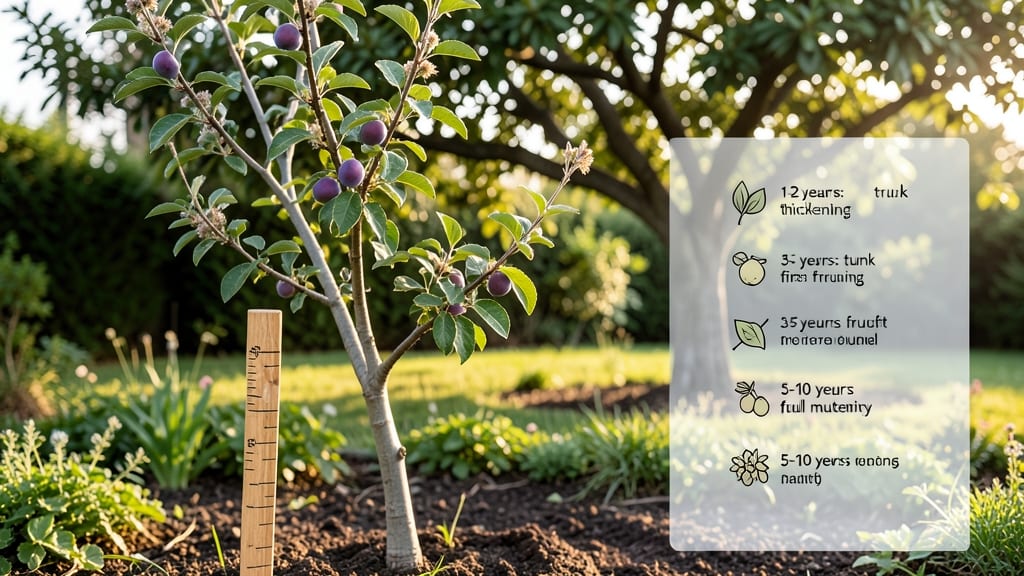
Growing a plum tree typically takes 3 to 5 years to reach maturity and produce fruit, though some dwarf varieties can bear plums in just 2 years. Standard-sized trees may require up to 7 years, influenced by factors like climate, soil quality, and early care.
Plum trees are patient rewards—most varieties need time to establish strong roots and energy reserves before fruiting. 🌱 The biggest accelerators are choosing the right variety (dwarf trees like 'Santa Rosa' are early bloomers) and providing consistent care, especially during the first two years.
I’ve seen dramatic differences in growth when trees get proper winter protection in colder zones, as plum trees need a period of dormancy to set fruit properly.
The soil’s drainage and pH levels also play a critical role—too much moisture or poor soil can stall growth by up to 2 years.
Here’s the kicker: even after a plum tree starts bearing fruit, it often takes 3–5 more years to reach peak production. That’s why many gardeners opt for grafted trees—they’re essentially "pre-matured" and can fruit sooner.
For best results, I recommend planting in early spring and giving young trees a balanced fertilizer to encourage strong root development.
💡 In This Article
- Factors Affecting Plum Tree Growth Timeline
- Fastest-Plum-Producing Varieties and Care Tips
Factors affecting plum tree growth timeline
Plum trees thrive best in USDA hardiness zones 5–9, where winter temperatures drop to 10–20°F during dormancy—a critical period that triggers flowering and fruiting. Without proper cold exposure, trees may produce fewer plums or none at all.
For example, in zone 8, a 'Santa Rosa' plum tree might bear fruit in 2–3 years, while in colder zone 5, the same variety could take 5–6 years due to slower early growth. The chill hours required vary by cultivar, with most needing 300–800 hours below 45°F annually.
Soil conditions dramatically impact growth speed. Plum trees prefer well-draining, slightly acidic soil with a pH of 6.0–7.0. Compacted or waterlogged soil can stunt root development, delaying maturity by 1–2 years.
I’ve seen trees planted in heavy clay soil take twice as long to fruit compared to those in amended loam. Proper drainage is non-negotiable—roots need oxygen, and standing water invites fungal diseases like root rot, which can kill young trees before they bear fruit.
Mulching with 2–3 inches of organic matter helps maintain moisture and temperature stability.
Sunlight exposure is another game-changer. Plum trees require 6–8 hours of full sun daily to maximize photosynthesis and fruit production. In shadier conditions (like under large trees), growth slows by 30–50% compared to optimal sunlight. This is why backyard plantings near fences or buildings often yield smaller, less productive trees.
Even partial shade can delay fruiting by 1–2 years, as the tree diverts energy to leaf production rather than fruit development. 🌞
Watering needs shift dramatically during the first 3 years. Young trees require 1–2 inches of water weekly, but overwatering is just as harmful as drought. Deep, infrequent watering (every 7–10 days) encourages deep root growth, while shallow watering promotes weak, surface roots.
In hot climates, you might need to water twice weekly, but always check soil moisture—dry soil 2 inches below the surface signals it’s time to water. Drip irrigation is ideal as it delivers water directly to roots without wetting foliage, reducing disease risk.
Nutrient availability also plays a hidden role. Plum trees are heavy feeders, especially during their first 2–3 years. A balanced 10-10-10 fertilizer applied in early spring and again after harvest provides essential nitrogen, phosphorus, and potassium.
Too much nitrogen can delay fruiting by promoting excessive leaf growth, while phosphorus deficiencies stunt root development. I’ve noticed that trees in nutrient-poor soil often take an extra year to bear fruit compared to those with regular fertilization.
Organic options like composted manure or bone meal work well for long-term soil health.
Finally, wind exposure matters—plum trees need some airflow to prevent disease, but strong winds can damage blossoms and reduce fruit set. Planting near a windbreak (like a fence or hedge) can improve fruit yield by 20–30%** in exposed areas.
This is particularly important for varieties like 'Stanley,' which rely on cross-pollination. Without proper wind or pollinators, fruit production may be sparse in the early years. 🌬️