
How To
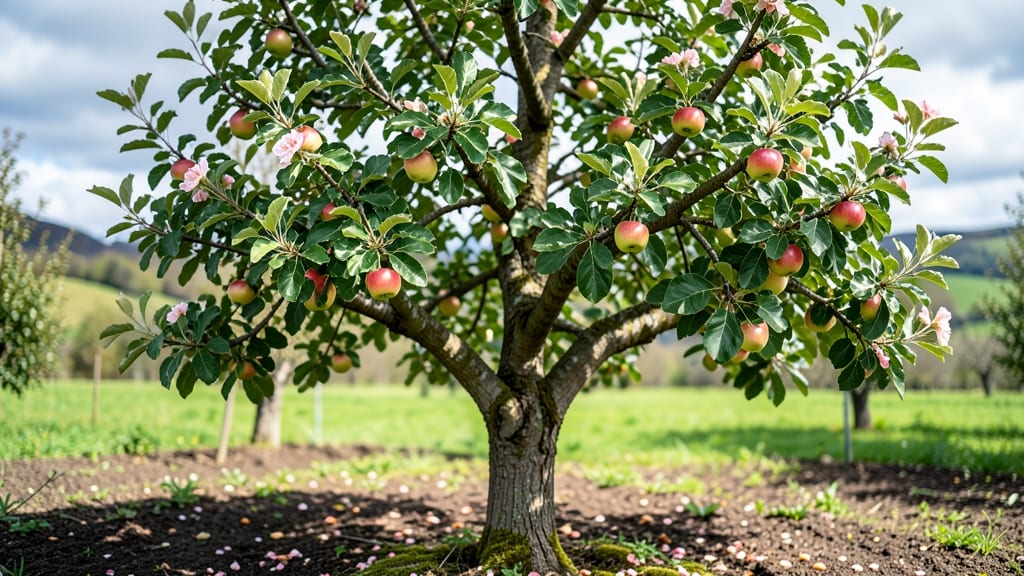
How tall can an apple tree grow? It can range anywhere from 8 feet to towering 30 feet, depending on the variety and rootstock you choose.
Picture this: a dwarf tree fits neatly in a backyard corner, while a standard variety stretches taller than your two-story home. The difference isn’t just about space—it affects how much fruit you harvest and how much pruning you’ll tackle each year.
From compact dwarf varieties like ‘Columnar’ apples to the sprawling standard ‘Granny Smith,’ we’ll break down the exact heights you can expect and how to pick the right size for your garden.
You’ll also learn how pruning, rootstock, and your climate can shape your tree’s growth—so you can grow the perfect apple tree for your space.


Apple tree height by variety: from dwarf to standard sizes
Choosing the right apple tree size starts with understanding how tall your variety will grow at maturity. The rootstock determines whether your tree stays compact or reaches towering heights. Dwarf varieties top out at 6-10 feet, while standard trees can soar to 20-30 feet.
Your space, sunlight access, and maintenance preferences all play critical roles in selecting the perfect size.
Most home gardeners opt for semi-dwarf varieties (12-18 feet) because they balance harvest yield with manageable pruning needs. However, columnar varieties like 'Columnar Red Delicious' offer vertical growth under 10 feet while producing abundant fruit. Let’s explore the exact mature heights for each category and their ideal growing conditions.
🌱
| Variety Type | Mature Height (ft) | Space Needs | Sunlight Needs | Best For |
|---|---|---|---|---|
| Dwarf (e.g., 'Bushel Baker', 'Liberty') | 6-10 ft | 5-8 ft radius | Full sun (6+ hrs) | Containers, small yards, urban gardens |
| Semi-Dwarf (e.g., 'Gala', 'Fuji') | 12-18 ft | 10-15 ft radius | Full sun (6+ hrs) | Backyards, community gardens |
| Standard (e.g., 'Granny Smith', 'Honeycrisp') | 20-30 ft | 20-30 ft radius | Full sun (6+ hrs) | Large properties, orchards |
| Columnar (e.g., 'Columnar Red Delicious') | 8-12 ft | 3-5 ft radius | Full sun (6+ hrs) | Small spaces, vertical gardens |
Dwarf apple trees thrive on M.9 or M.26 rootstock, keeping their height under 10 feet while producing full-sized fruit. These varieties are perfect for containers or small patios because they require minimal pruning.
However, they need staking or trellising to support their weight as they mature. Popular dwarf varieties like 'Bushel Baker' and 'Liberty' are disease-resistant and ideal for home orchards.
Semi-dwarf varieties, such as 'Gala' or 'Fuji', grow to 12-18 feet and are the most versatile choice for home gardens. They offer a balance between manageable size and high yield.
These trees need 10-15 feet of space around them to avoid overcrowding and ensure proper airflow. Semi-dwarfs also benefit from regular pruning to maintain shape and encourage fruit production.
Standard apple trees, like 'Granny Smith' or 'Honeycrisp', can reach 20-30 feet at maturity, making them suitable for large properties or commercial orchards. These trees require ample space (20-30 feet radius) and professional pruning to manage their height and shape.
While they produce the largest harvests, their size demands more maintenance and may not fit in urban settings.
Columnar apple trees are a unique option for gardeners with limited space. Growing vertically to 8-12 feet, they fit perfectly in narrow gardens or along fences. Varieties like 'Columnar Red Delicious' produce fruit along their entire length, making them highly efficient for small spaces.
These trees need minimal pruning but still require full sun and well-draining soil to thrive.
When selecting an apple tree, consider your yard size, sunlight exposure, and maintenance commitment. Dwarf and columnar varieties are ideal for urban gardens, while semi-dwarfs offer the best balance for most homeowners. Standard trees are best suited for rural areas or orchards where space isn’t a concern.
🌳
How to choose the right apple tree size for your garden
Choosing the right apple tree size depends on your available space, climate conditions, and maintenance preferences. A dwarf apple tree might fit perfectly in a small urban garden, while a standard variety thrives in rural orchards.
Let’s explore how to match tree size to your unique needs, including rootstock compatibility and pollination requirements.
For urban gardens or balcony containers, dwarf apple trees (6–12 feet tall) are ideal. These compact trees produce full-sized fruit but require minimal space. Semi-dwarf varieties (12–18 feet) suit suburban yards, offering a balance between manageable height and higher yield potential.
Meanwhile, standard apple trees (20–30 feet) dominate commercial orchards, providing abundant harvests but demanding significant space and pruning effort.
Rootstock type plays a crucial role in determining mature height. Dwarfing rootstock like M.9 keeps trees under 12 feet, while semi-dwarfing rootstock like MM.106 allows 15–20 feet of growth. Standard rootstock like Seedling or Malling-Merton can reach 30 feet or more. Always check the rootstock label when selecting your tree to avoid surprises.
Apple Tree Size Comparison
Dwarf Trees (6–12 ft)
- ✅ Fits containers or small yards
- ✅ Lower maintenance and easier pruning
- ✅ Bears fruit in 2–3 years
- ❌ Limited yield compared to larger trees
- ❌ Needs staking for support
Semi-Dwarf Trees (12–18 ft)
- ✅ Balanced space and productivity
- ✅ Good for suburban backyards
- ✅ Higher yield than dwarfs
- ❌ Requires more pruning than dwarfs
- ❌ Needs 8–10 feet of clearance
Standard Trees (20–30 ft)
- ✅ Highest yield potential
- ✅ Ideal for orchards or large properties
- ✅ Long lifespan (50+ years)
- ❌ Needs significant space (20+ ft clearance)
- ❌ Heavy pruning and maintenance
Columnar Trees (8–12 ft)
- ✅ Ultra-compact, vertical growth
- ✅ Perfect for narrow spaces
- ✅ Easy to harvest
- ❌ Limited branch spread
- ❌ Lower total yield than standard trees
Consider your climate zone when selecting size. In colder regions (USDA Zones 3–5), standard trees thrive with their deep root systems accessing nutrients. Warmer climates (Zones 6–9) often benefit from dwarf or semi-dwarf varieties, which handle heat stress better due to their smaller canopies.
Always pair trees with compatible pollination partners—most apple trees need a second variety for cross-pollination to produce fruit.
For urban gardens, columnar apple trees are a game-changer. These slender varieties grow just 8–12 feet tall but produce abundant fruit along their vertical trunks. They’re perfect for small patios or rooftop gardens, requiring only 3–4 feet of space.
If you’re planting in a commercial orchard, standard trees maximize yield but require careful planning for spacing (20–30 feet apart) and pruning to prevent disease.
Don’t forget about future growth—apple trees can outgrow their space quickly. Always plant with at least 6–10 feet of clearance for semi-dwarfs and 20+ feet for standards. If space is tight, opt for espalier techniques to train trees against walls or fences, saving room without sacrificing productivity.
With the right size and care, your apple tree will reward you with decades of harvests!