
How To
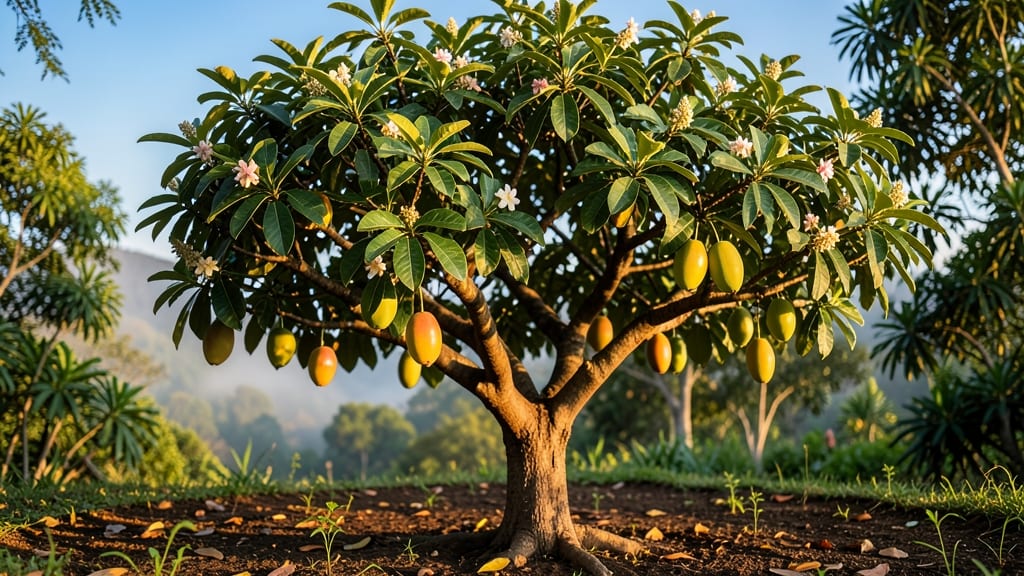
A mango tree can grow how tall it does depending on the variety and care you provide, ranging anywhere from 10 feet to towering over 100 feet. Dreaming of a tropical paradise in your backyard?
Mango trees aren’t just stunning—they’re one of the fastest-growing fruit trees, but their height can vary wildly depending on the variety. Before planting, knowing whether your mango tree will reach skyscraper heights or stay compact is key to planning space, pruning, and even harvesting.
Some varieties, like the 'Cogshall' dwarf, max out around 15–20 feet, making them perfect for containers or small yards. Meanwhile, standard types like 'Keitt' or 'Haden' can easily stretch to 40–60 feet, requiring careful pruning and space planning.
The right choice depends on your climate, soil, and how much maintenance you’re willing to tackle.
In this guide, I’ll break down the height ranges for popular varieties, how fast they grow, and the best ways to manage their size—so you can enjoy fresh 🥭 without losing your backyard to a jungle.


Mango tree height by variety: dwarf vs. standard vs. giant types
Choosing the right mango tree variety is critical if you want a backyard-friendly fruit tree. Some varieties grow as tall as three-story buildings, while others stay manageable at 15 feet.
The difference comes down to genetics, climate, and care—so let’s break down the height ranges of popular mango types to help you plan your space and pruning strategy.
Dwarf varieties like 'Cogshall' and 'Julie' are perfect for containers or small yards, reaching just 15–20 feet. Standard varieties such as 'Keitt' and 'Haden' dominate landscapes at 40–60 feet, while giant types like 'Irwin' can soar to 100 feet or more.
Your climate also plays a role—tropical zones (10–11) support faster, taller growth, while subtropical areas may see slower development.
Below, compare mango tree heights by variety, including growth rates and ideal climates to help you pick the best fit for your garden. Whether you’re dreaming of a container-grown mango or a towering shade tree, this guide ensures you’re prepared for the sky’s the limit—or not!
| Variety | Height Range | Growth Rate (Annual) | Ideal Climate | Pruning Needs |
|---|---|---|---|---|
| Cogshall (Dwarf) | 15–20 ft | 1–2 ft/year | Tropical/Subtropical | Minimal (shape only) |
| Julie (Dwarf) | 12–18 ft | 1–1.5 ft/year | Tropical | Light pruning |
| Keitt (Standard) | 40–60 ft | 3–5 ft/year (young) | Tropical | Regular (safety) |
| Haden (Standard) | 35–50 ft | 2–4 ft/year | Subtropical | Moderate (fruit access) |
| Irwin (Giant) | 80–100+ ft | 5–7 ft/year (young) | Tropical | Heavy (safety) |
If you’re growing 'Cogshall' or 'Julie', their dwarf stature makes them ideal for containers or small patios. These varieties thrive in USDA zones 10–11 and rarely need pruning beyond shaping.
Their slower growth rate of 1–2 feet per year means you’ll enjoy fruit in 3–5 years without a towering tree.
For standard varieties like 'Keitt' and 'Haden', plan for a 40–60 foot canopy. These trees grow rapidly in youth, adding 3–5 feet annually before slowing to 1–2 feet as they mature. Their pruning needs are higher—focus on removing dead branches and thinning for fruit access and safety.
Giant varieties such as 'Irwin' are best for large estates or tropical landscapes. Their 80–100+ foot height demands heavy pruning to manage growth and prevent hazards.
These trees grow aggressively in ideal climates, so expect 5–7 feet of growth per year when young. Without pruning, they can become unmanageable quickly.
How fast do mango trees grow? Annual height increases by age & care
Mango trees are among the fastest-growing fruit trees, but their growth rates change dramatically as they mature. In their first few years, expect 3–5 feet per year, while mature trees slow to just 1–2 feet annually.
Understanding this pattern helps you plan for space, pruning, and even harvesting. The right conditions—like well-draining soil and full sunlight—can accelerate growth, while neglect may stunt it.
Growth isn’t linear—young trees focus on root and trunk development, while older trees prioritize foliage and fruit production. For example, a 'Haden' mango tree might hit 10 feet by year 3 but take 10+ years to reach its 40–60-foot mature height.
Dwarf varieties like 'Cogshall' grow slower, staying under 20 feet even at maturity.
| Age | Annual Growth Rate | Cumulative Height (Standard Variety) | Key Growth Factors |
|---|---|---|---|
| Year 1 | 3–5 ft | 3–5 ft | Root establishment, minimal pruning |
| Year 2 | 4–6 ft | 7–11 ft | Fertilizer boost, full sun |
| Year 3–5 | 5–8 ft | 15–25 ft | Prune for shape, deep watering |
| Year 6–10 | 2–4 ft | 30–50 ft | Focus on fruit, moderate pruning |
| Year 10+ | 1–2 ft | 50–100 ft | Maintenance pruning, pest control |
To estimate your mango tree’s future height, use this simple formula: Multiply the annual growth rate by the tree’s age, then add 5–10 feet for variability.
For example, a 5-year-old 'Keitt' mango (growing at 5 ft/year) would likely reach 20–30 feet, not the full 40–60 feet at maturity. Adjust for your climate zone—trees in USDA Zone 10–11 grow faster than those in cooler subtropical areas.
Soil quality is critical: Sandy loam with 6.0–7.0 pH and organic matter supports rapid growth, while clay soil can stunt roots. Pair this with deep watering 2–3 times per week during dry spells.
Neglecting water or nutrients? Expect stunted growth and smaller fruit. Even 'Carrie' dwarf varieties need consistent care to hit their 10–15-foot potential.
Sunlight is non-negotiable—mango trees demand 6+ hours of direct sun daily. Partial shade slows growth by 30–50%. In my Zone 10 garden, I’ve seen 'Kent' mangoes grow 6 feet in a single season with ideal conditions, while shaded trees barely topped 2 feet.
Use a growth rate calculator (like the one below) to predict height at 5, 10, or 20 years based on your variety and care.
Pro tip: Track your tree’s growth with a measuring tape each spring. If growth stalls, check for nutrient deficiencies (yellow leaves = nitrogen) or pests (aphids, mites). With the right care, even a standard 'Haden' can reach harvestable fruit in 3–5 years, though full height may take decades.
Plan ahead—your mango’s future depends on it today!