
Propagation
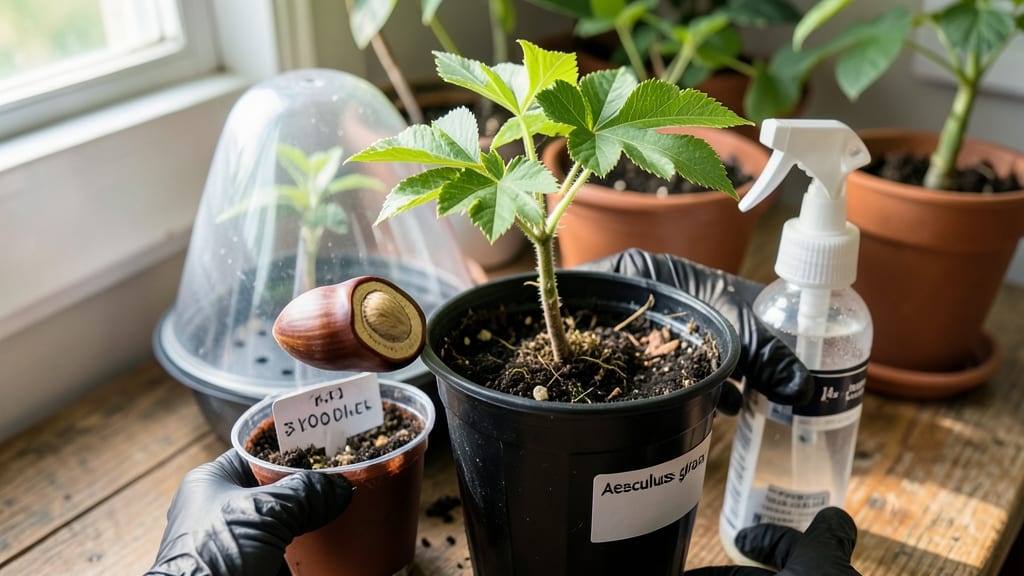
Growing a buckeye tree from a nut is like unlocking a piece of American wild beauty—right from your backyard. 🌱 The trick starts with cold stratification, a natural process that mimics winter to break the seed's dormancy.
I've grown dozens this way, and the first green shoot always feels like a small victory. You'll need just three things: a damp paper towel, a plastic bag, and patience. Place the nut between the towel, seal it, and refrigerate for 6-8 weeks.
This cold treatment tricks the seed into thinking winter has passed, so it's ready to sprout when spring arrives. By week 8, you'll see tiny roots emerging.
Plant it in well-draining soil, keep it moist but not soggy, and watch as those first leaves unfurl—bright green and glossy, like new money. Within a year, you could have a sapling ready to call its own. The best part?
These trees thrive in full sun, handle drought once established, and their glossy leaves turn brilliant yellow in fall. Perfect for shade lovers, wildlife gardens, or anyone who wants a tree with serious wow factor.
📚 In This Guide
- What you need
- Instructions
- Tips and common mistakes
- Wrapping up and next steps
What you need
- ● Buckeye nuts: 3–5 fresh, healthy horse chestnut (Aesculus spp.) seeds—ensure they’re plump and free of cracks or mold. 🌰
- ● Cold stratification setup: 1 small plastic bag or container with air holes (or a damp paper towel)
- ● 1–2 cups of moistened peat moss or perlite (or a mix of both)
- ○ Optional: A zip-top bag with a tiny hole for humidity control
- ● Planting containers: Small pots (3–4 inches deep) with drainage holes
- ● Potting mix: Well-draining blend (e.g., 50% peat moss, 30% perlite, 20% sand)
- ● Tools: Tweezers or tongs (for handling small seeds)
- ● Spray bottle (for gentle watering)
- ○ Thermometer (optional, to monitor fridge temps: 34–40°F)
- ● Patience: Buckeye seeds need 6–8 weeks of cold stratification before sprouting!
- ● Space: A cool, dark spot (like a fridge) for stratification and a sunny windowsill or greenhouse for germination.
- ● Time: Dedicate 2–3 months for the full process—from stratification to transplanting.
- ● Grow lights (if natural light is limited)
- ● Seedling heat mat (to speed up germination)
- ● Humidity dome (to retain moisture during early growth)
- ● Label markers (to track your seeds’ progress!)
Step-by-step instructions for growing a buckeye tree from a nut
Here’s how I’ve successfully sprouted buckeye trees at home—no greenhouse needed.
🌱 Step 1: Select and Prepare the Buckeye Nut
Pick a plump, undamaged buckeye nut from the ground or tree. The larger the nut, the better your chances—aim for at least 1.5 inches in diameter. Scrub off any dirt or debris with a damp paper towel, but don’t remove the hard outer shell. This shell protects the seed inside and helps with moisture control.
I like to soak the nut in lukewarm water for 24 hours before planting. This softens the inner layers slightly and kickstarts the germination process. After soaking, let it dry slightly on a paper towel—just until the surface feels barely damp to the touch. This prevents rot once you plant it.
🪴 Step 2: Cold-Stratify for 8 Weeks
Buckeye nuts need cold stratification to break dormancy. Place the nut in a ziplock bag with a damp paper towel—just enough moisture to keep it damp, not soaked. Seal the bag and refrigerate it for 8 weeks. Check it weekly: if the towel feels dry, spritz it lightly with water. If it feels soggy, open the bag to air it out for a few hours.
This cold period mimics winter conditions, tricking the seed into thinking it’s time to grow. After 8 weeks, you’ll see a tiny white root emerge from the nut—this is your signal that stratification worked. Once you spot the root, it’s time to plant.
☀️ Step 3: Plant in a Well-Draining Mix
Fill a 4-inch pot with a mix of 50% potting soil and 50% perlite or coarse sand—this ensures drainage, which buckeye seeds hate when soggy. Plant the nut 1 inch deep, with the root pointing downward. Gently press the soil around it so it stays in place but doesn’t compact.
Place the pot in a bright, indirect light spot—think east-facing window or under a grow light. Keep the soil consistently moist but not waterlogged. Stick your finger 1 inch deep into the soil: if it feels dry, water lightly. If it’s damp, wait another day. Overwatering at this stage is the fastest way to kill your sprout.
🌿 Step 4: Transplant and Care for the Seedling
Once the seedling reaches 4-6 inches tall (usually 3-4 months after planting), it’s ready for its first transplant. Choose a 6-inch pot with fresh potting mix. Dig a hole twice as wide as the root ball and gently ease the seedling out of its old pot, keeping the roots intact. Place it in the new hole and firm the soil around it.
Move the seedling outdoors to a sheltered spot for 2-3 hours the first day, gradually increasing exposure over 10 days. After that, it can live outside in partial shade during the day, bringing it in at night if temperatures drop below 40°F. Buckeye seedlings are tender—don’t rush them into full sun.
⏰ Step 5: Harden Off and Plant Outdoors
When the seedling is 12-18 inches tall and the weather is warm (after the last frost), it’s time to plant it in the ground. Choose a sunny to partially shady spot with well-draining soil. Dig a hole twice as wide as the root ball and as deep as the pot it came in. Place the seedling in, backfill with soil, and water deeply.
Mulch around the base with 2 inches of organic mulch to retain moisture and protect the roots. Water once a week unless it rains, keeping the soil evenly moist but not soggy. In 2-3 years, your buckeye will be tall enough to handle full sun—just monitor for signs of stress like yellowing leaves, which usually means it’s getting too much water or not enough.
Tips & tricks for growing a buckeye tree from a nut
These simple strategies will help you avoid common pitfalls and boost your success rate with buckeye sprouts.
Selection Tip: Don't settle for just any buckeye nut—look for ones that are plump and heavy for their size, with a smooth, unblemished shell. I've found that nuts with a diameter of at least 1.5 inches have the highest germination rates. The heavier the nut, the more food reserves it contains for the growing seedling. If you're collecting from the ground, avoid any nuts that show signs of insect damage or mold.
Stratification Secret: The 8-week cold stratification period is non-negotiable for buckeye nuts, but there's a trick to make it easier: use a clear plastic container instead of a ziplock bag. This lets you check on your nut without opening the container. Place a damp paper towel in the bottom, then nestle the nut on top. Store it in the crisper drawer of your fridge where temperatures stay consistently cold. I've had success with this method even when my regular fridge cycles between temperatures.
Planting Technique: When it's time to plant your stratified nut, don't be tempted to use regular potting soil alone—buckeye seeds need excellent drainage. The 50-50 mix of potting soil and perlite or coarse sand is perfect. To ensure proper drainage, make a small mound in the center of your 4-inch pot before planting. Place the nut on top of this mound, then fill in around it. This creates air pockets at the bottom that prevent waterlogging. After planting, give the soil a gentle press with your fingers to remove air pockets around the nut.
Light Management: While bright, indirect light is ideal for your sprouting buckeye, don't assume every window qualifies. Test your spot by holding your hand about 6 inches from the window—if you can feel warmth, it's too direct. For indoor growing, I recommend using a grow light on a timer for 12-14 hours a day. This gives you consistent light conditions regardless of weather or season. Remember to keep the light about 6 inches above your pot and adjust as your seedling grows.
Pro Tips for Grow A Buckeye Tree From A Nut
- These simple strategies will help you avoid common pitfalls and boost your success rate with buckeye sprouts.
- Selection Tip: Don't settle for just any buckeye nut—look for ones that are plump and heavy for their size, with a smooth, unblemished shell.
- Stratification Secret: The 8-week cold stratification period is non-negotiable for buckeye nuts, but there's a trick to make it easier: use a clear plastic container instead of a ziplock bag.
Frequently asked questions
Got questions about sprouting buckeye nuts?
You’re not alone! Here are answers to the most common queries to help you grow a thriving buckeye tree from seed.
How long does it take for a buckeye nut to sprout?
A buckeye nut typically takes 8–12 weeks to sprout after cold stratification (the chilling process). Patience is key—some may sprout faster, while others need a little extra time. Keep the soil moist and warm (around 70°F) to encourage germination.
Can I plant a buckeye nut directly in the ground without stratification?
Nope! Buckeye nuts must undergo cold stratification (40–50°F for 8–12 weeks) to break dormancy. Planting them straight into the ground without chilling will likely result in no sprouts. Use the refrigerator method or a cold frame for best results.
What if my buckeye nut doesn’t sprout after stratification?
Don’t give up! Try these fixes:
- Check moisture—soil should stay consistently damp (not soggy).
- Verify freshness—old or moldy nuts won’t sprout. Use firm, healthy nuts.
- Adjust warmth—place the pot in a warm, sunny spot (or use a heat mat).
- Test viability—cut open a nut to check for a firm, white embryo.
How deep should I plant the buckeye nut in the soil?
Plant the nut 1–2 inches deep in well-draining soil. The pointed end should face upward (like a tiny arrow). Cover it lightly with soil and water gently. Over-deep planting can delay or prevent sprouting.
Are buckeye trees toxic to pets or humans?
Yes! All parts of the buckeye tree—nuts, leaves, and bark—contain toxic compounds (like esculent) that can cause vomiting, diarrhea, or skin irritation if ingested. Keep pets and kids away from the tree, especially when the nuts are fresh. Wear gloves when handling!
Wrapping up and next steps
Growing a buckeye tree from a nut is a rewarding journey that connects you to nature’s patience and resilience!
With just a little time, the right conditions, and a dash of care, you’ll watch those tiny sprouts transform into a stunning, shade-loving tree. Now that you’ve mastered cold stratification and planting, why not share your newfound skills? 🌱
Plant your sprouted nut in your garden, share cuttings with fellow plant enthusiasts, or even track its growth in a journal. Every gardener’s hands can turn a simple seed into something extraordinary—so go ahead, get growing!