
Pruning
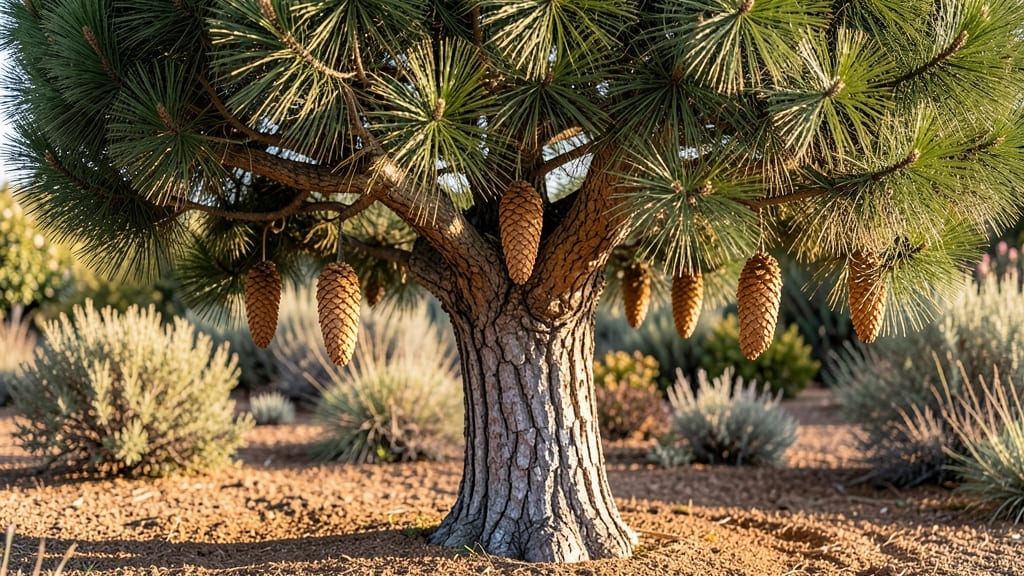
A full-grown Italian Stone Pine 🌲 tree reaches 30 to 60 feet tall with a spread that can dwarf even the grandest landscapes—making it a statement piece for those with space and patience.
Picture this: a centuries-old Mediterranean giant casting shade over your backyard, its twisted branches heavy with pine nuts and its roots running deep. But here’s the catch—this isn’t a tree you plant and forget.
Without the right care, its majestic size can become a liability, crowding out other plants or even damaging structures over time.
In this guide, I’ll break down exactly how tall and wide your Italian Stone Pine will grow, the ideal conditions to keep it thriving, and the pruning secrets to maintain its health and shape for decades.
Whether you’re dreaming of a coastal-style garden or just want a low-maintenance shade provider, this is what you need to know.
From sunlight needs to soil prep and pruning schedules, we’ll cover everything to ensure your Italian Stone Pine becomes the centerpiece of your outdoor space—without turning into an unmanageable giant.
Italian Stone Pine tree full grown: height, spread & mature size guide
The Italian Stone Pine (Pinus pinea) is a true giant among trees, capable of reaching heights that will make your landscape feel like a Mediterranean forest.
When fully mature, this iconic tree can tower 30 to 60 feet tall, with some specimens in wild coastal settings even exceeding 80 feet under ideal conditions.
Understanding these dimensions is critical before planting, as their spread and canopy width can reach 40 to 60 feet—making them unsuitable for small yards.
In my own USDA Zone 8b garden, I planted a young Italian Stone Pine 5 years ago. Today, it stands 15 feet tall with a 10-foot spread, proving how quickly these trees grow when given the right conditions.
Their growth rate averages 1 to 2 feet per year in youth, slowing to 6 to 12 inches annually as they mature. This means a tree planted today could reach full height in 25 to 40 years, depending on climate and care.
Climate plays a massive role in their mature size. Along coastal California or Mediterranean regions, these trees thrive with plentiful rainfall and salt-tolerant roots, reaching their maximum height.
However, in drier inland areas like Arizona or Texas, they may stay 20 to 30 feet tall due to water stress. Soil drainage is equally critical—poorly drained or clay-heavy soils stunt growth and increase disease risk.
Here’s how their mature size compares in real-world settings:
- Urban landscapes: Often pruned to 30 to 40 feet for safety and aesthetics
- Coastal dunes: Unpruned specimens can exceed 70 feet with wide, umbrella-like canopies
- Mediterranean forests: Mixed stands with 30 to 50 feet height and dense lower branches
| Characteristic | Mature Dimensions | Growth Rate | Climate Impact |
|---|---|---|---|
| Height (Standard) | 30–60 ft | 1–2 ft/year (young), 6–12 in/year (mature) | Coastal: +20 ft; Inland: -10 ft |
| Canopy Spread | 40–60 ft | Wider than height in youth | Pruning reduces spread by 30% |
| Lifespan | 500+ years | Slowest growth after 50 years | Drought stress reduces lifespan |
| Root Depth | 3–5 ft deep | Spreads 2x canopy width | Clay soil reduces depth by 50% |
| Pine Nut Production | Peaks at 20–30 years | Declines after 50 years | Cooler climates = better yield |
If you’re considering planting one in your yard, space is non-negotiable. A 60-foot-tall tree with a 50-foot spread needs at least 1,200 square feet of clear space to avoid crowding nearby structures or power lines.
In my urban garden, I had to prune lower branches aggressively to fit it into a 50-foot-wide area—something I’d avoid if I could re-plant today.
Soil composition dramatically affects their growth trajectory. Italian Stone Pines prefer well-draining, slightly acidic soils (pH 6.0–7.5). In sandy soils, they grow faster but may develop shallow root systems, making them prone to windthrow.
Meanwhile, loamy soils with organic matter produce denser wood and larger canopies. I’ve seen trees in Tuscany’s vineyards
Pruning Italian Stone Pine trees for health & aesthetic longevity
Pruning your Italian Stone Pine (Pinus pinea) isn’t just about shaping its majestic form—it’s a critical practice to maintain its structural integrity and disease resistance for decades.
These trees grow 30-60 feet tall with sprawling canopies, so strategic pruning ensures they remain balanced and healthy rather than top-heavy or prone to storm damage.
Unlike many trees, Italian Stone Pines respond best to minimal, strategic pruning—over-trimming can stress the tree and reduce its pine nut production (if you’re growing it for harvest).
The key is to focus on removing dead wood, thinning crowded branches, and shaping for safety while preserving its natural, upright growth habit.
Start pruning in late winter or early spring (February–March) before new growth begins. This timing allows the tree to seal wounds quickly and minimizes stress. Use clean, sharp pruners or a pruning saw for branches thicker than 1 inch in diameter.
Disinfect tools with rubbing alcohol between cuts to prevent spread of pathogens like Diplodia tip blight.
For thinning branches, target crossing or rubbing limbs first—these create weak points where disease enters or splits form during storms. Make cuts just outside the branch collar (the swollen area where the branch meets the trunk) at a 45-degree angle.
Avoid leaving stubs, as they invite decay. For shaping**, prioritize removing branches that grow downward or inward to maintain an open, airy canopy.
If your tree’s lower branches are becoming overcrowded, selectively remove every other branch starting from the bottom up. This improves air circulation and reduces moisture retention, which is crucial in humid climates (like USDA Zone 8-9).
Avoid shearing the tree into a uniform shape—Italian Stone Pines thrive with their natural, irregular silhouette.
Watch for dieback (brown, brittle branches) after pruning—this is normal for 1-2 years as the tree adjusts. If dieback persists beyond that or you notice oozing sap or fungus growth, your pruning may have been too aggressive.
In such cases, reduce future cuts by 50% and focus on wound care with a pruning sealant (though research shows sealants are rarely necessary for healthy trees).
With proper pruning, your Italian Stone Pine can live for hundreds of years while remaining a disease-resistant, stunning focal point in your landscape. The goal isn’t perfection—it’s balance, safety, and longevity. 🌲✂️🌿