
Blooming
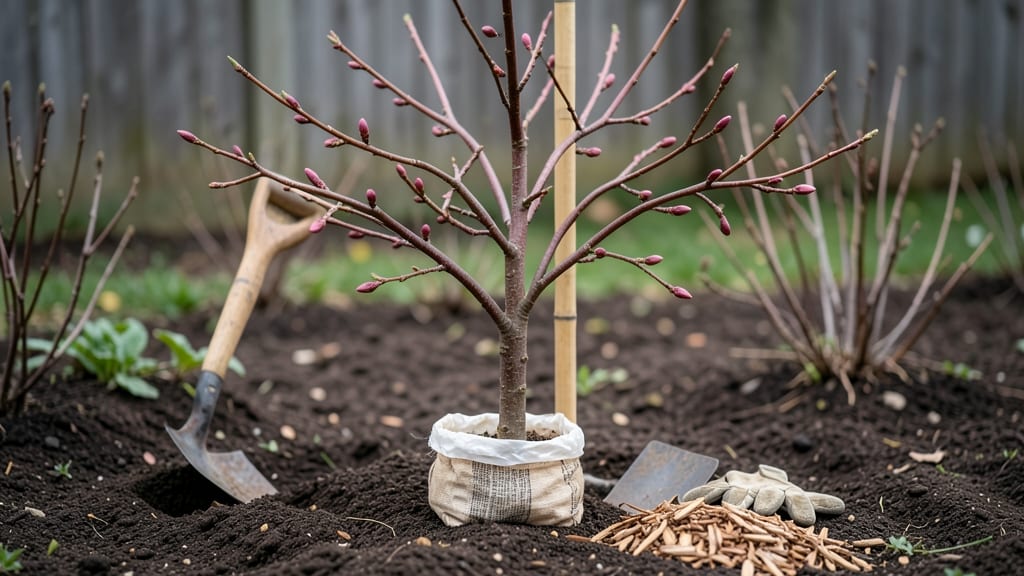
Planting a bare-root Kwanzan cherry blossom means welcoming a tree that blooms in spring, holds foliage all summer, and turns fiery red in fall—without the fuss of container shock. 🌸 I’ve planted mine in late winter when the ground is workable but still cold, and the difference in early root establishment is night and day compared to spring planting.
The secret to success starts with soil: amending heavy clay with compost and a handful of sand creates the perfect crumbly texture Kwanzan cherries crave. Dig a hole twice as wide as the root ball but only as deep—planting too deep suffocates the roots, while too shallow invites drought stress.
Water deeply before backfilling to settle the soil around roots, then mulch with 2-3 inches of organic matter to lock in moisture and regulate temperature.
You’ll know it’s thriving when new growth appears within 4-6 weeks, and by year two, those iconic double pink blossoms will cover the tree like a cloud.
The tree handles pruning well, so you can shape it now or wait until spring—just avoid heavy cuts that remove more than 25% of the canopy at once. Cold-hardy down to zone 5, this tree adapts to urban spaces, parks, or rural yards alike.
The key is patience: it takes 3-5 years for full bloom potential, but the wait transforms any landscape into a seasonal masterpiece.
📚 In This Guide
- What you need
- Instructions
- Tips and common mistakes
- Wrapping up and next steps
What you need
- ● Bare-root Kwanzan cherry blossom tree (ensure it’s dormant, typically sold in late fall/winter)
- ● Shovel or spade (for digging the planting hole)
- ● Garden fork or trowel (for loosening soil)
- ● Native soil or well-draining potting mix (avoid heavy clay; amend if needed)
- ● Compost or organic matter (1-2 gallons for enriching the soil)
- ● Mulch (wood chips or straw) (2-3 inches to retain moisture and protect roots)
- ● Watering can or hose with a gentle spray nozzle (for hydration)
- ● Pruning shears (to trim dead or damaged roots/stems)
- ● Root stimulator or mycorrhizal fungi (boosts root growth—great for cold climates!)
- ● Planting hole frame or grid (ensures proper spacing and depth)
- ● Slow-release fertilizer (balanced 10-10-10 or organic options like fish emulsion)
- ● Tree stakes and ties (if planting in windy areas)
- ● Soil pH test kit (ideal range: 5.5–6.5 for cherry blossoms)
- ● Winter protection fabric (for young trees in harsh climates)
Step-by-step guide to planting a Kwanzan cherry blossom tree bare root
Here's how to give your new tree the perfect start for decades of stunning blooms.
🪴 Step 1: Choose the Right Planting Site
Kwanzan cherries thrive in full sun—select a spot that gets at least 6 hours of direct sunlight daily. Avoid low areas where cold air pools, as these trees need good air circulation to prevent fungal diseases. The soil should drain well but retain moisture—amend heavy clay with 2-3 inches of compost if needed.
Dig a hole twice as wide as the root ball but only as deep. The top of the root flare (where roots meet trunk) should sit 2-3 inches above ground level. This prevents soil from smothering the graft union. I always mark the hole's center with a stake to keep the tree centered during planting.
🌱 Step 2: Prepare the Root System
Soak the bare roots in lukewarm water for 1-2 hours before planting to revive them. Gently spread the roots outward in the hole—never force them. If roots are circling, make 2-3 vertical cuts to encourage outward growth. The goal is a loose, natural shape that mimics how roots grow in nature.
Here's the thing—don't tease the roots too aggressively. Just enough to spread them evenly without breaking delicate root tips. You'll see the roots begin to plump up as they absorb water, which is your signal they're ready for planting.
💧 Step 3: Plant and Water Thoroughly
Backfill the hole with native soil mixed with 1 part compost to improve fertility. Firm the soil gently as you fill, tapping the sides of the hole to eliminate air pockets. Water in 10 gallons of water slowly as you plant to settle the soil around roots.
Mulch the base with 2-3 inches of wood chips, keeping mulch 6 inches away from the trunk to prevent rot. I always water deeply one final time after mulching to ensure good root-to-soil contact. The soil should feel moist but not soggy—you're aiming for dampness like a wrung-out sponge.
☀️ Step 4: Provide Care for First Season Growth
Water deeply once a week during the first growing season, providing 20-30 gallons depending on tree size. Young trees need consistent moisture to establish roots, but avoid waterlogging. You'll know you're doing it right when the soil feels dry 2-3 inches down between waterings.
Fertilize lightly in spring with ½ cup of 10-10-10 granular fertilizer, working it into the top 6 inches of soil. Kwanzan cherries are slow to establish but reward patience with dramatic blooms. Prune only to remove dead wood—never prune for shape in the first year, as this stresses young trees.
⏰ Step 5: Prepare for Winter Hardiness
Kwanzan cherries handle USDA Zone 5-9, but young trees need protection. Water deeply in late fall to establish root reserves, then apply 3-4 inches of mulch around the base. Avoid heavy pruning in late winter—wait until early spring when buds begin to swell to encourage new growth.
This is the moment that matters: Your tree's first winter determines its long-term health. I've seen trees that survived harsh winters with proper mulching go on to bloom spectacularly for 50+ years. The key is consistent moisture and protection from winter winds.
Tips & tricks for planting a thriving Kwanzan cherry blossom tree
Your Kwanzan cherry blossom tree's future beauty starts with these planting essentials—trust me, these small details make all the difference.
Site Selection Wisdom: That 6 hours of sunlight isn't just a suggestion—it's non-negotiable for vibrant blooms. I once planted one in partial shade and watched the flowers fade to pale pink. Test your spot by observing sunlight patterns for a full week before digging. Also, avoid planting near sidewalks or driveways where roots might get damaged by maintenance equipment.
Root Revival Technique: The 1-2 hour soak in lukewarm water is your secret weapon for stressed bare roots. I learned this the hard way after planting one without soaking—it struggled for years. Pro tip: Use a bucket of water that's about 70°F (room temperature), not cold straight from the tap. You'll know it's ready when the roots look plump and flexible, not shriveled.
Planting Depth Secret: That 2-3 inch elevation above ground level for the root flare isn't just about aesthetics—it prevents soil from smothering the graft union where the tree's strength originates. I use a small wooden stake to mark the correct depth before planting, then double-check with a level to ensure the tree stays perfectly upright. Uneven planting leads to crooked growth patterns.
Winter Protection Strategy: The 3-4 inches of mulch isn't just decoration—it's your tree's winter blanket. I've seen trees survive -20°F winters with proper mulching that would otherwise suffer frost cracks. Use coarse wood chips rather than fine mulch, which can compact and suffocate roots. And remember: keep that mulch 6 inches away from the trunk to prevent rot.
Pro Tips for Kwanzan Cherry Blossom Tree Bare Root
- Your Kwanzan cherry blossom tree's future beauty starts with these planting essentials—trust me, these small details make all the difference.
- Site Selection Wisdom: That 6 hours of sunlight isn't just a suggestion—it's non-negotiable for vibrant blooms.
- Root Revival Technique: The 1-2 hour soak in lukewarm water is your secret weapon for stressed bare roots.
Frequently asked questions
Got questions about your Kwanzan cherry blossom tree? You’re not alone!
Here are answers to the most common concerns—from planting to care—so you can enjoy this stunning tree’s beauty year-round.
When is the best time to plant a bare-root Kwanzan cherry blossom?
Plant your bare-root Kwanzan cherry blossom in late fall to early spring (while dormant) for the best success. Avoid extreme heat or frost—aim for cooler temperatures (40–50°F). If you must plant in summer, keep the roots moist and mulch well to reduce stress.
How do I know if my bare-root Kwanzan cherry blossom is healthy?
Healthy bare-root trees have plump, flexible roots (not shriveled or mushy) and firm, smooth bark. Check for no signs of pests, mold, or dried-out leaves. If roots are dry, soak them in water for 1–2 hours before planting.
Can Kwanzan cherry blossoms survive in cold climates?
Kwanzan cherries are USDA Zones 5–8 hardy, making them perfect for cold climates. Just plant in full sun, water deeply in winter (if snow is scarce), and mulch heavily to protect roots. They thrive in urban areas too—just avoid heavy salt exposure!
What if my Kwanzan cherry blossom isn’t blooming?
Patience is key! Kwanzan trees often take 3–5 years to bloom after planting. Ensure it gets 6+ hours of sun, well-draining soil, and regular pruning (remove dead wood in late winter). If it’s older and still not blooming, check for over-fertilization or root competition from nearby plants.
Are there alternatives to Kwanzan if I want a smaller tree?
Yes! For compact options, try ‘Okame’ cherry (dwarf variety, Zones 6–9) or ‘Amanogawa’ (weeping habit, Zones 5–8). Both offer stunning blooms with less space. Just ensure they get full sun and prune regularly to maintain shape.
Wrapping up and next steps
Growing a Kwanzan cherry blossom tree from bare root isn’t just about adding beauty to your garden—it’s about embracing resilience and patience. With the right location, soil prep, and care, this cold-hardy tree will reward you with stunning blooms year after year.
Whether you’re a seasoned gardener or just starting, your efforts will create a breathtaking focal point that brings joy for decades.
Ready to get started? Mark your calendar for early spring—when those bare roots are ready to transform your landscape! 🌸✨