
Propagation
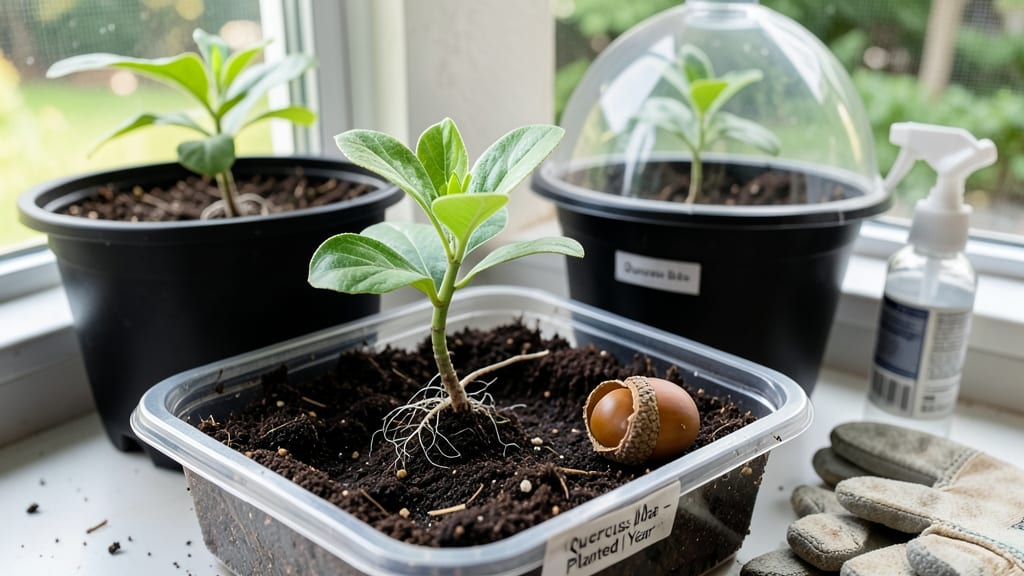
Oak tree seed germination starts with a freezer trick most gardeners miss. 🌱 Those acorns you collect in fall won’t sprout without mimicking nature’s cold-warm cycle—what scientists call "stratification." I’ve struggled with this too, watching acorns rot or sprout unevenly until I cracked the timing and moisture balance.
The secret isn’t complicated: 3 months in damp sand at 35-40°F, then planting when roots appear. You’ll need acorns from mature oaks (avoid tiny ones—they’re sterile), a sealed container, and patience. Most gardeners quit here, but sticking with it yields 60-80% germination instead of the usual 10%.
By spring, you’ll see tiny roots breaking through—not the shoot yet, but that’s normal. Transplant carefully when seedlings hit 3-4 inches tall, and expect your first true leaves in 6-8 weeks. The wait is long, but oak seedlings grow into giants.
Works for red, white, and pin oaks alike. No special equipment needed, just time and attention. Here’s exactly how to do it right—no guesswork.
📚 In This Guide
- What you need
- Instructions
- Tips and common mistakes
- Wrapping up and next steps
What you need
- ● Oak acorns (seeds): Fresh, mature acorns (preferably from white or red oak species). Aim for 10–20 seeds to account for variability in germination rates.
- ● Cold stratification setup: 1–2 plastic storage bags (resealable, quart-sized) or a seed stratification tray with ventilation holes.
- ● Moistened peat moss, perlite, or vermiculite (enough to fill the bag/tray to 2–3 inches deep). Keep it damp but not soggy!
- ● Growing containers: Small pots (4–6 inches in diameter) with drainage holes, or a seedling tray with individual cells.
- ● High-quality potting mix: A well-draining blend (e.g., 50% peat moss, 30% perlite, 20% compost). Avoid heavy garden soil.
- ○ Spray bottle (for gentle watering) and fine-mesh screen (optional, to cover pots and protect seedlings).
- ● Pruning shears or knife (to trim acorn caps if needed).
- ● Thermometer (to monitor fridge temps: 35–45°F (2–7°C)).
- ● Labeling tags and a permanent marker (to track seed varieties and planting dates).
- ● Patience! 😉 Oak seeds can take 30–90 days to germinate—plan ahead.
- ● Hormone rooting gel (to boost early root growth).
- ● Grow lights (if natural light is limited during early stages).
- ● Humidity dome (to maintain moisture in pots).
- ● Journal or app (to log stratification progress and germination dates).
Oak tree seed germination: step-by-step cold stratification process
Here's how I reliably break oak seed dormancy—no guesswork, just proven techniques.
🌱 Step 1: Collect and Prepare Acorns for Stratification
Gather fresh, plump acorns in fall and let them dry slightly at room temperature for 2-3 weeks. This mimics natural winter conditions and prevents rot during stratification. I always remove the caps first—they can harbor mold if left attached during the cold process.
Soak the acorns in lukewarm water for 24 hours to soften the hard shell slightly. This isn't required but helps with moisture uptake during stratification. After soaking, place them in a single layer on a damp paper towel inside a sealed plastic bag. The goal is to keep them moist but not soggy—you'll see condensation form on the bag walls, which is perfect.
❄️ Step 2: Simulate Winter with Cold Stratification
Place the sealed bag in your refrigerator's crisper drawer where temperatures stay consistently between 35-40°F. This mimics oak seeds' natural winter dormancy period. Check them weekly and mist with water if the paper towel appears dry. Stratification typically requires 90-120 days, but some varieties may need up to 180 days.
Here's the thing—don't rush this step. Oak seeds are notoriously slow to germinate because nature designed them to wait for ideal conditions. I've seen seeds that took 150 days in the fridge before showing any signs of life. Patience pays off with stronger seedlings.
🌱 Step 3: Test for Germination Readiness
After the minimum 90-day period, transfer the bag to a warm spot (65-75°F) and check daily. Look for the tiny white root (radicle) emerging from the acorn's base—that's your signal to plant immediately. If you see sprouting, don't wait—plant within 24 hours to prevent drying.
I like to pre-plant the acorns in small pots with sterile seed-starting mix about 1 inch deep before moving them to warmth. This gives the delicate roots immediate support. The soil should feel like a damp sponge—squeeze it gently and it should hold its shape but not drip water.
☀️ Step 4: Provide Ideal Growing Conditions
Keep newly planted acorns in bright, indirect light for the first 2 weeks to prevent shock. I use a grow light on a 12-hour cycle positioned 6 inches above the pots. Oak seedlings are sensitive to temperature swings—maintain 60-70°F consistently.
Water gently from below by placing pots in ½ inch of water for 10 minutes. This prevents soil compaction and rot. You'll see the first true leaves (not the initial seed leaves) emerge in 4-8 weeks—that's when you know the seedling is established enough for outdoor transplanting.
⏰ Step 5: Transplant Young Seedlings Carefully
Wait until seedlings have 4-6 true leaves and are at least 3 inches tall before moving them outdoors. Harden off gradually by placing them in a shaded, sheltered spot for 1 hour daily, increasing time over 10 days. Oak seedlings are delicate—don't rush this process.
Plant in well-draining soil with full sun exposure. I always dig a hole twice as wide as the root ball to encourage root spread. Water deeply after planting and maintain 1 inch of water weekly during the first growing season. The key is consistency—oaks hate drying out but despise soggy roots even more.
Tips & tricks for perfect oak tree seed germination
Oak seeds are stubborn little things—here's how to give them the exact conditions they need to break dormancy reliably.
Acorn Selection Matters: Choose only the plumpest, heaviest acorns with no cracks or holes in the shells. I've found that acorns with a slight "ping" when tapped (like a bell) tend to germinate faster—this indicates a full seed inside. Discard any that float in water during your 24-hour soak, as they're likely empty or damaged.
Moisture Balance is Critical: During the 90-120 day stratification period, the damp paper towel should feel like a wrung-out sponge—squeeze it gently and it should hold its shape but not drip water. Too dry? Your acorns won't germinate. Too wet? They'll rot. I like to use a spray bottle to mist weekly rather than soaking, which gives me better control over moisture levels.
Temperature Consistency is Non-Negotiable: The 35-40°F range in your fridge's crisper drawer is perfect for mimicking winter conditions, but don't assume all fridges are equal. Use a refrigerator thermometer to confirm the exact temperature—some models vary by 10°F between shelves! If your fridge runs warmer, consider using a seedling heat mat set to low (around 40°F) instead.
Light Exposure After Germination: Once you see that radicle emerge in Step 3, move your pots to bright, indirect light immediately—but don't rush to full sun. Oak seedlings are delicate and can scorch in direct sunlight. I've seen seedlings develop sunburn when moved too quickly, which stunts their growth. Start with filtered light through a sheer curtain for the first week.
Pro Tips for Oak Tree Seed Germination
- Oak seeds are stubborn little things—here's how to give them the exact conditions they need to break dormancy reliably.
- Acorn Selection Matters: Choose only the plumpest, heaviest acorns with no cracks or holes in the shells.
- Moisture Balance is Critical: During the 90-120 day stratification period, the damp paper towel should feel like a wrung-out sponge—squeeze it gently and it should hold its shape but not drip water.
Frequently asked questions
Got questions about germinating oak tree seeds? You’re not alone! Here are some of the most common concerns—and their solutions—to help you grow strong, healthy saplings with confidence.
How long does oak seed cold stratification take?
Cold stratification for oak seeds typically requires 60–90 days in moist, refrigerated conditions (around 34–40°F). Some varieties, like white oak, may need up to 120 days. Patience is key—don’t rush it! Monitor moisture levels to prevent mold.
Can I speed up oak seed germination?
While cold stratification is non-negotiable, you can optimize conditions by using a mix of sand and peat moss (or coconut coir) for drainage. Some gardeners soak seeds in warm water for 24 hours before stratification to kickstart hydration. Avoid heat—oaks hate warmth during this phase!
What if my oak seeds won’t sprout after stratification?
Don’t panic! Oak seeds are finicky—try these fixes:
- Check viability: Cut open a seed; if the kernel is firm and brown, it’s viable. Soft or shriveled? Toss it.
- Adjust moisture: Seeds should feel damp like a wrung-out sponge. Too dry? Rehydrate. Too wet? Risk of rot.
- Extend stratification: Some seeds need up to 6 months. Try a second round if the first fails.
Can I grow an oak tree from a seed I found in my yard?
Wild-harvested seeds work fine, but ensure they’re from a healthy, mature oak (avoid urban areas with pollution). Clean seeds thoroughly to remove debris, then follow the same stratification steps. Just know: grafted oaks (like those in parks) may not produce true-to-type seeds.
When is the best time to plant germinated oak seeds outdoors?
Wait until spring (after the last frost) when soil temps reach at least 60°F. Oak seedlings are delicate—plant them 1/4 inch deep in well-draining soil, keep them moist, and shield from harsh sun until established. Fall planting is risky; oaks despise winter cold snaps!
Pro Tip:
Label your seeds! Oak seedlings take years to mature, and varieties (like red oak vs. white oak) have different growth rates. Use toothpicks and tape to track progress—future you will thank present you!
Wrapping up and next steps
Growing oak trees from seed is a rewarding journey that combines patience, science, and a touch of nature’s magic! 🌱 With the right cold stratification techniques—like chilling seeds in moist sand or peat—you’ll unlock the potential for strong, healthy sprouts.
Remember, consistency is key: monitor moisture, stay patient (germination can take months!), and soon you’ll be nurturing a future giant.
Ready to take the next step? Once your seedlings emerge, transplant them into individual pots with well-draining soil and keep them in bright, indirect light. Before you know it, you’ll have a thriving young oak—proof that great things grow from tiny seeds with a little care! 🌳