
Pruning
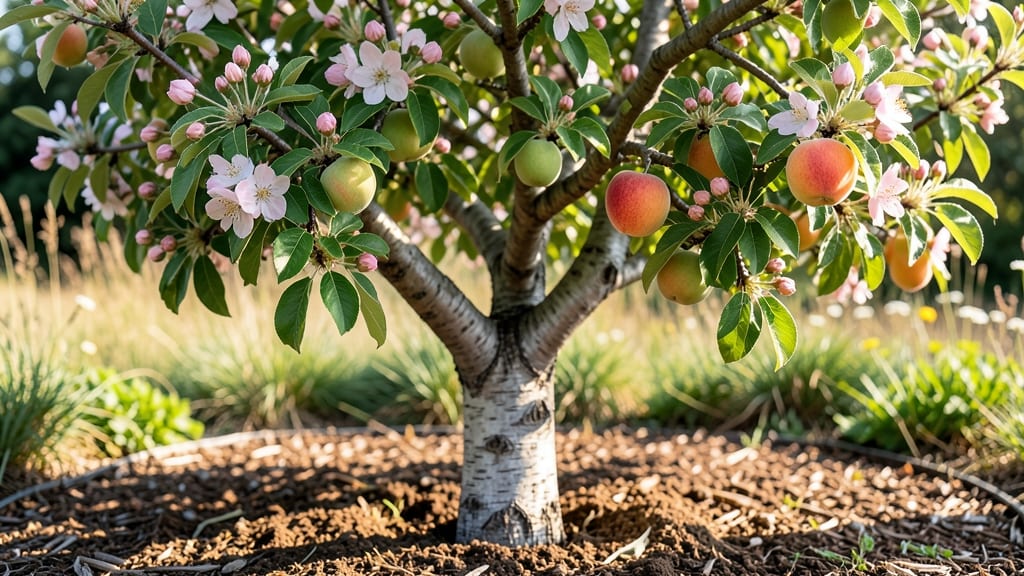
Understanding your peach tree's cycle transforms it from a struggling bush to a fruit-bearing powerhouse. 🌱 The secret lies in matching each season's care to what the tree naturally needs—dormancy prep, bloom protection, summer fruit support, and harvest prep.
My first peach tree nearly died because I pruned at the wrong time; now I follow this cycle religiously, and the difference is night-and-day harvests.
The cycle starts in late winter when the tree sleeps. That's when you prune to shape the structure, remove dead wood, and open the canopy for sunlight. Spring brings delicate blossoms that need protection from frost, while summer focuses on watering, thinning fruit, and watching for pests.
Each stage builds on the last—skip one, and you risk poor fruit set or weak harvests.
By late summer, you'll see peaches swelling on the branches, their fuzzy skins turning smooth. The tree needs consistent moisture but less fertilizer now—too much nitrogen late in the season means fewer next year's blooms.
When those peaches blush pink and soften, it's harvest time, and the reward for your year-round care is sweet, juicy fruit straight from your yard.
This cycle works for any peach variety, from classic Elberta to modern freestones. The key is observing your tree—adjust timings slightly based on your climate, and you'll get bigger harvests every year. Let's break it down season by season.
📚 In This Guide
- What you need
- Instructions
- Tips and common mistakes
- Wrapping up and next steps
What you need
- ● Pruning shears: Sharp, bypass-style shears (for cuts under ½ inch thick). Tip: Clean with rubbing alcohol after each use to prevent disease spread! 💡
- ● Loppers: 20-24 inch loppers for thicker branches (up to 2 inches in diameter). Look for ratcheting or bypass models for precision.
- ● Pruning saw: A curved-tooth saw for branches over 2 inches thick. Sterilize with bleach or hydrogen peroxide between cuts.
- ● Gloves: Heavy-duty, cut-resistant gloves (e.g., mechanics’ or pruning gloves) to protect from thorns and splinters.
- ● Disinfectant: 70% isopropyl alcohol or 10% bleach solution (1 part bleach to 9 parts water) to sanitize tools.
- ○ Pruning sealant: Optional but helpful for large cuts (e.g., Tree Seal Tape or pruning wax) to prevent disease entry.
- ● Ladder or step stool: A stable, extendable ladder (e.g., 24-32 feet) for tall trees. Safety first! 🔒
- ● Trash bags: Heavy-duty bags (10+ gallon size) for collecting pruned branches and debris.
- ● Sharpie or marking pen: Waterproof for labeling cuts or branches to remove later.
- ● Hand pruners: Compact shears for small, precise cuts (great for shaping in tight spaces).
- ● Pole pruner: Extendable 10-16 feet for high branches (saves ladder time!).
- ● Tree wound dressing: Controversial but some swear by it (e.g., Tanglefoot Tree Wound Pruning Seal).
- ● Work boots: Steel-toe or waterproof for stability and protection.
- ● Safety glasses: Protect your eyes from debris and sap splashes!
- ● Notebook or app: Track pruning dates, notes, and tree health (e.g., Gardenate or PlantNet).
- ● Basic knowledge of peach tree anatomy (e.g., water sprouts, suckers, and scaffold branches). Pro tip: Watch a YouTube tutorial on peach tree pruning basics! 🌡️
- ● Weather check: Prune on a dry, overcast day to reduce stress on the tree.
- ● Tree health assessment: Remove dead, diseased, or crossing branches first—even if it’s not the "official" pruning season!
Step-by-Step year-round pruning calendar for peach trees
Here's the seasonal rhythm I follow to keep my peach trees productive and healthy—pruning isn't just one task, it's a year-long conversation with your tree.
✂️ Step 1: Late Winter Dormant Pruning (January-February)
When your peach tree is completely dormant—no buds swelling, no leaves—is the perfect time to do the bulk of your pruning. I wait until after the worst winter cold has passed, usually in late January or early February, depending on your climate zone. This timing removes winter-killed wood and opens the canopy for better air circulation and sunlight.
Start by removing any dead, diseased, or crossing branches first. Use clean, sharp pruning shears to make cuts just outside the branch collar—the swollen area where the branch meets the trunk. I always cut at a 45-degree angle about ¼ inch above an outward-facing bud. This ensures the new growth will angle away from the center of the tree, keeping it open and airy.
Next, thin out the center of the tree to reduce crowding. You want sunlight to reach all the way to the center branches. Aim to remove about 20-30% of the tree's total branches during this dormant season. If you see any suckers growing from the base or trunk, cut those off too—they sap energy from your fruit production.
☀️ Step 2: Post-Harvest Summer Pruning (June-July)
After you've harvested your peaches, take another look at your tree. Summer pruning focuses on shaping, removing water sprouts, and improving air flow. I wait until after the first big heat wave has passed, usually in late June or early July, when the tree has recovered from fruiting but before new growth gets too vigorous.
Look for any branches that are growing too close together or rubbing against each other. These need to come off to prevent wounds that could invite disease. Also remove any shoots growing straight up from the trunk or main branches—these water sprouts compete with fruit production. Make your cuts just above a leaf bud or side branch.
This is also when I do any minor shaping to keep the tree at a manageable height. Peach trees can get quite tall, and if you want to keep them smaller, now's the time to make those adjustments. Just don't remove more than 10-15% of the tree's foliage in summer—too much pruning now stresses the tree and reduces next year's crop.
🌱 Step 3: Light Fall Cleanup (October-November)
As fall approaches, do a final walk-through of your peach tree. Remove any branches that have produced fruit this year—they've given their all and won't contribute much next season. Also look for any branches with signs of disease or pest damage. These should be pruned out and disposed of properly (don't compost them—burn or trash them to prevent spreading problems).
This is also when I do any final shaping to prepare the tree for winter. I might remove a few branches that are growing in awkward directions or crossing each other. The goal is to create an open, vase-like shape that lets sunlight and air move freely through the tree. Just stop pruning about 6 weeks before your first expected frost—new growth won't harden off properly and could be damaged by winter cold.
Finally, give the base of the tree a good cleaning. Remove any fallen leaves, fruit, or debris from around the trunk. This reduces hiding places for pests and diseases that might overwinter in your orchard. I also apply a fresh layer of mulch (about 2-3 inches deep) to help protect the roots from temperature swings.
⏰ Step 4: Winter Monitoring and Adjustments (December)
During the winter months, keep an eye on your peach tree for any signs of winter damage. If you get unexpected cold snaps or ice storms, damaged branches should be pruned out as soon as the weather breaks. I wait until after the ground thaws in early spring to do any major winter damage cleanup—pruning frozen wood can tear the bark and create wounds that invite disease.
This is also when I plan next year's pruning strategy. I'll look at where last year's fruit set was heavy and where it was light. If certain branches consistently produce well, I might give them a little more room to grow. If others are always sparse, I'll plan to remove them during next winter's dormant pruning. The goal is to create balance in your tree's structure year after year.
Finally, I make note of any branches that need special attention. Maybe there's a branch that's growing too close to a power line, or one that's rubbing against another. I'll mark these with flagging tape or paint so I remember to address them during next year's dormant season pruning. A little planning now makes the actual pruning work much easier later on.
Tips & tricks for mastering your peach tree cycle
Here's what I've learned after years of pruning my own peach trees—these little details make all the difference between a healthy tree and one that struggles.
Tool Prep for Step 1: Sterilize your pruning shears with rubbing alcohol or a bleach solution between cuts during the late winter dormant pruning. I learned this the hard way after spreading bacterial canker between branches. Also, sharpen your blades before you start—dull tools crush wood instead of making clean cuts, which invites disease. A quick test: if your shears can't cut cleanly through a piece of paper, they need sharpening.
Branch Angle Secret: When making cuts at a 45-degree angle in Step 1, think of it like slicing a pizza—you want the cut to slope away from the branch collar. This helps water run off and prevents rot. I mark my shears with tape to create a visual guide for the perfect angle. For branches thicker than your thumb, use three cuts: first undercut, then top cut, and finally clean up the stub.
Summer Pruning Balance: During the post-harvest summer pruning in Step 2, I never remove more than 10-15% of the foliage at once. This might seem restrictive, but remember—peach trees produce fruit on current season's growth. Over-pruning now means fewer blossoms next spring. I use the "one-third rule": if a branch has more than one-third of its leaves removed, I stop cutting there.
Frost Timing Tip: That 6-week rule before frost in Step 3 is crucial. I mark my calendar with the average first frost date for my zone, then count backward. In colder climates, you might need to stop pruning even earlier. Watch for new growth that's still green and tender—this is your signal to stop cutting. For extra protection, apply a dormant oil spray after your final fall pruning to help prevent overwintering pests.
Pro Tips for Peach Tree Cycle
- Here's what I've learned after years of pruning my own peach trees—these little details make all the difference between a healthy tree and one that struggles.
- Tool Prep for Step 1: Sterilize your pruning shears with rubbing alcohol or a bleach solution between cuts during the late winter dormant pruning.
- Branch Angle Secret: When making cuts at a 45-degree angle in Step 1, think of it like slicing a pizza—you want the cut to slope away from the branch collar.
Frequently asked questions
Got questions about keeping your peach tree thriving through its natural cycle? You’re not alone!
Here are some of the most common queries—and their answers—to help you navigate pruning, growth, and fruit production like a pro.
When is the best time to prune a peach tree?
The ideal window is late winter or early spring (just before buds swell but before new growth starts). This ensures minimal stress on the tree while maximizing airflow and sunlight for fruit development. Avoid pruning in fall—it can invite disease or pests. Pro tip: If you missed winter, prune in early summer after harvest, but keep cuts minimal to avoid stress.
How long does it take for a peach tree to bear fruit after planting?
Patience is key! Most peach trees take 2–4 years to produce fruit, depending on the variety and care. Dwarf trees may fruit sooner (1–2 years), while standard trees can take longer. To speed things up, ensure proper pruning, watering, and fertilizer (like nitrogen-rich compost) during the first year to encourage strong root and branch growth.
Why aren’t my peach tree’s flowers turning into fruit?
Several factors could be at play:
- Poor pollination: Peaches need cross-pollination (plant two varieties nearby).
- Late frost: Flowers damaged by frost won’t develop fruit.
- Nutrient deficiency: Lack of zinc or boron can cause poor fruit set.
- Over-pruning: Too many cuts reduce energy for fruiting.
Can I prune a peach tree in summer?
Summer pruning is possible but risky. Limit it to removing only dead, diseased, or crossing branches. Heavy pruning in summer stresses the tree, making it vulnerable to pests or sunburn. If you must prune, do it after harvest (late July–early August) and avoid cutting more than 10% of the canopy. Always use sterilized tools to prevent bacterial infections.
What’s the best way to protect a young peach tree from extreme heat or cold?
Peach trees thrive in USDA Zones 5–9, but extremes can harm them. For heat:
- Mulch heavily (3–4 inches) to retain moisture.
- Provide afternoon shade with shade cloth.
- Wrap the trunk with burlap or tree guard.
- Water deeply before winter to protect roots.
- Avoid pruning in fall—it exposes fresh cuts to frost damage.
Wrapping up and next steps
Understanding the peach tree cycle and mastering the year-round pruning calendar is your ticket to a bountiful harvest and a thriving orchard! By following seasonal cues—from dormant cuts in winter to summer thinning—you’ll boost fruit quality, airflow, and long-term tree health. You’ve got this!
Ready to put your new skills into action? Start with a quick inspection of your tree this week—note any dead branches or overcrowded growth—and plan your first pruning session. Every small step brings you closer to that dream peach harvest! 🌱🍑