
Pruning
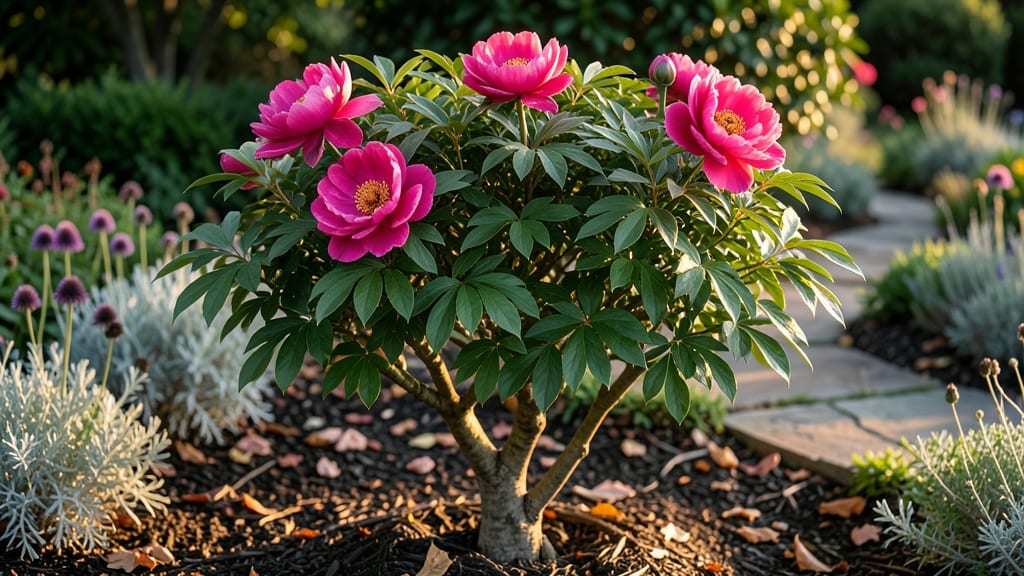
A tree peony’s height 🌸 ranges from 2 to 5 feet at maturity, but the variety you pick determines whether your garden gets a compact statement or a bold vertical focal point.
If you're dreaming of a stunning, low-maintenance shrub that blooms like a queen every spring, tree peonies could be your perfect match—but did you know their height varies dramatically by variety?
From compact 2-foot varieties that fit cozy borders to towering 5-foot giants that steal the show in mixed shrub beds, size isn’t just about aesthetics. It affects spacing, pruning needs, and even how you design your garden layout.
Below, I’ll break down how to choose the right height for your space, the fastest-growing varieties for quick vertical impact, and the pruning secrets to keep them thriving—no matter how tall they get.

Tree peony height by variety: compact vs. towering options
Tree peonies are stunning woody shrubs that offer long-lasting spring blooms and elegant foliage—but their mature heights can vary dramatically by variety. Unlike herbaceous peonies (which die back annually), tree peonies grow year-round and develop into permanent garden focal points.
Knowing the height range of your chosen variety helps you plan spacing, pruning, and even garden layout for maximum impact.
Most tree peonies reach maturity between 3 to 5 feet tall, but some compact varieties stay under 3 feet, making them perfect for small gardens or containers. Meanwhile, taller varieties can dominate borders or serve as specimen plants.
Below, I’ve broken down the height ranges, growth habits, and mature size expectations for popular tree peony varieties to help you choose the perfect fit for your space.
Why height matters: Taller varieties need more sunlight and airflow to prevent disease, while compact types thrive in tight spaces or mixed borders. Their growth rates also differ—some varieties grow 1-2 feet per year, while others take 3-5 years to reach full height. Let’s explore the key categories and their unique characteristics.
| Variety Category | Height Range (Mature) | Growth Rate (Per Year) | Spread (Width) | Best For |
|---|---|---|---|---|
| Compact (2-3 ft) | 2–3 ft | 6–12 in | 2–3 ft | Containers, small gardens, borders |
| 'Koi No Mai' | 2–2.5 ft | 8 in | 2–2.5 ft | Dwarf varieties, rock gardens |
| 'Lavender Lark' | 2.5–3 ft | 10 in | 3 ft | Small spaces, cottage gardens |
| Standard (3-4 ft) | 3–4 ft | 1–2 ft | 3–4 ft | Mixed borders, foundation plantings |
| 'Sarah Bernhardt' | 3.5–4 ft | 1.5 ft | 3.5 ft | Specimen plant, focal point |
| 'Coral Charm' | 3–3.5 ft | 1 ft | 3 ft | Cut flowers, cottage gardens |
| Towering (4-5 ft) | 4–5 ft | 1.5–2 ft | 4–5 ft | Woodland edges, tall borders |
| 'ToSaNoUra' | 4.5–5 ft | 2 ft | 4 ft | Shade tolerance, large gardens |