
Pruning
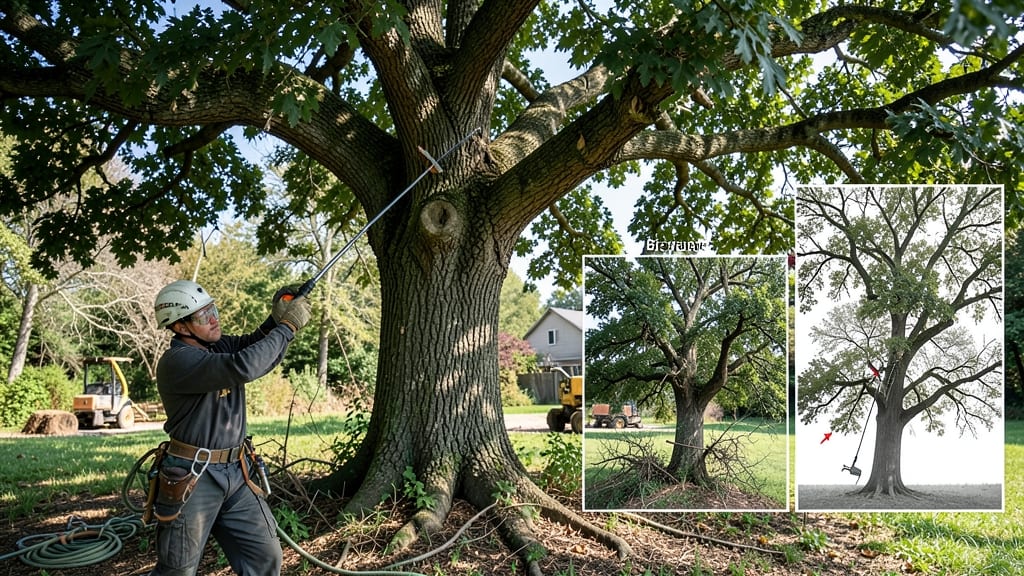
Tree lopping is important because it prevents structural damage, removes hazardous deadwood, reduces fire risks, and fosters healthier growth by optimizing airflow and sunlight penetration through the canopy. Proper pruning also minimizes safety threats from falling limbs and unstable branches.
When you skip regular lopping, trees become vulnerable to diseases that spread through open wounds, and weak branches can snap unexpectedly—especially during storms. 🌳 The right technique actually helps trees heal faster by promoting new growth at strategic points, while poor lopping can create permanent scars.
I’ve seen cases where neglected trees became fire hazards in dry seasons, or their overgrown limbs crushed cars and power lines after heavy winds.
Beyond the obvious dangers, improper lopping can turn a healthy tree into a liability. For example, topping a tree (cutting back to a stub) creates stubby regrowth that’s weak and prone to breaking. Instead, targeted cuts just above branch collars encourage stronger regrowth while maintaining the tree’s natural shape.
Many insurance claims for property damage trace back to unmaintained trees—making lopping both a safety and financial investment.
💡 In This Article
- How Tree Lopping Protects Tree Health and Longevity
- Safety Risks of Ignoring Tree Lopping: Common Hazards
How tree lopping protects tree health and longevity
Tree lopping isn't just about cutting branches—it's a precise horticultural practice that mimics natural pruning processes trees undergo. When you remove dead or diseased limbs, you're preventing pathogens like honey fungus or silver leaf disease from spreading through the tree's vascular system.
These infections can travel up to 3 feet per year if left unchecked, turning a healthy tree into a decaying structure within years.
The key is making clean cuts at the branch collar (that swollen area where the branch meets the trunk), which contains protective cells that help the wound heal faster.
Proper lopping also optimizes a tree's energy distribution. Trees allocate nutrients to their most active growth zones, and overgrown canopies force energy toward excessive foliage rather than structural support. By selectively removing branches, you redirect resources to the root system and trunk, which strengthens the tree's foundation.
For example, a 100-year-old oak with proper pruning can maintain its structural integrity for decades longer than one with neglected branches. The airflow improvements from strategic cuts reduce humidity in the canopy, creating an environment less hospitable to fungal spores that thrive in stagnant, damp air.
One critical aspect often overlooked is branch weight distribution. Heavy limbs create mechanical stress points where the branch meets the trunk, similar to how a crane's load capacity is tested at its weakest joint.
A 3-inch diameter branch can weigh 50 pounds per foot when saturated with water—enough to snap under storm conditions. Lopping removes these overloaded branches before they become hazards, while also preventing co-dominant stems (where two main trunks compete for dominance) from creating weak crotches that split during high winds.
The science of wound healing in trees reveals why technique matters. When you make a clean cut at the branch collar, the tree's natural callus tissue forms within 2-3 weeks, sealing the wound.
However, improper cuts (like topping or leaving stubs) create entry points for decay that can persist for years. Studies show trees pruned with proper techniques heal 40% faster than those with rough cuts.
This healing process is why professional arborists emphasize making cuts just outside the branch collar rather than flush against the trunk.
Consider the case of urban trees like London plane trees, which are pruned annually to maintain their structure. Without regular lopping, these trees develop dense, tangled canopies that block sunlight from lower branches, causing them to die back. The result?
A tree that looks healthy from the outside but has a hollow, decaying interior—what arborists call heart rot. This condition makes the tree structurally unsound and far more likely to fail catastrophically during storms.
The solution is targeted removal of 30-40% of the canopy every few years to maintain balance.
What most people don't realize is that lopping can actually extend a tree's lifespan by decades. A well-maintained tree like a maple or beech can live 200+ years with proper care, while neglected specimens often succumb within 50-70 years due to structural failures or disease.
The investment in regular lopping pays off in both tree health and property protection—making it one of the most cost-effective tree care practices available. 🌿