
How To
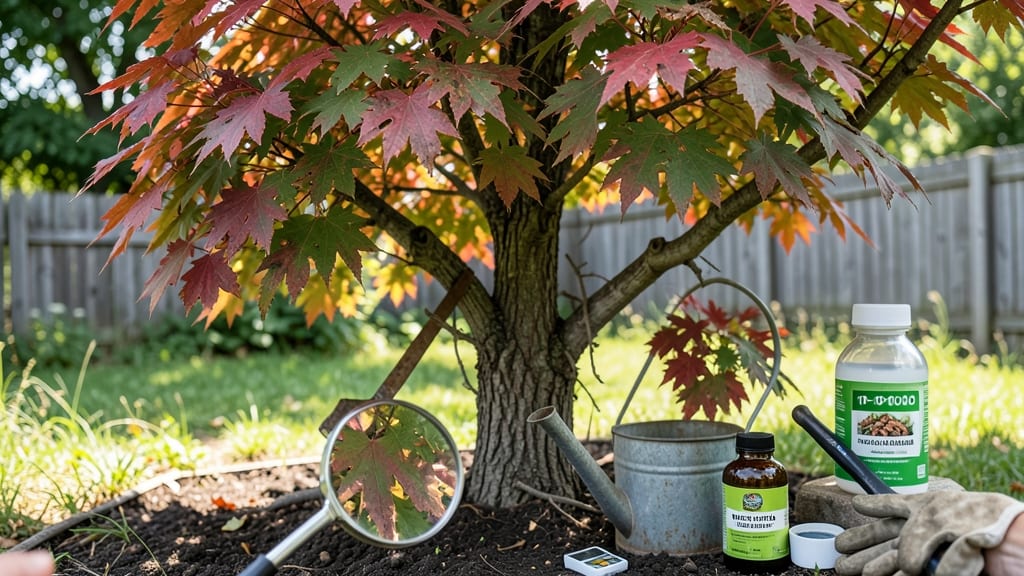
Your acer tree’s crispy brown tips on the leaves are screaming for help—and the fix is simpler than you think. 🌿 I’ve seen this problem turn into a full-blown leaf disaster when ignored, but with three targeted fixes, you’ll restore that vibrant green in no time.
The culprits? Usually overwatering, underwatering, or harsh winter winds drying out the edges. Sometimes it’s nutrient burn from too much fertilizer or salt buildup from tap water. Start by checking the soil moisture—if it’s soggy, you’re overdoing it; if it’s bone-dry, your tree’s thirsty.
Once you identify the issue, prune the damaged tips (they won’t recover) and adjust your care routine. A light mulch layer and even watering (deep but infrequent) work wonders. For extra protection, apply a foliar spray in late afternoon to lock in moisture.
This isn’t just a quick fix—it’s a long-term leaf health boost. With consistent care, your acer will bounce back stronger, and those crispy edges will be a thing of the past. Let’s get those leaves looking fresh again!
Root Causes Behind Leaf Damage
When your Acer tree starts showing brown tips on its leaves, it’s often a cry for help—whether from environmental stress, poor care, or underlying health issues. Understanding the why behind the browning is the first step to restoring your tree’s vibrant green.
Below, we break down the most common culprits, backed by science, so you can diagnose the problem like a pro.
Too much love (in the form of water) can drown your Acer tree’s roots, leading to oxygen deprivation and nutrient starvation. When roots suffocate, they can’t absorb water efficiently, causing the leaf edges to turn brown and crispy—a condition called marginal scorch.
- Why it happens: Acer trees prefer well-draining soil. If water pools around the roots (common in clay-heavy or compacted soil), root rot sets in, disrupting the tree’s ability to transport water and nutrients upward. Brown tips appear first because the leaf margins are the most sensitive to moisture stress.
- Tell-tale signs:
- Yellowing leaves (chlorosis) between brown edges.
- Mushy, dark roots when checked.
- Leaves wilting despite damp soil.
- Actionable fix:
- ✅ Test your soil: Dig 6–8 inches deep near the tree. If it’s soggy after 24 hours, drainage is the issue.
- ✅ Amend the soil: Mix in compost or perlite to improve aeration. For heavy clay, consider raised beds or mound soil around the trunk to encourage root spread.
- ✅ Adjust watering: Water deeply but only when the top 2–3 inches of soil are dry. Acer trees hate "wet feet"—they prefer consistency over constant moisture.
While overwatering is a common villain, underwatering and intense heat can also trigger brown tips, especially in Acer varieties like Acer palmatum (Japanese maple) or Acer rubrum (red maple). When soil dries out too quickly, leaves lose turgor pressure, and the edges become brittle and brown.
- Why it happens: Acer trees have shallow root systems, making them susceptible to rapid moisture loss during hot, dry spells. When transpiration (water loss through leaves) outpaces absorption, cells in the leaf margins plasmolyze (shrink and die), turning brown. High temperatures also increase oxidative stress, damaging cell membranes.
- Tell-tale signs:
- Leaves feel dry or papery to the touch.
- Brown tips spread inward if stress continues.
- Soil is bone-dry at the surface.
- Actionable fix:
- ✅ Mulch like a pro: Apply 2–4 inches of organic mulch (wood chips, straw) around the base (keep it 3–4 inches away from the trunk to prevent rot). Mulch retains moisture and regulates soil temperature.
- ✅ Water deeply and infrequently: Aim for 1–1.5 inches of water per week, delivered at the soil level (not overhead). Early morning watering reduces evaporation.
- ✅ Provide shade: If your tree is in a full-sun location, consider light shade cloth during peak afternoon heat (especially for delicate varieties like Acer japonicum).
Acer trees are hardy, but sudden temperature swings—especially late spring frosts or winter desiccation—can shock the tree into browning leaves. Cold damage often starts at the leaf edges, where cells are most vulnerable to freeze-thaw cycles.
- Why it happens: When temperatures drop below 28°F (-2°C) (varies by species), ice crystals form in leaf cells, rupturing membranes. Even winter sun (a phenomenon called winter burn) can dehydrate leaves by increasing transpiration while roots are frozen. Brown tips appear as the tree’s defense mechanism to limit further damage.
- Tell-tale signs:
- Brown edges on younger leaves (new growth is most sensitive).
- Leaves may appear crispy or papery after a freeze.
- Damage often occurs on south- or west-facing sides of the tree.
- Actionable fix:
- ✅ Protect young trees: Wrap the trunk with burlap or tree guard in late fall to shield it from winter sun and wind. For container Acers, move them to a sheltered spot.
- ✅ Avoid late-season fertilizing: Stop fertilizing by mid-summer to encourage hardier root growth before winter.
- ✅ Water before winter: Give the tree a deep soak in late fall to help roots store moisture for winter.
Brown tips aren’t always environmental—sometimes, they’re a silent battle against fungi, bacteria, or pests. Pathogens like Anthracnose or Verticillium wilt can cause leaf edges to brown and die back, while pests like spider mites or scale insects suck sap, leaving leaves dehydrated and crispy.
- Why it happens:
- Fungal diseases (e.g., Anthracnose): Thrives in wet, humid conditions, clogging leaf stomata and disrupting water uptake. Brown, irregularly shaped spots with yellow halos are classic signs.
- Bacterial leaf scorch: Caused by Xylella bacteria, which block the tree’s xylem vessels, preventing water transport. Leaves develop brown, scorched edges while staying attached.
- Pests (e.g., spider mites): Tiny mites pierce leaf cells, causing stippling and dehydration. Brown tips appear as the leaf’s last resort to conserve moisture.
- Tell-tale signs:
- ✅ Fungal signs: Dark, raised spots on leaves; infected leaves may drop prematurely.
- ✅ Bacterial signs: V-shaped brown edges; wilting despite moist soil.
- ✅ Pest signs: Fine webbing (mites), sticky residue (aphids),
Quick Fixes for Crispy Leaf Edges
Now that you know what’s causing those unsightly brown tips on your acer tree leaves, it’s time to roll up your sleeves and restore your tree’s lush, green glory! The good news? Most fixes are simple, cost-effective, and can be done in just a few steps.
Below, we’ve mapped out practical solutions tailored to each common cause—plus pro tips to keep your tree thriving long-term.
Signs: Yellowing leaves, soggy soil, brown tips, or roots sitting in water. Why it happens: Too much moisture suffocates roots, leading to stress and crispy edges.
🔥 Step 1: Check the Soil
- Stick your finger 2–3 inches deep into the soil. If it’s damp (not soaked but not dry either), hold off on watering.
- Pro tip: 🌡️ Use a moisture meter for accuracy—acer trees prefer soil that’s moist but not waterlogged.
👨🍳 Step 2: Adjust Your Watering Routine
- Water deeply but less frequently. Aim for 1–1.5 inches of water per week (including rain).
Let the top 1–2 inches of soil dry out between waterings. - Morning watering is best—it reduces evaporation and fungal risks. - For potted acers: Ensure pots have drainage holes and use a well-draining mix (like 60% soil, 30% compost, 10% perlite).
⏰ Step 3: Improve Drainage (If Needed)
- Outdoor trees: Amend heavy clay soil with organic matter (compost or peat moss) to improve aeration.
- Potted trees: Repot if roots are circling or soil compacts easily.
Add a 1-inch layer of gravel at the bottom of the pot for extra drainage.
💡 Prevention Tips
- Mulch properly: Apply 2–3 inches of mulch (wood chips or bark) around the base, but keep it 6 inches away from the trunk to prevent rot.
- Avoid watering at night—wet leaves overnight invite fungal infections.
- Watch for signs of root rot: If the trunk feels soft or mushy, prune affected roots and repot or replant immediately.
Signs: Brown, crispy edges (especially on exposed leaves), wilting, or leaves curling upward.
🍳 Step 1: Provide Shade Relief
- Young or newly planted acers need partial shade (especially in hot afternoons).
Use light shade cloth (30–50%) or plant near taller trees/shrubs for natural protection. - Mature trees: If brown tips appear on south- or west-facing branches, consider pruning back aggressive growth to reduce sun exposure.
🌿 Step 2: Hydrate Strategically
- Deep watering (as above) helps leaves retain moisture. Aim for early morning or late evening watering to minimize evaporation.
- Mist leaves on extremely hot days (but avoid doing this at night to prevent fungal growth).
🎯 Step 3: Protect with Mulch and Fertilizer
- Mulch heavily (3–4 inches) to retain soil moisture and regulate temperature.
- Fertilize lightly in spring with a balanced, slow-release fertilizer (10-10-10) to boost resilience. Avoid high-nitrogen fertilizers—they can stress the tree further.
✨ Prevention Tips
- Choose the right location: When planting, pick a spot with dappled shade (like under a canopy or near a building with partial shade).
- Group plants together to create a microclimate that retains moisture.
- Use reflective mulch (like white gravel) around the base to bounce back some sunlight and reduce heat stress.
Signs: Brown tips with black spots, yellowing, or a powdery/moldy texture on leaves.
🔪 Step 1: Identify the Culprit
- Powdery mildew: White, powdery coating on leaves.
- Anthracnose: Dark, sunken spots with yellow halos.
- Bacterial leaf spot: Water-soaked brown spots with yellow edges.
👨🍳 Step 2: Prune and Clean Up
- Remove affected leaves (wear gloves!) and sterilize pruners with rubbing alcohol between cuts.
- Rake up fallen leaves and dispose of them in the trash (don’t compost infected plant matter).
🥘 Step 3: Apply Fungicide or Bacterial Spray
- For powdery mildew: Spray with neem oil (1 tsp per quart of water) or baking soda solution (1 tbsp baking soda + 1 tsp soap + 1 gallon water).
Reapply every 7–10 days. - For anthracnose/bacterial issues: Use a copper fungicide (like Copper Soap) or organic option like Serenade Garden Disease Control. - Preventative spray: Apply fungicide in early spring before new growth appears.
💡 Prevention Tips
- Water at the base (avoid overhead sprinkling).
- Improve air circulation by pruning dense branches and spacing plants properly.
- Avoid wetting leaves when watering—use drip irrigation or soaker hoses.
- Plant resistant varieties (like Japanese Maple ‘Bloodgood’) if fungal issues are recurrent.
Final Thought: 🌱 Most acer trees recover quickly once the stressor is removed. Monitor your tree’s progress, and don’t hesitate to adjust care as needed. With a little TLC, those brown tips will fade, and your tree will be back to its vibrant best in no time!
Frequently asked questions
Why do my acer tree leaves only get brown tips instead of turning completely brown?
Brown tips on acer leaves typically appear first because the leaf margins are the most sensitive to moisture stress, nutrient deficiencies, or environmental damage. The center of the leaf often stays green because it receives more direct nutrients from the tree’s vascular system. This pattern is common with underwatering, overwatering, or salt buildup from tap water.
Can I save my acer tree if the brown tips spread to half the leaf?
Yes, but act fast! If brown tips cover more than 30% of the leaf, those leaves won’t recover. Prune them off to redirect the tree’s energy to healthier growth. Focus on fixing the root cause—whether it’s watering habits, soil drainage, or pest control4-6 weeks.
Is it safe to use tap water for my acer tree if I suspect salt buildup?
Tap water can contribute to brown tips due to chlorine and mineral salts that accumulate in the soil. For sensitive acer varieties, use rainwater or filtered water instead. If you must use tap water, flush the soil with extra water every 2-3 waterings to leach out excess salts. Mulching also helps regulate soil chemistry.
How do I tell if my acer tree’s brown tips are from pests vs. environmental stress?
Check for tiny webs, sticky residue, or holes on leaves—these indicate pests like spider mites or aphids. Environmental stress usually shows as uniform browning without visible insects. Hold a white sheet under leaves and shake branches: falling pests confirm an infestation. For pests, use neem oil or insecticidal soap.
Will pruning brown-tipped leaves help my acer tree recover faster?
Pruning removes the energy drain from damaged leaves, allowing the tree to focus on new, healthy growth. Use clean, sharp pruners to cut just above the leaf node (where the leaf meets the stem). For severe cases, remove up to 20% of affected foliage—this triggers faster regrowth. Always sterilize tools with rubbing alcohol between cuts.