
Pruning
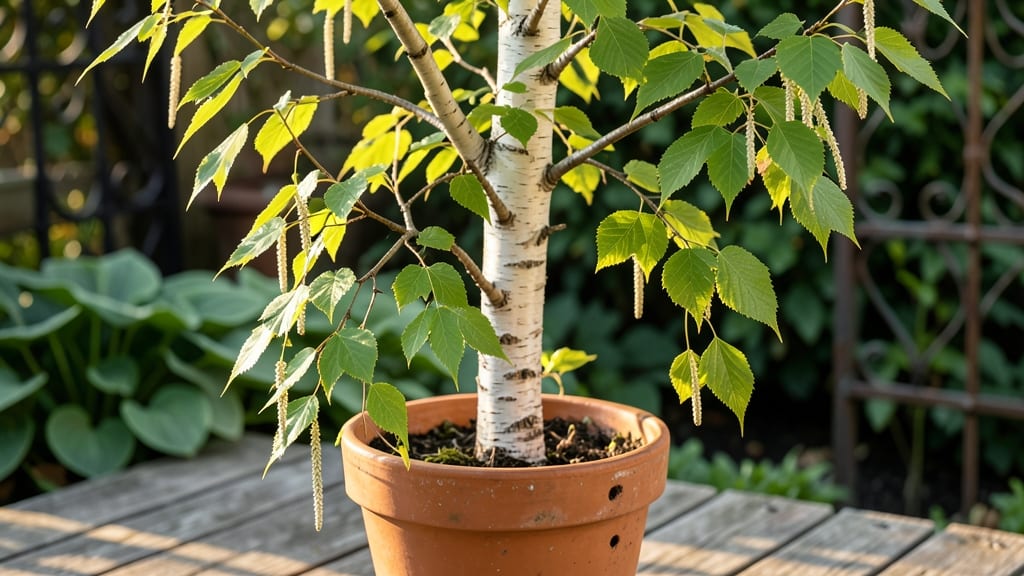
A birch tree in a pot transforms your patio into a miniature forest. 🌿 The trick is choosing the right variety—dwarf paper birch or yellow birch thrive in containers, while their in-ground cousins sprawl.
I’ve grown mine for three years now, and the secret lies in soil, drainage, and pruning to keep roots happy without letting them escape.
Start with a 15-20 gallon container (larger for mature trees) and fast-draining soil mix—birches hate soggy feet. Add perlite or coarse sand to prevent root rot, and drill drainage holes if your pot doesn’t have them.
Sunlight needs vary by type: yellow birch loves full sun, while paper birch tolerates partial shade. Water deeply when the top inch of soil feels dry, but never let it sit in water.
By summer, your birch will reward you with delicate foliage and peeling bark—the signature birch charm. Prune in late winter to shape the tree and remove dead branches, but avoid heavy cuts that stress roots.
Root-binding is the biggest challenge; repot every 2-3 years to refresh soil and prevent circling roots. With the right care, your potted birch can live for decades, becoming a living centerpiece.
For city balconies or small yards, this is the only way to grow birch—no yard required. Just remember: drainage is non-negotiable, and mulch helps retain moisture. Skip the cheap pots, and your birch will thank you with vibrant growth year after year.
📚 In This Guide
- What you need
- Instructions
- Tips and common mistakes
- Wrapping up and next steps
What you need
- ● Pot: A container with drainage holes (minimum 12-inch diameter for dwarf varieties, 16-inch+ for standard birch). Terracotta or ceramic works best for airflow.
- ● Potting Mix: 3 parts high-quality potting soil + 1 part perlite or sand for drainage (avoid garden soil—it compacts!).
- ● Birch Sapling: Choose a young birch tree (preferably Betula pendula or Betula papyrifera for compact growth). Nursery-grown saplings (3–5 ft tall) adapt best to pots.
- ● Pruning Tools: Bypass pruners (for clean cuts on branches ½-inch thick)
- ● Loppers (for thicker branches, if needed)
- ● Sharp pruning saw (for stubborn stems)
- ● Mulch: Organic mulch (e.g., shredded bark) to retain moisture and regulate soil temperature.
- ● Drainage Layer: 2–3 inches of small gravel or expanded clay pebbles at the pot’s base.
- ● Watering Can: With a rose attachment for gentle, deep watering.
- ● Fertilizer: Slow-release balanced fertilizer (10-10-10) or organic options like composted manure (apply spring and early summer).
- ● Root Stimulator: Mycorrhizal fungi or a rooting hormone to boost early growth.
- ● Support Stake: A bamboo stake or spiral tie for young trees in windy areas.
- ● Misting Bottle: To keep leaves hydrated in dry climates.
- ● Pot Feet: Elevate pots slightly to improve drainage and airflow.
Step-by-step guide to growing a birch tree in a pot
Here's how to keep a stunning birch tree thriving in containers year after year.
🪴 Step 1: Choose the Right Container and Drainage
Birch trees need room to grow, so select a large container—at least 24 inches deep and wide for mature trees. I recommend fiberglass or plastic pots because they retain moisture better than terra cotta, which dries out too quickly. Make sure it has multiple drainage holes at the bottom to prevent root rot.
If your pot lacks drainage, drill ¼-inch holes along the bottom using a power drill. Line the pot with landscape fabric to keep soil from washing out while still allowing water to escape. This is especially important for birch trees, which hate soggy roots.
🌱 Step 2: Prepare the Soil Mix for Optimal Growth
Birch trees prefer well-draining, slightly acidic soil with a pH between 5.0 and 6.5. Mix two-thirds high-quality potting soil with one-third perlite or coarse sand to improve drainage. Avoid garden soil—it compacts in containers and suffocates roots.
Fill the pot ⅓ full with your soil mix, then tap the container gently to settle it. Birch trees have shallow but wide-spreading roots, so a loose, airy mix encourages healthy growth. Add a slow-release fertilizer (like 10-10-10) mixed into the soil to give your tree a nutrient boost right from the start.
☀️ Step 3: Plant the Birch Tree and Ensure Proper Light
Gently remove the birch tree from its nursery pot and loosen the roots if they’re circling. Place it in the center of your container and backfill with soil, pressing lightly to remove air pockets. Leave 2 inches of space between the soil surface and the pot’s rim for watering.
Birch trees love full sun—at least 6 hours of direct light daily. Position your pot in a south-facing spot or under a large shade tree that still allows dappled sunlight. If growing indoors, place it near a south- or west-facing window and supplement with a grow light for 12-14 hours a day during winter.
💧 Step 4: Water and Maintain Moisture Without Overdoing It
Water deeply once a week in warm months, allowing water to run through the drainage holes. In summer, you may need to water every 3-4 days, especially if the pot feels light when lifted. Birch trees hate dry soil but also dislike sitting in water—let the top 2 inches dry out between waterings.
Mulch the soil surface with 2 inches of pine bark or straw to retain moisture and regulate temperature. Avoid mulching too close to the trunk—keep it 3 inches away to prevent rot. In winter, reduce watering to every 2-3 weeks unless the pot feels dry.
✂️ Step 5: Prune and Fertilize for Healthy Growth
Prune your birch tree in late winter or early spring before new growth begins. Remove dead, diseased, or crossing branches with clean, sharp pruners. Thin out 10-20% of the canopy to improve airflow and light penetration. Birch trees respond well to pruning, so don’t be afraid to shape them—just avoid heavy pruning in summer, which stresses the tree.
Fertilize twice a year: once in early spring and again in mid-summer. Use a balanced, slow-release fertilizer (like 10-10-10) at half the recommended strength to avoid burning roots. Birch trees are sensitive to over-fertilization, so less is more. Always water the tree 24 hours before and after fertilizing to help it absorb nutrients safely.
Tips & tricks for perfect birch tree container growth
Real talk: Container-grown birch trees need extra TLC to thrive. Here are the secrets I've learned after watching my own birch struggle—and then flourish—over the years.
Container Size Matters: That 24-inch minimum depth isn't just a suggestion—it's a must. Birch roots spread wide but shallow, and cramped spaces cause stress. If you're working with a smaller pot, consider a dwarf variety like 'Fastigiata' or 'Youngii' that naturally stays compact. I've seen birches in 18-inch pots thrive when planted with these varieties, though growth will be slower.
Soil Science: The two-thirds potting soil to one-third perlite mix is non-negotiable for drainage, but here's what nobody tells you—test that soil pH. Birch trees are fussy about their acidity (5.0-6.5 range). If your tap water is alkaline, add a handful of peat moss to the mix to buffer it. I use a simple pH test kit from the garden center—it's cheap insurance against stunted growth.
Light Strategy: That 6 hours of direct sun is your baseline, but winter's the real test. If you're growing indoors, position your tree within 3 feet of the window (south- or west-facing). For extra insurance, I supplement with a 12-inch grow light on a timer during cloudy days. The key is consistency—birch trees notice when light changes, and they'll drop leaves if they feel neglected.
Watering Wisdom: The "let top 2 inches dry" rule is solid, but here's my pro move: Use a moisture meter. Stick it in the soil—when it reads dry at 2 inches deep, that's your watering cue. I've caught many a birch owner over- or under-watering because they're guessing. And in winter? Check the pot's weight—if it feels light, water even if it's only been 3 weeks.
Pro Tips for Birch Tree In Pot
- Real talk: Container-grown birch trees need extra TLC to thrive.
- Container Size Matters: That 24-inch minimum depth isn't just a suggestion—it's a must.
- Soil Science: The two-thirds potting soil to one-third perlite mix is non-negotiable for drainage, but here's what nobody tells you—test that soil pH.
Frequently asked questions
Got questions about growing a birch tree in a pot? You’re not alone! Here are some of the most common concerns—and their simple solutions—to help you nurture your compact beauty with confidence.
How often should I water a potted birch tree?
A potted birch tree needs consistent moisture but hates soggy roots. Water when the top 1–2 inches of soil feel dry (usually every 5–7 days, more in summer or hot climates). Use well-draining soil and a pot with drainage holes to prevent root rot. Pro tip: Water deeply until it drains from the bottom—this encourages stronger roots!
Can I keep a birch tree in a pot long-term?
While birch trees are adaptable, they’ll need repotting every 2–3 years to accommodate growth. Choose a container 10–12 inches larger in diameter and refresh the soil annually. For dwarf varieties (like Betula pendula ‘Fastigiata’), a pot can work for decades—but monitor root health and prune aggressively to control size.
Do potted birch trees need winter protection?
Yes! Birch trees are cold-hardy but vulnerable to winter burn or root freeze in pots. Move your tree to a sheltered spot (like a garage or under an eave) when temps drop below 10°F. Wrap the pot in bubble wrap and mulch the soil with straw or pine needles. Pro tip: Avoid placing pots directly on frozen ground—use a pot stand for airflow!
What’s the best soil mix for a potted birch tree?
Birch trees thrive in well-aerated, slightly acidic soil (pH 5.0–6.5). Mix 50% potting soil, 30% perlite or sand, and 20% compost for drainage and nutrients. Avoid heavy garden soil—it compacts and suffocates roots. Bonus: Add a handful of worm castings at planting for a nutrient boost!
Why are my birch tree’s leaves turning yellow?
Yellow leaves usually signal overwatering, poor drainage, or nutrient deficiency. Check the soil moisture and ensure your pot has drainage holes. If the problem persists, flush the soil with water to remove salts, then fertilize lightly with a balanced, slow-release fertilizer (like 10-10-10). Pro tip: Yellowing on older leaves? It’s likely normal aging—but new leaves turning yellow? Act fast!
What’s a good alternative to a birch tree for small pots?
If birch trees seem too high-maintenance, try these low-maintenance, compact alternatives:
- Japanese Maple (Acer palmatum) – Stunning foliage, slow-growing.
- Dwarf Willow (Salix caprea ‘Pendula’) – Graceful weeping habit.
- Crepe Myrtle (Lagerstroemia ‘Natchez’) – Drought-tolerant and colorful.
- Ornamental Grass (Carex oshimensis) – Ultra-low maintenance, textural appeal.
All love pots and add year-round interest!
Wrapping up and next steps
Growing a birch tree in a pot is a fantastic way to bring nature’s elegance into small spaces—whether you’re a seasoned gardener or a beginner!
With the right container, soil, and care, you can enjoy its delicate foliage and striking bark year after year. Remember, patience and consistency are key—your little birch will reward you with beauty and serenity.
Ready to take the next step? Start small—choose your pot, gather supplies, and give your birch tree the love it deserves. Explore more tips or share your progress with fellow plant enthusiasts! 🌿✨