
Pruning
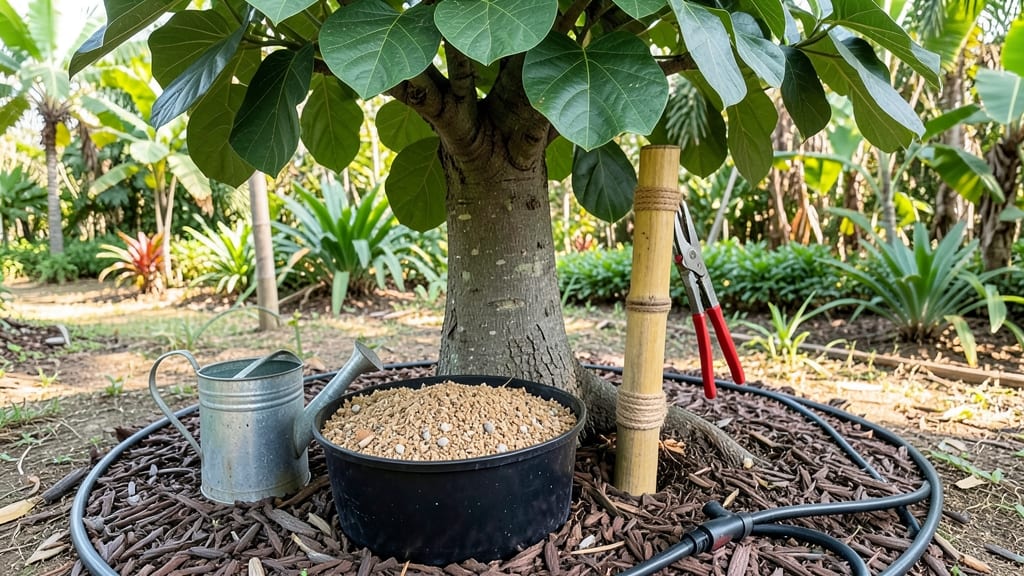
Caring for a breadfruit tree transforms your yard into a tropical oasis 🌿—but only if you nail the basics. I’ve nurtured these giants for years, and the secret to their lush, year-round canopies lies in understanding their tropical roots, even if you’re not in Hawaii or the Caribbean.
These trees aren’t fussy, but they do demand consistency in water, soil, and pruning—or you’ll end up with sparse branches and bitter fruit.
Start with well-draining, slightly acidic soil (think 6.0–7.0 pH) mixed with compost, and water deeply 2–3 times a week once established—drought stress shows up fast. Prune strategically in late winter to shape the tree and encourage new growth, but avoid heavy cuts that weaken the trunk.
The real magic happens when you let the tree mature: a well-cared-for breadfruit can produce hundreds of pounds of fruit annually for decades.
Pests like mealybugs or fruit flies are the biggest threats, but a neem oil spray or introducing ladybugs keeps them in check. Harvest when the fruit turns yellow-green and yields slightly to pressure—ripe breadfruit is starchy, not sweet, and cooks up like a potato.
The best part? These trees thrive in USDA zones 10–12, but with the right microclimate (warmth + humidity), you can grow them in containers even in cooler areas.
Here’s the kicker: breadfruit trees are self-pollinating, so you don’t need a second tree for fruit. Once you’ve mastered the basics, propagation becomes the fun part—whether you’re air-layering branches or growing from seed (though seedlings take 5–10 years to bear fruit).
Start small, stay patient, and soon you’ll have a towering, productive tree that feeds your family and your soul.
📚 In This Guide
- What you need
- Instructions
- Tips and common mistakes
- Wrapping up and next steps
What you need
- ● Pruning shears – Sharp, bypass-style (8-10" blade length) for clean cuts on small branches.
- ● Loppers – Heavy-duty, ratcheting or bypass (16-24" blade) for thicker branches (1-2" diameter).
- ● Pruning saw – Curved-tooth (10-12" blade) for branches too thick for loppers (2"+ diameter).
- ● Disinfectant – 70% isopropyl alcohol or bleach solution (1:9 ratio) to sterilize tools between cuts.
- ● Gloves – Cut-resistant (gardening or pruning gloves) to protect hands from thorns and sap.
- ● Rope or twine – 3/8" nylon (20-30 ft roll) for securing heavy branches during pruning.
- ● Compost or mulch – Organic matter (shredded leaves, wood chips) to replenish soil post-pruning (5-10 gallons).
- ● Watering can or hose – For post-pruning hydration (1-2 gallons per tree).
- ● Extension pole – 3-6 ft for hard-to-reach branches (saves your back!).
- ○ Tree wound dressing – Pruning sealant (optional; some gardeners skip this for tropical trees).
- ● Safety glasses – To shield eyes from debris (always a good idea!).
- ● Notebook & pen – To sketch your tree’s structure before/after pruning.
- ● Fertilizer (balanced, 10-10-10 or citrus-specific) – 1 lb for post-pruning feeding.
Step-by-Step guide to year-round breadfruit tree care
Here’s how I keep my breadfruit trees thriving through every season—no winter dormancy required.
🌱 Step 1: Establish Proper Planting and Soil Conditions
Breadfruit trees need well-draining, nutrient-rich soil with a pH of 6.0-7.5. I always mix equal parts compost and native soil to ensure organic matter and aeration. The hole should be twice as wide as the root ball but only as deep—planting too deep suffocates roots and causes stress.
Gently loosen the roots if they’re pot-bound before placing the tree in the hole. Backfill with soil while watering deeply to eliminate air pockets. Mulch with 2-3 inches of organic mulch (like wood chips) around the base, keeping it 6 inches away from the trunk to prevent rot. This mimics the tree’s native tropical environment and retains moisture year-round.
☀️ Step 2: Optimize Light and Water for Tropical Growth
Breadfruit thrives in full sun (6+ hours daily), but young trees benefit from gradual exposure. If planting in hot climates, provide partial shade for the first 2-3 weeks to prevent leaf scorch. Mature trees handle full sun beautifully once established.
Water deeply 2-3 times per week during the first year, ensuring the soil stays moist but not waterlogged. After establishment, reduce to 1-2 times weekly, checking that the top 6 inches of soil dry out slightly between waterings. Overwatering is the fastest way to kill a breadfruit tree—always prioritize drainage.
✂️ Step 3: Prune Strategically for Shape and Fruit Production
Prune in late winter or early spring to shape the tree and encourage fruiting. Remove any dead, diseased, or crossing branches first—these compete with healthy growth. I also cut back 10-20% of the canopy to improve air circulation and sunlight penetration, which boosts fruit set.
Never prune more than 25% of the canopy at once, or you’ll shock the tree. Use sterilized pruners to make clean cuts just above a leaf node. The goal is an open, vase-like shape that lets light reach all branches—this is key for heavy fruit production.
💧 Step 4: Fertilize for Year-Round Vigorous Growth
Feed your breadfruit tree with a balanced, slow-release fertilizer (10-10-10 or 8-3-9) every 3 months during the growing season. I apply half the recommended dose in early spring, then again in summer and fall. Avoid high-nitrogen fertilizers—they promote leafy growth at the expense of fruit.
In late winter, add a potassium-rich fertilizer (0-0-50) to support root health and disease resistance. Always water the soil thoroughly before and after applying fertilizer to prevent root burn. A healthy tree will show glossy leaves and steady new growth—this is your sign the fertilization routine is working.
🪴 Step 5: Monitor for Pests and Diseases Proactively
Breadfruit trees are generally pest-resistant, but watch for scale insects, mealybugs, or aphids on new growth. I inspect leaves weekly during warm months and treat infestations immediately with neem oil or insecticidal soap. Never let pests establish—they weaken the tree and reduce fruit quality.
Fungal diseases like root rot or leaf spot thrive in stagnant water, so always ensure proper drainage. If you notice yellowing leaves or wilting, check the roots for rot and improve aeration by amending the soil with perlite or sand. A proactive approach keeps your tree strong and productive for decades.
Tips & tricks for year-round breadfruit tree care
A few key insights that'll transform your breadfruit tree from struggling to spectacularly productive.
Soil Science: When mixing equal parts compost and native soil in Step 1, don't skimp on the compost quality. I use well-aged, composted cow manure or finished compost with a rich, earthy smell—this ensures proper microbial activity that tropical trees thrive on. If your soil tests below pH 6.0, add pulverized limestone gradually over several months to avoid shocking the roots. The goal is that perfect 6.0-7.5 range where nutrients become available.
Watering Wisdom: The 2-3 times weekly watering schedule in Step 2 works best when you water deeply—aim for 1-2 inches of water per session. I use a rain gauge to track this because breadfruit trees hate surface moisture. For containers, ensure drainage holes are present and water until it flows freely from the bottom. The top 6 inches drying slightly between waterings is your cue that roots are developing properly.
Pruning Precision: When cutting back 10-20% of the canopy in Step 3, focus on removing branches that grow inward or upward. These compete for sunlight and weaken the tree's structural integrity. Always make cuts just above a leaf node where new growth will emerge. I mark branches to remove with flagging tape before pruning—this helps visualize the open vase shape you're aiming for while preventing accidental cuts.
Fertilizer Timing: The 3-month fertilization schedule in Step 4 is ideal, but timing matters. Apply spring fertilizer when you see new leaf growth appearing, summer fertilizer when fruit begins to form, and fall fertilizer when leaves start turning darker green. This aligns nutrient delivery with the tree's natural growth cycles. For potassium in late winter, I mix it with a bit of molasses (1 tablespoon per gallon of water) to stimulate beneficial microbial activity in the soil.
Pro Tips for Breadfruit Tree Care
- A few key insights that'll transform your breadfruit tree from struggling to spectacularly productive.
- Soil Science: When mixing equal parts compost and native soil in Step 1, don't skimp on the compost quality.
- Watering Wisdom: The 2-3 times weekly watering schedule in Step 2 works best when you water deeply—aim for 1-2 inches of water per session.
Frequently asked questions
How often should I prune my breadfruit tree?
Prune your breadfruit tree once a year during its dormant season (late winter or early spring). Light trimming to remove dead or overcrowded branches can happen anytime, but major pruning should align with new growth cycles. Avoid heavy pruning in summer—it stresses the tree!
Can I prune too much? What are the signs?
Yes! Over-pruning weakens the tree, leading to fewer fruits, stunted growth, or even death. Signs include yellowing leaves, sparse foliage, or no new shoots. If this happens, reduce pruning and focus on fertilizing and watering to recover.
Will pruning affect fruit production?
Pruning boosts fruit quality by improving airflow and sunlight exposure. However, avoid cutting back more than 25% of the canopy at once. Heavy pruning can delay fruiting for a season. For best results, prioritize shaping and thinning branches over aggressive cuts.
Do I need special tools for breadfruit pruning?
Basic tools like sharp pruning shears, loppers, and a pruning saw work well. For larger branches, a pole saw or chainsaw may be needed. Always sterilize tools with rubbing alcohol between cuts to prevent disease. Gloves are a must—breadfruit thorns are sharp!
What if my tree isn’t fruiting after pruning?
If your breadfruit tree isn’t producing, check these factors:
- Age: Trees need 3–5 years to bear fruit.
- Pollination: Breadfruit is self-pollinating, but cross-pollination helps. Plant multiple trees nearby.
- Nutrients: Test soil for potassium and phosphorus—key for fruiting.
- Climate: Ensure it’s in a warm, tropical zone (USDA 10–12) with no frost.
Wrapping up and next steps
Caring for your breadfruit tree is a rewarding journey that yields delicious fruit and stunning foliage year-round! 🌿 With the right tools, pruning techniques, and a little patience, you’ll enjoy a thriving canopy that keeps growing stronger.
Whether you’re trimming for shape, health, or harvest, remember that consistency is key—your tree will thank you with bountiful rewards.
Ready to take the next step? Start small—pick one pruning task this week, like removing dead branches or thinning the canopy, and observe how your tree responds. Soon, you’ll be a breadfruit pruning pro! 🌟