Trees
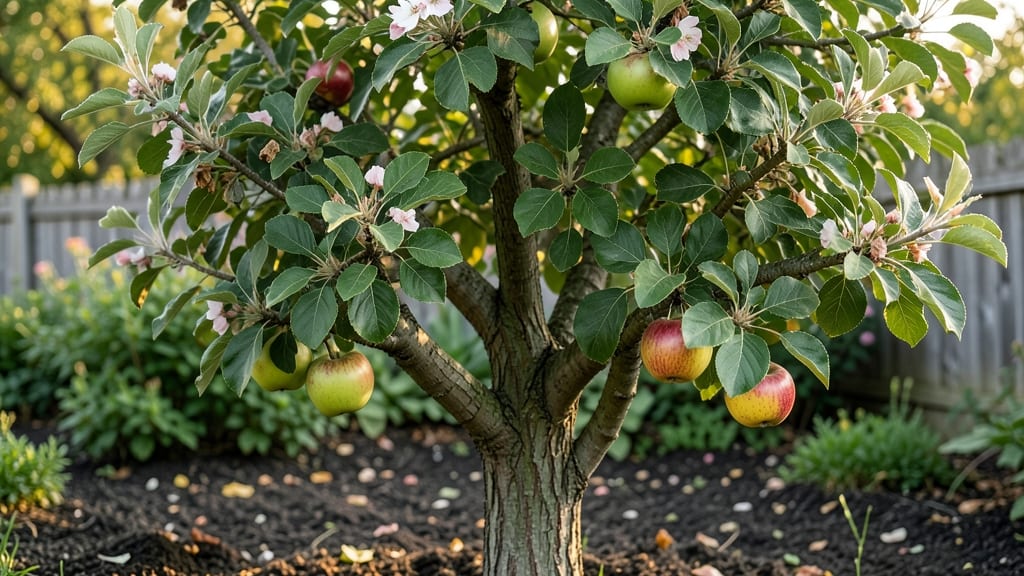
Yes, one apple tree can produce fruit if it's a self-pollinating variety or has compatible pollen sources nearby, though cross-pollination often yields larger, sweeter fruit. Some cultivars, like 'Anna' or 'Golden Delicious,' thrive alone, while others need a second tree for optimal yields.
Apple trees that can fruit alone do so because their flowers contain both male and female reproductive parts, allowing them to self-pollinate. 🌸 However, the fruit quality often improves when bees or wind carry pollen from a different tree—this process creates genetic diversity that enhances sweetness and size.
If you're planting just one tree, choosing a self-fertile variety like 'Liberty' or 'Enterprise' ensures you'll still get a harvest, though yields may be smaller than with cross-pollination. The key is understanding your tree's specific needs before planting.
Even self-pollinating trees benefit from nearby pollinators like bees, which improve fruit set. For best results, plant your tree in full sun with well-draining soil and prune regularly to encourage strong growth. Some varieties, like 'Golden Delicious,' can produce fruit alone but may have reduced yields without a pollination partner.
💡 In This Article
- How Apple Tree Pollination Works for Solo Fruiting
- Best Self-Pollinating Apple Tree Varieties for Home Gardens
How apple tree pollination works for solo fruiting
Apple trees produce fruit through a fascinating biological process where pollen must fertilize the flower's ovules. Trees that can fruit alone—called self-pollinating or self-fertile—have flowers containing both male (pollen-producing) and female (ovule-containing) parts.
When pollen from the same tree's flowers lands on the stigma, fertilization occurs, leading to fruit development. This process relies on either wind or insects like bees to transfer pollen between flowers on the same tree.
The magic happens at the genetic level: self-fertile varieties have compatible genes that allow pollen to successfully fertilize ovules without rejection. For example, the 'Anna' apple tree thrives alone because its pollen and ovules share the necessary genetic markers for compatibility.
In contrast, cross-pollinated varieties like 'Fuji' require pollen from a different tree to trigger fruit development, as their genetic makeup prevents self-fertilization. This is why you'll often see orchards planted with multiple apple varieties—each tree's pollen complements another's.
Bees play a crucial role in this process, even for self-pollinating trees. While wind can carry pollen, bees are far more efficient, increasing the chances of successful fertilization by up to 30-50% compared to wind alone.
A single bee visit can transfer pollen from multiple flowers, boosting fruit set. 🌸 The result? Larger, sweeter apples with fewer deformities. Without pollinators, even self-fertile trees may produce smaller yields or misshapen fruit due to incomplete fertilization.
Temperature and timing also matter. Apple blossoms typically open in spring when daytime temperatures reach 55-65°F, and bees are most active between 10 AM and 4 PM. Cold snaps or rain during bloom can reduce pollinator activity, directly impacting fruit production.
This is why gardeners in colder climates often see better yields in warmer springs—more pollinator activity means more successful pollination events.
Here’s what happens when cross-pollination occurs: pollen from one tree lands on the stigma of a different variety, creating genetic diversity in the offspring. This diversity often results in apples that are 20-30% larger and sweeter than those from self-pollination alone.
For instance, a 'Gala' tree paired with a 'Honeycrisp' tree might produce fruit with the best traits of both—juicier flesh and a balanced sugar-acid ratio. Without this cross-pollination, the fruit may still form but lack these desirable qualities.
For home gardeners, understanding these mechanisms means you can strategically choose trees that fit your space and goals. If you only have room for one tree, opt for a self-fertile variety like 'Enterprise' or 'Dorsett Golden'.
But if you can plant two or more, pair them with complementary varieties to maximize both quantity and quality. The key is balancing convenience with the natural biology of apple trees.