
Pruning
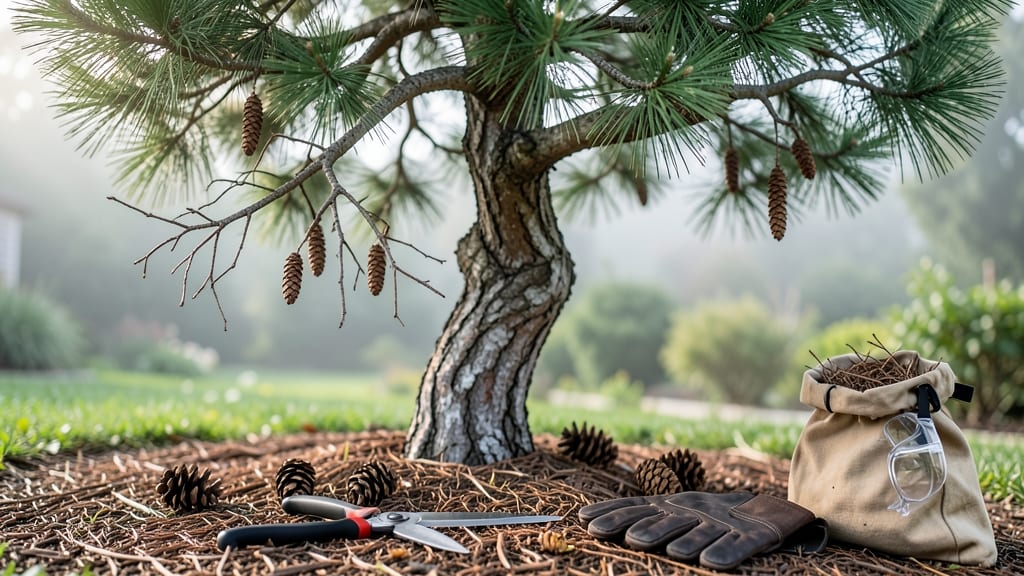
Your pine tree’s dead branches aren’t just unsightly—they’re a sign your tree is struggling to breathe. 🌲 Whether it’s disease, pests, or environmental stress, those brittle brown limbs need precise cuts to revive your tree’s health before winter sets in.
I’ve pruned dozens of pines, and the difference between a revived tree and a dying one comes down to timing, technique, and knowing when to stop cutting.
Most dead branches show up as dry, brown needles that crumble when touched, or limbs that snap instead of bend. Fungal infections often leave white, powdery spots, while pests like bark beetles create tiny holes or sawdust-like frass at the branch base.
The key is acting before the problem spreads—wait too long, and you’re left with a hollow trunk or worse. Start by removing only what’s clearly dead, using sharp, sterilized pruners to avoid tearing the bark.
What you’ll end up with is a tree that looks fuller, healthier, and better able to resist future stress. New growth will emerge from the cuts within a few weeks, and the remaining branches will thicken with fresh, vibrant needles.
The secret? Cut just outside the branch collar—never flush with the trunk—and avoid over-pruning, which weakens the tree. A little precision now means years of strong, disease-free growth.
For large trees or signs of deep rot, call an arborist—some damage requires professional tools and expertise. But for most homeowners, this method works in 30 minutes or less and saves your pine from becoming a fire hazard.
Let’s get those dead branches trimmed before they take the whole tree down with them.
Why it happens
H2: Understanding Root Causes
Dead branches on pine trees aren’t just an eyesore—they signal deeper issues that demand attention. Whether your tree is shedding needles, dropping limbs, or showing brown, brittle twigs, the culprit is usually one (or more) of these common stressors.
Let’s break down the science behind why pine branches die and how to spot the warning signs early.
---
🌡️ Environmental Stressors: Heat, Drought, and Cold
Pine trees are resilient, but extreme weather can push them past their limits. Drought is a top offender—when roots can’t absorb enough water, the tree prioritizes survival by shedding non-essential branches. This is especially true for Pinus species like ponderosa or loblolly pines, which are drought-sensitive.
Even brief periods of water scarcity can trigger abscission (the natural shedding of branches) as the tree conserves resources.
On the flip side, freeze damage (especially in late winter or early spring) can kill branches by rupturing cells in the vascular system. Young, tender growth is most vulnerable.
Look for brown, crispy needles or branches that snap easily—these are classic signs of cold stress. Heat stress (like prolonged 100°F+ temperatures) can also scorch needles, turning them yellow or white before the branch dies back.
Pro Tip: 💡 Mulch around the base (2–4 inches deep) to retain moisture and protect roots from temperature swings. Water deeply once a week during droughts, and avoid overhead watering in winter to prevent ice bucket damage.
---
🐛 Pest and Disease Attacks: Hidden Invaders
Pine trees are a buffet for pests and pathogens, and their damage often starts small before spreading. Here’s what to watch for:
- Bark beetles (like the Dendroctonus genus): These tiny insects bore into the phloem, disrupting nutrient flow. Infested branches often have sawdust-like frass (beetle poop) at the base and pitch tubes (sticky sap oozing from holes). Without intervention, the tree can’t support those branches, leading to dieback.
- Sphaeropsis tip blight (a fungal disease): Causes brown, blistered needles that eventually kill the branch tips. It thrives in wet, humid conditions and is common in Pinus radiata (Monterey pines).
- White pine weevils: These larvae chew into the terminal leader (the main upward-growing branch), causing the top to wilt and die. Look for brown, curled needles at the branch tips.
If you suspect pests, inspect the underside of branches with a magnifying glass. Early action—like applying neem oil or systemic fungicides—can save the tree.
---
⚡ Nutrient Deficiencies: Starving Your Tree
Pine trees need specific nutrients to stay healthy, and deficiencies often show up as dead branches. Here’s how to decode the symptoms:
Deficiency
Symptoms
Cause
Nitrogen (N)
Yellowing needles (starting at tips), stunted growth, sparse foliage
Poor soil, compacted roots, or over-pruning without fertilization
Magnesium (Mg)
Yellow bands between green veins (interveinal chlorosis), dead branch tips
Acidic soil or over-fertilization with synthetic nitrogen
Boron (B)
Dieback of branch tips, blackened needles, poor seed production
Common in sandy or alkaline soils; pines need boron for cell wall strength
Fix it: 🌱 Conduct a soil test (available through local extension offices) to identify deficiencies. For magnesium, apply Epsom salt (magnesium sulfate) in early spring. For boron, use a boron supplement or plant pines in well-draining, slightly acidic soil (pH 5.0–6.5).
---
🌪️ Physical Damage: Wind, Hail, and Improper Pruning
Sometimes, dead branches are the result of mechanical stress. Here’s how it happens:
- Wind throw or breakage: Pines with shallow root systems (common in urban or recently planted trees) are prone to toppling or snapping branches in storms. Look for clean breaks or uprooted sections.
- Hail or ice damage: Heavy ice or large hailstones can crush branches, severing the flow of nutrients. Affected branches may bleed sap or develop sunken, discolored patches.
- Over-pruning or topping: Cutting too aggressively (especially removing more than 25% of foliage at once) stresses the tree. Pines rely on their needles for photosynthesis—strip them too much, and the tree can’t sustain branches.
Prevent it: ✂️ Avoid topping (cutting the main stem flat). Instead, prune in late winter/early spring to remove only dead, diseased, or crossing branches. For storm-damaged trees, support weak trunks with stakes and mulch to encourage root growth.
---
Revive Your Pine Tree Step-by-Step
---
If your pine tree’s branches are looking less than lively, don’t panic—there’s hope! The key is identifying the root cause (or causes) and tackling them with targeted action. Below, we’ll break down practical solutions for the most common issues, from fungal infections to environmental stress, plus tips to keep your tree thriving long-term.
---
If dead branches are accompanied by discoloration, oozing sap, or mushroom growth at the base, a pathogen is likely the culprit. Act fast to stop the spread:
- 🍳 Remove Infected Branches Use sterilized pruning shears (clean with rubbing alcohol) to cut back to 6–12 inches below the visible damage. Dispose of infected debris in a sealed bag—do not compost it!
- 👨🍳 Apply Fungicide Spray a copper-based fungicide (like Bordeaux mixture) on remaining branches and the trunk. Reapply every 2–4 weeks during wet seasons. For severe cases, consult an arborist about systemic treatments.
- 🌡️ Improve Airflow & Drainage Thin out dense foliage around the tree and ensure the soil isn’t waterlogged. Mulch 3–4 inches deep (but keep it 6 inches away from the trunk) to prevent moisture buildup.
---
Over-pruning, improper cuts, or timing errors can stress pines and lead to dead branches. Here’s how to prune right:
- 🔪 Trim at the Right Time Prune late winter or early spring (before new growth starts). Avoid heavy cuts in summer or fall, as this stresses the tree.
- 🎯 Make Clean Cuts Use sharp shears to cut just outside the branch collar (the swollen area where the branch meets the trunk). Never leave stubs—they invite disease.
- ⏰ Avoid Topping the Tree Never remove more than 25% of the canopy at once. Topping (cutting the top flat) weakens pines and invites pests. Instead, selectively remove dead or crossing branches.
---
Drought, poor soil, or extreme weather can kill branches. Revive your pine with these adjustments:
- 🌱 Water Deeply & Infrequently Pines hate soggy roots but also struggle in drought. Water slowly and deeply (1–2 inches per week) during dry spells. Use a soaker hose to avoid wetting foliage (which promotes fungus).
- 🥗 Amend the Soil Test soil pH (pines prefer acidic soil, pH 4.5–6.0). If compacted, mix in organic matter like pine bark fines or compost. Avoid heavy fertilizers—too much nitrogen burns roots.
- 🌡️ Protect from Heat & Wind If your tree is in a hot, exposed area, plant windbreaks (like shrubs) or install tree wraps on young trunks to prevent sun scorch.
---
Bark beetles, spider mites, or aphids can drain a pine’s vitality. Take these steps to evict pests:
- 🔪 Prune Infested Branches Look for sawdust-like frass (beetle droppings) or webbing (mites). Cut out affected branches immediately and burn or bag them.
- 💦 Blast Off Pests with Water For soft-bodied pests (like aphids), spray branches with a strong hose stream to knock them off. Repeat weekly.
- 🎯 Use Natural Repellents Apply neem oil or insecticidal soap (follow label rates). For severe beetle infestations, consider pesticide bait stations placed at the tree’s base.
---
Once your pine is back on track, keep it strong with these proactive measures:
- 🌱 Mulch properly: Use pine-specific mulch (like wood chips) and refresh it annually.
- 🌡️ Monitor moisture: Pines in containers dry out faster—check soil weekly in summer.
- 🦟 Inspect regularly: Scan for pests or fungal signs every spring and fall.
- 🌳 Avoid overcrowding: Space pines 15–25 feet apart to reduce competition.
- 🍂 Clean up debris: Remove fallen needles and branches to prevent fungal spores from lingering.
With the right care, your pine tree can bounce back—and even grow stronger. Start with the fixes that match your tree’s symptoms, and soon you’ll see fresh, vibrant growth where dead branches once were! 🌲✨
Frequently asked questions
Why do pine tree branches die suddenly without obvious signs?
Sudden branch dieback often signals vascular diseases (like pine wilt) or bark beetle infestations. These pests block nutrient flow, causing branches to dry from the inside out. Check for tiny holes or sawdust-like frass at branch bases. Environmental stress (like root rot from overwatering) can also mimic sudden death—look for mushy roots if you suspect this.
Can I prune dead branches anytime, or does timing matter?
Prune dead branches anytime, but avoid heavy cuts during active growth seasons (spring/summer). For healthy pines, focus on late winter/early spring pruning to remove deadwood before new buds form. Never prune when branches are wet (like after rain)—this spreads fungal spores. Sterilize tools between cuts with rubbing alcohol.
How do I tell if a branch is truly dead vs. just dormant?
Scratch the bark with your fingernail—if it’s brown underneath, the branch is dead. For evergreen pines, check for crispy, brown needles that don’t bend when touched. Live branches have green cambium layer (just under the bark) and flexible wood. Test 2-3 branches before deciding—some pines naturally shed old needles in patches.
Will removing dead branches help my pine tree grow faster?
No—pruning dead branches won’t speed growth, but it prevents energy loss and reduces disease risks. A healthy pine allocates resources to live branches, so removing deadwood lets the tree focus on new growth. For faster recovery, combine pruning with proper watering (deep but infrequent) and nutrient testing to address deficiencies.
When should I call an arborist instead of DIY pruning?
Hire a pro if you see honeycomb-like galleries (bark beetle damage), oozing sap from large cracks, or mushrooms growing at the base. Large trees (>30 feet) with dead branches in hard-to-reach areas also need professional tools. Never attempt ladder work if branches are rotten or hollow—they can snap unpredictably. Always get quotes for trees with more than 30% deadwood.