
Pruning
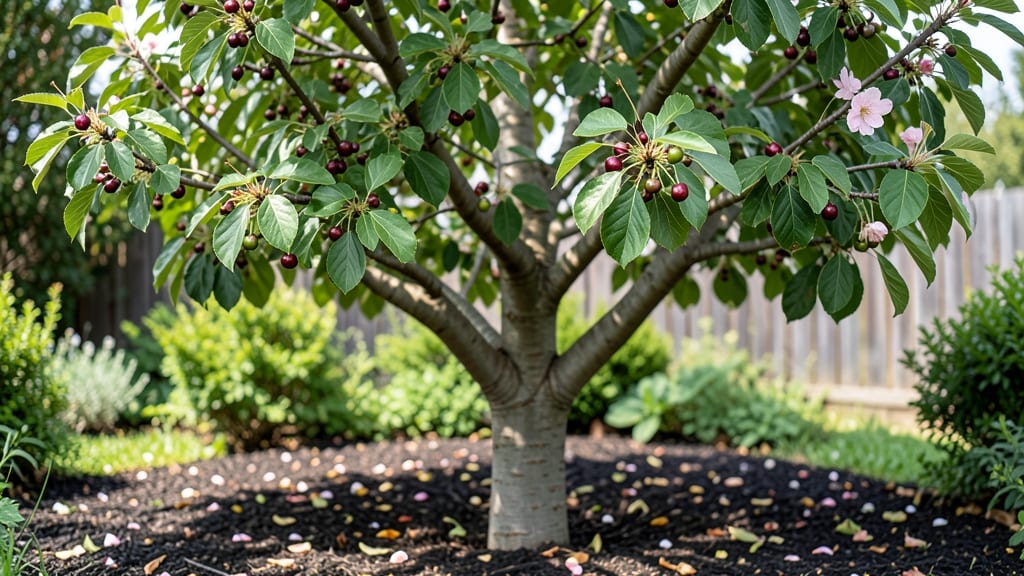
A cherry tree in your backyard isn’t just a tree—it’s a living privacy screen that changes with every season. 🌿 From spring blossoms to summer shade and autumn foliage, it transforms your outdoor space into a serene retreat.
The real magic happens when you prune it strategically, shaping it to block nosy neighbors while letting light filter through just enough for your garden to thrive.
Picture this: your morning coffee on the patio, surrounded by fragrant blossoms in May, then lush green foliage that keeps summer breezes cool. By fall, the leaves turn fiery gold, and winter’s bare branches let sunlight warm your space without sacrificing privacy.
The key is selective pruning—opening up the lower branches to encourage new growth where you want it, while keeping the upper canopy dense for that all-year shield.
You’ll create a backyard that feels like a hidden sanctuary, where the tree’s natural beauty works with your design—not against it. Pair it with climbing roses or ornamental grasses at its base, and suddenly, your space has depth, texture, and that jealousy-worthy curb appeal.
The best part? It grows with you, adapting to your needs as your garden evolves.
Whether you’re starting with a sapling or shaping an established tree, the principles stay the same: light, air, and intention. Skip the heavy-handed pruning—think of it as sculpting, not hacking.
By summer’s end, you’ll have a tree that’s both functional and stunning, a centerpiece that makes your backyard feel like a private escape. Ready to get started?
📚 In This Guide
- What you need
- Instructions
- Tips and common mistakes
- Wrapping up and next steps
What you need
- ● Cherry tree sapling: Choose a dwarf variety (e.g., Stella® or Balaton) for easier pruning (1–3 plants, spaced 10–15 ft apart).
- ● Pruning tools: Bypass pruners (sharp, bypass-style for clean cuts)
- ● Loppers (for thicker branches, 20–24" cutting length)
- ● Hand saw (for stubborn branches, curved blade preferred)
- ● Safety gear: Gloves (cut-resistant), safety goggles, and long sleeves.
- ● Cleaning supplies: Rubbing alcohol (70%+) and a scrub brush (to disinfect tools).
- ● Tree support stakes (for young saplings, T-posts + straps).
- ● Mulch (2–3" layer of wood chips or pine straw to retain moisture).
- ● Fertilizer (balanced 10-10-10 or citrus-specific for acid-loving cherries).
- ● Drip irrigation kit (for consistent watering, 1/2" tubing).
- ● Pest control: Neem oil or horticultural oil (for early-season prevention).
Instructions for planting and pruning a backyard cherry tree for privacy
Here's how to turn a single cherry tree into a lush, year-round privacy screen with smart pruning.
🌱 Step 1: Select and Plant the Right Tree
Choose a dwarf or semi-dwarf cherry cultivar like 'Stella' or 'North Star'—they grow 12-16 feet tall with a compact form perfect for privacy. Plant in late fall or early spring when soil is workable but not frozen. Dig a hole twice as wide as the root ball but only as deep—the top of the root flare should sit 1-2 inches above ground level. This prevents water from pooling and suffocating roots.
Amend the native soil with 3-4 inches of compost mixed into the bottom of the hole. Place the tree so its strongest branch faces the direction you want to block views. Backfill with the original soil (no need for extra amendments unless your soil is extremely poor), then water deeply to settle everything. You'll know it's right when water drains evenly without pooling.
✂️ Step 2: Establish the Initial Structure
Wait until early spring before new growth begins to prune. Remove any dead, crossing, or rubbing branches first—these compete for energy and create entry points for disease. Next, select 3-5 strong, evenly spaced branches to form the tree's skeleton. Cut back these branches to just outside a bud facing the direction you want growth to go. This encourages outward growth rather than upward.
Use clean, sharp pruners to make cuts at a 45-degree angle about 1/8 inch above a bud. Avoid leaving stubs—this invites rot. If you're unsure which bud to target, look for the one that points in the direction you want the branch to grow. After pruning, apply a tree sealant to larger cuts over 1 inch in diameter to prevent moisture loss.
☀️ Step 3: Summer Maintenance for Fullness
During the first growing season, focus on light pruning to shape the tree. Pinch back new growth on the lower branches to encourage bushier growth—this is where your privacy screen will thicken. In mid-summer, when growth slows slightly, do a second pruning to remove any suckers (shoots growing from the base) and water sprouts (fast-growing vertical shoots). These steal energy from your desired structure.
Water deeply once a week during dry spells, aiming for 1-1.5 inches of water per session. You'll know it's enough when water penetrates 12 inches into the soil. Mulch the base with 2-3 inches of wood chips, keeping it 6 inches away from the trunk to prevent rot. This retains moisture and suppresses weeds while the tree establishes.
⏰ Step 4: Winter Pruning for Year-Round Density
In late winter, just before buds swell, do your heaviest pruning of the year. Remove any dead or weak wood first, then thin out 10-20% of the canopy to improve airflow. Focus on opening the center of the tree—this prevents dense, shaded areas where pests and disease thrive. Cut back last year's growth by about one-third to encourage new, vigorous shoots.
Shape the outer edges to maintain a rounded form, which catches wind and reduces storm damage. After pruning, fertilize with a balanced 10-10-10 formula if your tree shows signs of slow growth (small leaves, sparse foliage). You'll see new growth within 4-6 weeks—this is your signal that the tree is responding well. Avoid heavy pruning in fall, as it stimulates new growth that won't harden off before winter.
🌿 Step 5: Long-Term Care for a Thick Privacy Screen
Every 2-3 years, do a structural pruning to maintain the tree's shape and density. Remove any branches that cross or rub, as these create wounds and weak points. Thin out older wood from the center to keep light and air moving through the canopy. This prevents the tree from becoming too dense, which can lead to powdery mildew or fruit rot if it's a fruiting variety.
Monitor for pests like aphids or borers—treat early with neem oil or insecticidal soap to avoid a full-blown infestation. If your tree is a sweet cherry, watch for bird damage to fruit and use netting during harvest season. With consistent care, your cherry tree will develop a full, lush canopy within 5-7 years, providing year-round privacy while adding beauty and value to your backyard.
Tips & tricks for perfect backyard cherry tree privacy screens
Transforming a single cherry tree into a lush privacy screen takes patience—but these insights will help you avoid common pitfalls and maximize growth.
Tree Selection Wisdom: When choosing between 'Stella' or 'North Star' cultivars, opt for 'North Star' if you want slightly faster growth (14-16 feet) and better cold hardiness. Both are excellent for privacy, but 'North Star' handles harsh winters better. The dwarf varieties are perfect because they grow densely without requiring massive yard space—just give them 6-8 feet of clearance on all sides for proper airflow and sunlight penetration.
Planting Precision: The 1-2 inch root flare above ground level is critical—this prevents girdling as the tree matures. I've seen many trees planted too deep where the roots suffocate over time. After planting, create a small berm around the base to help direct water toward the roots during those first crucial weeks. This mimics natural water flow patterns and prevents erosion around your young tree.
Pruning Strategy: In Step 2, when selecting your 3-5 main branches, prioritize those with outward-facing buds. I learned this the hard way by choosing branches that grew inward, which created a hollow center over time. For the late winter pruning (Step 4), remove branches that are thinner than a pencil—they won't contribute much to your privacy screen and just create more work. The one-third reduction of last year's growth is perfect for encouraging new, vigorous shoots that will fill out your canopy.
Year-Round Care: The 2-3 inch mulch ring (Step 3) should always be refreshed annually—wood chips break down over time. I recommend using hardwood mulch rather than softwood, as it won't acidify the soil. For watering, the 12-inch soil penetration test is foolproof—just insert a screwdriver after watering. If it goes in easily, you've got the right amount. In drought-prone areas, consider adding a soaker hose at the drip line rather than watering at the base, which encourages deeper root growth.
Pro Tips for Cherry Tree In Backyard
- Transforming a single cherry tree into a lush privacy screen takes patience—but these insights will help you avoid co...
- Tree Selection Wisdom: When choosing between 'Stella' or 'North Star' cultivars, opt for 'North Star' if you want sli...
- Planting Precision: The 1-2 inch root flare above ground level is critical—this prevents girdling as the tree matures...
Frequently asked questions
How long does it take for a cherry tree to grow into a privacy screen?
A fast-growing cherry tree (like Prunus serrulata) can reach 15–20 feet tall in 5–7 years with proper care. Dwarf varieties may take slightly longer but require less space. Prune strategically in early spring to encourage dense growth—think "thinner at the bottom, fuller at the top" for that lush, hedge-like look.
When is the best time to prune a cherry tree for privacy?
Prune late winter or early spring (before buds break) to avoid disease spread. Summer pruning is risky—it can stress the tree and attract pests. If you must trim in summer, do it after fruiting (if applicable) and keep cuts small. Never prune in fall—it invites fungal infections.
Will a cherry tree produce fruit if I plant it just for privacy?
Most ornamental cherry trees (like Prunus serrulata) are non-fruiting and focus on flowers. However, sweet or tart cherry varieties (e.g., Prunus avium) will bear fruit—but they need cross-pollination and may require more maintenance. If fruit isn’t your goal, stick to flowering types for year-round greenery with minimal fuss.
How do I protect my cherry tree from pests or diseases?
Prevent issues with proper spacing (15–20 ft apart) for airflow. Watch for cherry leaf spot (remove infected leaves) and borers (apply neem oil early). Water at the base (avoid wetting foliage) and mulch to retain moisture. If pests strike, prune out damaged branches immediately and consider beneficial insects like ladybugs.
What’s a good alternative if I want fast privacy but don’t want a tree?
Consider bamboo (clumping types), arborvitae, or evergreen shrubs like Ilex crenata (boxwood). For year-round color, mix Holly with Camellia. If you love cherries but want low-maintenance, try a cherry-laurel hedge—it’s dense, evergreen, and thrives in shade.
Wrapping up and next steps
A cherry tree in your backyard isn’t just a stunning addition—it’s a year-round privacy screen that evolves with the seasons, offering shade, beauty, and even delicious fruit with the right care.
Strategic pruning keeps it healthy, shaped, and thriving, while maximizing its natural benefits. Whether you’re a pruning pro or just starting, the key is patience and consistency!
Ready to transform your space? Start small: grab your tools, pick a sunny day, and take that first confident cut. Your backyard—and future harvests—will thank you! 🌿✂️