
Leaf Blower
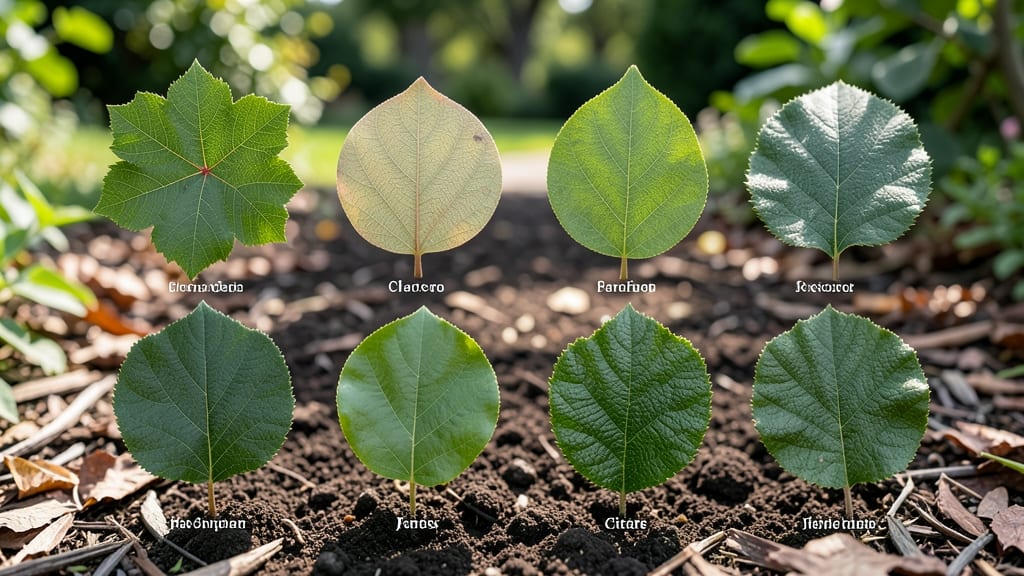
Fruit tree identification by leaf saves you from guessing—and a wrong guess means wasted pruning or pest treatments. 🌿 I’ve spent years studying leaf shapes, edges, and veins to tell my neighbor’s apple tree from my peach, and once you learn these tricks, you’ll spot them too, even in winter when branches are bare. The secret lies in three key details: leaf shape (oval, lobed, or elongated?), margin (smooth, serrated, or jagged?), and vein pattern (feathery or palm-like?). Compare your find to a reference guide or app—my go-to is the free iNaturalist tool—then double-check with fruit or flower clues. A single leaf can reveal if that tree bears pears, plums, or cherries before it even blooms. You’ll start noticing patterns: cherry leaves are smooth-edged and almond-shaped, while fig leaves are broad and lobed. Season matters too—new spring leaves often look different from summer’s mature ones. This knowledge turns pruning from a gamble into a precise science. Works for backyard trees, urban landscapes, or even wild orchards. Here’s how to master the visual clues and avoid costly mistakes.
Nature’s Leaf Code Explained
Understanding why leaves vary so dramatically between fruit trees isn’t just about aesthetics—it’s rooted in evolution, survival strategies, and environmental adaptations. Every leaf’s shape, texture, and vein pattern tells a story of how the tree evolved to thrive. Here’s why these differences exist in the first place:
Leaves aren’t just passive structures; they’re highly optimized tools for a tree’s survival. Over millions of years, fruit trees developed distinct leaf traits based on their native environments.
For example: - Thick, waxy leaves (like those on citrus trees 🍊) evolved in arid climates to reduce water loss through transpiration. - Compound leaves (with multiple leaflets, like those on pecan trees 🌳) minimize damage from herbivores by making it harder for insects to eat the entire leaf at once. - Serrated edges (common in apples 🍎) create microclimates that deter pests and fungi by disrupting their movement.
💡 Pro Tip: Trees in tropical regions often have broader leaves to maximize sunlight absorption, while those in cooler climates tend to have smaller, tougher leaves to resist wind and frost.
A tree’s leaf structure is a direct response to its habitat.
Key environmental factors include: - Sunlight exposure: - Sun-loving trees (like peach 🍑) develop thinner, lighter leaves to absorb more light. - Shade-tolerant trees (like persimmons 🍈) grow darker, thicker leaves to capture limited sunlight efficiently. - Water availability: - Drought-resistant trees (e.g., pomegranate 🍇) have smaller surface areas and sunken stomata (pores) to conserve moisture. - Wetland species (like figs 🍈) often have larger, thinner leaves to maximize gas exchange in humid air. - Soil nutrients: - Trees in poor soil (like some wild cherries 🍒) develop smaller leaves to reduce nutrient demands. - Rich-soil trees (like avocados 🥑) can afford larger, softer leaves since they have ample resources.
🔥 Fun Fact: Some leaves even change shape based on their position on the tree—lower leaves may be smaller to avoid shading the fruit-bearing branches above!
Not all variation comes from the environment—genetics play a huge role.
Fruit trees belong to different families and species, each with its own leaf "recipe." For example: - Rosaceae family (apples, pears, cherries) often have alternate leaf arrangements and stipules (small leaf-like structures at the base). - Rutaceae family (citrus) typically features evergreen, glossy leaves with prominent oil glands (which give them their signature scent). - Morus (mulberry) trees 🍇 have lobed leaves that resemble those of figs but are genetically distinct.
🌡️ Key Takeaway: If two trees look similar but have different leaf veins, edges, or aromas, they’re likely from different evolutionary lineages—even if they produce similar fruits!
Leaves aren’t just for photosynthesis—they’re first-line defenses against pests and diseases.
Some trees develop unique leaf traits to stay safe: - Toxic compounds: Some leaves (like those on yew trees) contain alkaloids that repel herbivores. - Hairy or sticky surfaces: Trees like hawthorn 🍎 have trichomes (tiny hairs) that trap insects. - Mimicry: Certain leaves resemble non-edible plants to fool pests into avoiding them.
✨ Bonus Insight: The smell of a leaf (e.g., the citrusy aroma of orange 🍊 leaves) often comes from volatile oils that deter insects while attracting pollinators.
Modern fruit trees often have unexpected leaf traits due to:
- Climate shifts: Warmer winters may cause evergreen trees to develop semi-deciduous leaves (like some fig varieties).
- Human cultivation: Grafting and hybridization (e.g., mixing apple varieties) can create hybrid leaves with unique shapes or colors.
- Invasive species: Non-native trees (like loquat 🍈) may have adapted leaves to survive in new climates.
🎯 Actionable Tip: If you’re identifying a tree and its leaves look "off" (e.g., yellowing, curling, or extra large), it could be a sign of stress, disease, or hybridization—not just natural variation!
The vein pattern (reticulate, parallel, palmate) isn’t random—it’s tied to water transport efficiency:
- Reticulate venation (like in apples 🍎) allows flexible growth and even water distribution.
- Parallel venation (common in citrus 🍊) is stronger against wind and reduces water loss.
- Palmate venation (e.g., in mango 🥭) maximizes surface area for tropical climates.
💪 Why It Matters: A tree’s vein structure can tell you how it handles stress—thicker veins mean better drought resistance!
Every quirk—from leaf shape to texture to scent—is a result of millions of years of adaptation. When you’re identifying fruit trees by leaf, you’re not just looking at a plant; you’re reading its survival manual.
Next time you hold a leaf, ask: ✅ Is this tree from a dry or wet climate? ✅ Does it have defenses against pests? ✅ What family does it belong to?
The answer might just be written in its veins. 🌿
Practical steps to identify trees
Mastering fruit tree identification by leaf doesn’t have to be a guessing game—just follow these clear, step-by-step solutions to decode your garden’s green mysteries. Whether you’re a curious gardener or a budding arborist, these methods will help you pinpoint the species with confidence.
Let’s break it down by common challenges and their fixes.
If you’re staring at two leaves that seem identical but aren’t sure which tree they belong to, focus on the details that matter most.
📏 Step 1: Measure and Compare Key Features
Use a ruler or your phone’s measuring app to check:
- Leaf shape: Is it lobed (like oak), serrated (like apple), or smooth-edged (like pear)?
- Venation pattern: Are the veins parallel (citrus), pinnate (peach), or palmate (fig)?
- Leaf arrangement: Are they alternate (one per node, like cherry) or opposite (paired, like citrus)?
Pro tip: 💡 Take a close-up photo of the leaf’s underside—many trees have distinctive hairiness or glandular dots (like in walnut leaves).
🍃 Step 2: Cross-Reference with a Field Guide
Pull up a digital or printed guide (like the one in this article!) and match your notes:
- Color: New growth vs. mature leaves (e.g., red-tinged maple vs. green oak).
- Texture: Is it waxy (like avocado), fuzzy (like peach), or leathery (like olive)?
- Scent: Crush a leaf—some (like citrus or mint) release a telltale aroma.
Prevention tip: ✨ Bookmark reliable sources (e.g., the USDA Plant Database, iNaturalist) to avoid misidentifications.
If pests, disease, or weather have stripped your tree of its best ID features, look for secondary clues.
🍎 Step 3: Examine the Tree’s Structure and Fruit
- Bark texture: Smooth (young apple) vs. rough (mature walnut).
- Branch pattern: Spreading (pear) vs. upright (cherry).
- Fruit or flowers: Even if the leaves are gone, last year’s fruit (like dried peaches or olives) can hint at the species.
Pro tip: 🌡️ Check the season—some trees (like dogwood) have showy spring blooms, while others (like persimmon) hold onto fruit into winter.
🐛 Step 4: Inspect for Pests or Disease Signs
- Holes or chew marks: Moths love apple leaves; beetles target walnut.
- Fungal spots: Rust-colored patches (like cedar-apple rust) can ID the tree and the problem.
- Galls or growths: Oak trees often host distinctive knobby galls.
Prevention tip: 🎯 Prune regularly to improve airflow and reduce pest hiding spots.
If the leaf doesn’t match any common fruit trees, narrow it down systematically.
📱 Step 5: Use Tech to Your Advantage
- Plant ID apps: Upload a photo to PictureThis, PlantNet, or Google Lens for AI-assisted matching.
- Leaf rubbings: Place a leaf under paper and rub with a pencil to reveal vein patterns (great for kids or quick checks!).
- Local experts: Post in gardening forums (like Reddit’s r/whatsthisplant) or ask at a nursery or extension office.
Pro tip: 🔥 Time your search—some trees (like serviceberry) have leaves that change dramatically through the seasons.
📖 Step 6: Study the Tree’s Habitat
- Native range: Is it common in your climate?
(E.g., figs thrive in warm zones; crabapples in cooler ones.) - Soil preference: Wet areas (like willows) vs. dry, rocky soil (like almonds). - Wild vs. cultivated: Wild plums have smaller leaves than cultivated varieties.
Prevention tip: ✨ Plant a "test tree"—grow a known species (like a dwarf apple) nearby to compare side by side.
Need a 5-second reference?
Bookmark this: | Feature | Apple | Peach | Citrus | Olive | |-------------------|----------------|----------------|----------------|----------------| | Leaf Shape | Oval, serrated | Lance-shaped | Elliptical | Lance-shaped | | Edge | Serrated | Smooth | Smooth | Smooth | | Underside | Slightly fuzzy | Hairy | Oil glands | Silvery | | Fruit Hint | Apples | Peaches | Oranges/lemons | Olives |
Remember: Every leaf tells a story—you just need to listen closely. With practice, you’ll go from "Hmm, what is this?" to "Ah, that’s a European plum!" in no time. 🌳🍑
Frequently asked questions
Can I identify fruit trees by leaf in winter when they're bare?
Yes! Look for bud shapes and bark texture—these often reveal the species. For example, peach tree buds are fuzzy, while apple buds are smooth. Also check for last year's fruit still clinging to branches or leaf scars on twigs.
What's the easiest way to distinguish between apple and pear leaves?
Apple leaves are serrated with sharp teeth and have slightly fuzzy undersides, while pear leaves are smooth-edged or softly serrated with a shinier appearance. Also, apple leaves tend to be slightly larger (3-5 inches) than pear leaves.
Are there any fruit trees with compound leaves?
Yes! Trees like pecan, hickory, and walnut have compound leaves with multiple leaflets. Citrus trees also have pinnate compound leaves, though they're often confused with simple leaves. Look for the distinct leaflet arrangement to confirm.
How do I know if a leaf is from a citrus tree?
Citrus leaves are elliptical with smooth edges, shiny and leathery, and have prominent oil glands (visible as tiny dots). Crush a leaf—if it smells strongly citrusy, that's your clue! They're also evergreen in most climates.
What should I do if I can't find a match for my leaf?
Try these steps: 1) Check both sides of the leaf for unique features, 2) examine the leaf arrangement (alternate vs. opposite), and 3) use a plant ID app like PictureThis or iNaturalist. If still unsure, consider the tree's habitat and fruit type—sometimes the fruit gives away the species even when leaves don't!