
How To
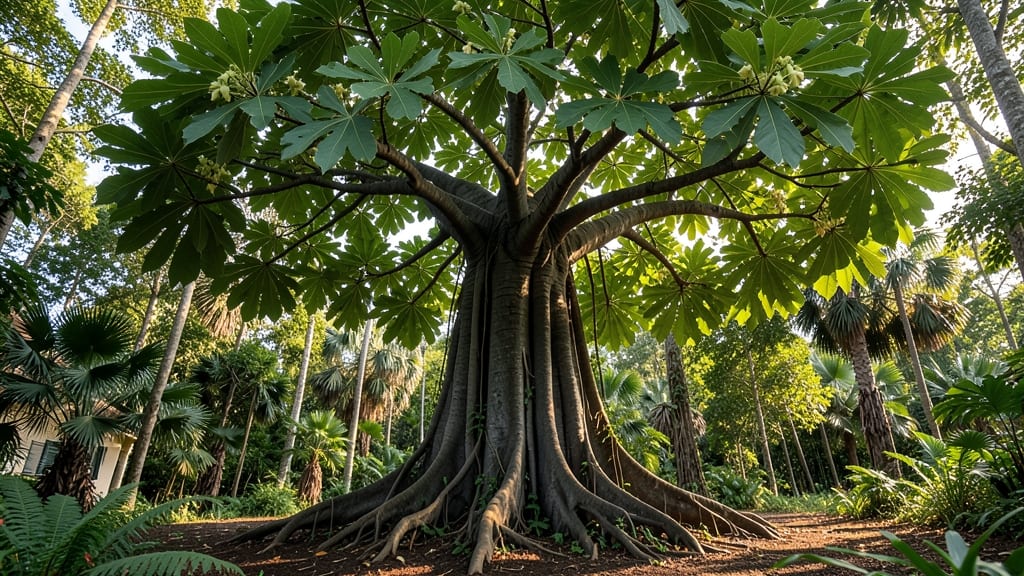
A kapok tree can grow up to 200 feet tall in ideal tropical conditions 🌳—making it one of the tallest trees on Earth—but its height depends on where and how you plant it.
Imagine a tree soaring above your house, its branches forming a natural canopy—yet many gardeners overlook its potential because they assume it’s too massive for home landscapes. The truth? With the right care, even smaller properties can accommodate this stunning giant.
In tropical regions like Southeast Asia or Florida’s hardiness zones 10-12, kapok trees thrive, reaching their full height within decades. But in cooler climates or with poor soil, growth slows dramatically, often capping at 50-70 feet.
Here’s what you need to know to maximize its height—from spacing and sunlight to soil prep—so you can grow a kapok tree that lives up to its legendary stature.


Natural height range of kapok trees by region and climate conditions
The kapok tree (Ceiba pentandra) can reach staggering heights—some specimens surpassing 200 feet in ideal tropical conditions. Its growth potential makes it one of the tallest trees in its native habitats, but regional climate and soil dramatically influence how tall your kapok tree might grow.
Let’s explore how geography shapes these giants and what you can expect in different growing zones.
In Southeast Asia, where kapok trees thrive naturally, they often grow between 100–180 feet. The high humidity and rich volcanic soils of Indonesia and Malaysia create perfect conditions for rapid vertical growth.
Meanwhile, in Central America, kapok trees typically reach 80–120 feet, with slower growth rates due to seasonal dry periods.
| Region | Average Height | Climate Factors | Growth Rate |
|---|---|---|---|
| Southeast Asia | 100–180 ft | High humidity, rich soil, year-round warmth | Fast (5–10 ft/year) |
| Central America | 80–120 ft | Seasonal dry periods, moderate rainfall | Moderate (3–7 ft/year) |
| Florida (US) | 50–90 ft | Subtropical, occasional frost risk, nutrient-poor soils | Slow (2–5 ft/year) |
| Cultivated Gardens | 30–60 ft | Controlled conditions, pruning, urban soil | Variable (1–4 ft/year) |
In Florida’s subtropical climate, kapok trees struggle to reach their full potential, often maxing out at 50–90 feet. The occasional frost and nutrient-poor soils in many areas stunt growth, though established trees in Miami or Key West can still grow impressively.
For gardeners in USDA Zones 10–12, expect slower growth compared to tropical natives.
When grown in cultivated gardens, kapok trees rarely exceed 60 feet due to space constraints and regular pruning. However, with ideal care—well-draining soil, full sun exposure, and consistent moisture—you can encourage faster vertical growth.
In containers, growth is even more limited, rarely surpassing 20–30 feet.
One of the most famous kapok trees stands in Thailand’s Khao Yai National Park, where a specimen reaches 197 feet. This tree thrives due to abundant rainfall (over 100 inches annually) and deep, fertile soil.
In contrast, a kapok tree in Costa Rica’s dry forests might only reach 70 feet due to water scarcity during dry seasons.
The growth rate of kapok trees also varies by region. In Southeast Asia, young trees can grow 5–10 feet per year, while in Florida, growth slows to 2–5 feet annually.
This difference highlights how climate consistency directly impacts height potential. For gardeners in subtropical zones, mimicking tropical conditions—like adding mulch for moisture retention—can help maximize growth.
If you’re considering planting a kapok tree, location matters. Trees in tropical regions will dwarf those in subtropical or urban gardens.
However, with the right care—fertile soil, adequate water, and protection from frost—you can still cultivate a striking specimen, even if it won’t reach the heights of its wild counterparts.
For those in Florida or California, focus on young tree protection during cooler months. In Southeast Asia, where kapok trees are native, they grow with minimal intervention, reaching their full 200-foot potential in just 50–70 years.
Whether you’re in a tropical paradise or a suburban backyard, understanding these regional differences will help you set realistic expectations for your kapok tree’s height.
🌳
Key factors that determine kapok tree growth height
The kapok tree’s impressive height isn’t just luck—it’s a result of perfect environmental conditions. In tropical rainforests, these trees can reach 200+ feet, but in less ideal settings, their growth slows dramatically.
Understanding the key factors lets you optimize your kapok tree’s vertical potential, whether you’re planting in Florida or a tropical nursery.
From soil composition to pruning techniques, each element plays a role in how tall your kapok tree will grow. Even small adjustments—like improving drainage or providing consistent moisture—can make a 30-foot difference over a decade. Let’s break down what truly influences a kapok tree’s height.
- 1 Soil Type: Kapok trees thrive in well-draining, slightly acidic soil (pH 5.5–6.5). Clay-heavy or waterlogged soil stunts root growth, limiting height by up to 50% in extreme cases.
- 2 Sunlight Exposure: Full sun (6+ hours daily) boosts growth by 20–30% per year. Partial shade reduces height potential, while less than 4 hours of sun can stunt growth entirely.
- 3 Water Availability: Young trees need deep weekly watering (10–15 gallons). Drought stress can halt growth for months, while overwatering causes root rot, limiting height by 40% or more.
- 4 Pruning Practices: Strategic pruning (removing dead or crossing branches) improves airflow and light penetration, accelerating height growth by 15–25%. Over-pruning reduces canopy size, slowing vertical expansion.
- 5 Disease Resistance: Trees with strong genetic resistance to fungal diseases (like root rot) grow 10–15% taller than susceptible varieties. Regular fungicide treatments can mitigate height loss.
Even in optimal conditions, kapok trees grow at a slow-to-moderate pace—expect 3–5 feet per year in ideal settings. However, neglecting any of these factors can drastically reduce height.
For example, a tree in poor soil might only reach 30–50 feet in 20 years, while one with perfect care could tower over 150 feet.
If you’re planting a kapok tree in your garden, focus on soil drainage and sunlight exposure first—these two factors alone can double your tree’s height potential. Pair that with consistent watering and minimal pruning, and you’ll be well on your way to nurturing a true giant.
Remember, kapok trees are long-term investments. Patience and attention to detail will reward you with a stunning, towering specimen that becomes the centerpiece of your landscape. With the right conditions, your kapok tree could one day rival the tallest specimens in the Amazon—all from your own backyard!