
How To
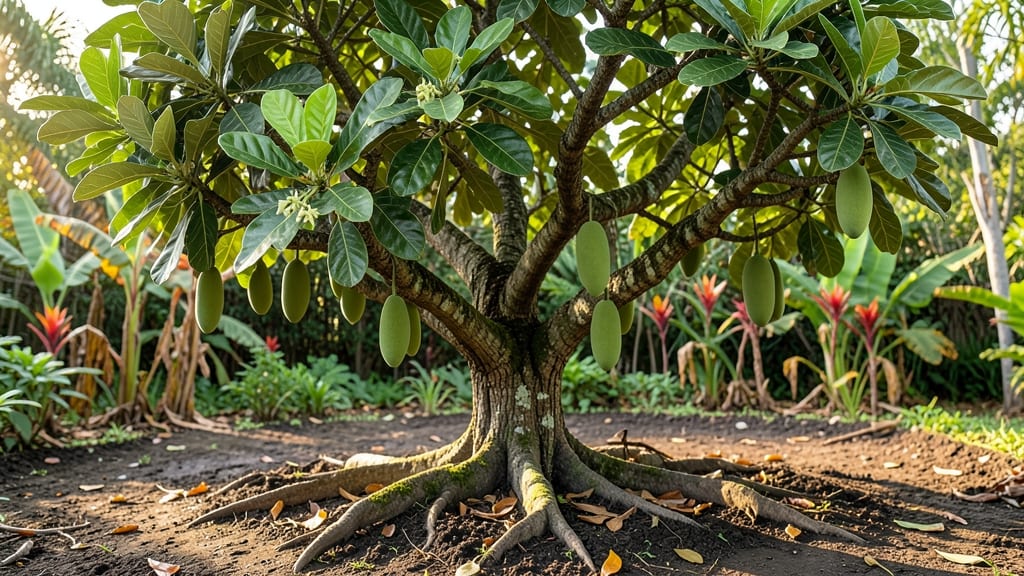
A soursop tree can grow to 15 to 30 feet tall—that’s taller than most two-story houses—making it a stunning tropical centerpiece for the right space.
If you're dreaming of tropical fruit trees that offer both shade and sweet rewards, the soursop (Annona muricata) might be your perfect match—but first, you need to know how big it can get.
This fast-growing giant thrives in USDA Zones 10-12, where it stretches toward the sky with minimal effort. In cooler subtropical climates, expect slightly shorter heights unless you provide optimal care.
Below, I’ll break down how variety, climate, and pruning shape its growth, plus whether it’s a good fit for containers or your backyard.


Soursop tree height ranges by variety: how big can it really get?
If you're considering adding a soursop tree (Annona muricata) to your garden, its mature height will likely be your first concern. This tropical beauty can grow into a towering giant, but the exact height depends heavily on the variety you choose.
While most soursop trees reach 15-30 feet at maturity, some varieties stay smaller, making them ideal for container gardening or limited spaces. Let's explore the height ranges and what influences them.
Soursop trees are known for their rapid growth—some varieties can add 3-5 feet per year under ideal conditions. However, their final height isn't just about genetics; climate, pruning practices, and soil quality all play a role.
For example, the 'Ice Cream' soursop is prized for its sweet fruit but can still reach 20-25 feet in tropical climates. Meanwhile, dwarf varieties (though rare) might stay under 10 feet if properly managed.
Here’s a quick look at how different soursop varieties compare in height, along with key care notes to help you plan for your garden:
| Variety | Mature Height | Growth Rate | Best For |
|---|---|---|---|
| 'Ice Cream' Soursop | 20-25 ft | 3-5 ft/year | Tropical gardens, large yards |
| 'Giant' Soursop | 25-30 ft | 4-6 ft/year | Shade trees, large estates |
| Standard Soursop | 15-20 ft | 2-4 ft/year | Home gardens, urban landscapes |
| Dwarf Varieties (Rare) | 8-12 ft | 1-2 ft/year | Containers, small patios |
The 'Giant' soursop variety is the tallest, often surpassing 25 feet in tropical climates like Florida or Hawaii. These trees thrive in USDA zones 10-12 and can become massive shade providers, but they require ample space.
If you're in a subtropical zone like zone 9, expect slightly slower growth—perhaps 20 feet at maturity—unless you provide optimal care.
For smaller spaces, consider container-grown soursop trees. While true dwarf varieties are rare, you can prune a standard soursop aggressively to keep it under 10 feet. Use a large container (3+ feet wide) with well-draining soil and fertilize regularly to encourage compact growth.
Just remember, even pruned trees may still need 6+ hours of sunlight daily to thrive.
Genetics play a huge role in height, but pruning techniques can significantly alter a tree's final size. For example, heading back (cutting back new growth) in early spring can redirect energy toward bushier growth rather than height.
This is especially useful if you're growing soursop in a small urban garden where space is limited. Just avoid heavy pruning in late summer, as this can stunt growth before winter.
If you're growing soursop in cooler climates (like zone 9), expect slightly slower growth and potentially shorter mature heights. These trees are not frost-tolerant, so protect young saplings with mulch and microclimates during unexpected cold snaps.
In such cases, even a standard variety might max out at 15-18 feet rather than the full 20-30 feet seen in tropical regions.
One common misconception is that all soursop trees grow equally tall. In reality, the 'Ice Cream' soursop, while delicious, can still reach 20 feet—making it unsuitable for balconies or small yards.
For these spaces, focus on container gardening and select the smallest available variety, even if it means sacrificing some fruit size. The trade-off for a manageable tree height is often worth it for urban gardeners!
When planning your soursop tree's location, account for its canopy spread, which can be nearly as wide as its height. A 25-foot-tall tree might also spread 15-20 feet, so place it at least 10 feet away from structures, fences, or other plants.
In tight spaces, consider espalier training to grow the tree against a wall or trellis, keeping its height in check while maximizing fruit production.
For the best results, pair your soursop tree with well-draining, slightly acidic soil (pH 5.5-6.5) and regular fertilization during the growing season. A balanced 6-6-6 NPK fertilizer applied every 4-6 weeks will encourage healthy growth and larger fruit. Combine this with
Climate and growing conditions that affect soursop tree height
The soursop tree thrives in tropical climates, where warm temperatures and high humidity fuel its rapid vertical growth. In ideal conditions, these trees can reach 20-30 feet tall within 5-7 years, but cooler climates or suboptimal conditions dramatically slow their ascent.
Understanding how temperature, humidity, sunlight, and soil interact will help you predict—and even influence—your tree's height potential.
Native to Central and South America, soursops demand consistent warmth (USDA zones 10-12) and struggle below 50°F (10°C). Even brief cold snaps can stunt growth or kill young trees, while high humidity (70%+) mimics their natural rainforest habitat.
Without these conditions, expect shorter stature—often just 10-15 feet—and slower fruit production.
| Condition | Tropical Climate Impact | Subtropical Impact | Cooler Climate Impact |
|---|---|---|---|
| Temperature | 80-90°F (27-32°C) year-round | 60-85°F (15-29°C); slower growth | Below 50°F (10°C) stunts growth |
| Humidity | 70-90%; rapid vertical growth | 50-70%; moderate height gain | Below 50%; dwarfed growth |
| Sunlight | Full sun (6+ hours); 25-30 ft tall | Partial shade; 15-20 ft tall | Filtered light; <10 ft tall |
| Soil Type | Well-draining, slightly acidic (pH 5.5-6.5) | Clay-heavy; root stress slows growth | Compacted; stunted root development |
For maximum height, prioritize well-draining, slightly acidic soil (pH 5.5-6.5) rich in organic matter. Sandy loam mimics their native conditions, while clay-heavy soils restrict root expansion, capping height at 10-15 feet.
Amend heavy soil with compost or perlite to improve drainage—this alone can boost growth by 30-50% in the first two years.
Sunlight is another critical factor: 6+ hours of direct sun daily fuels rapid vertical growth, while partial shade (common in subtropical zones) limits height to 15-20 feet.
In cooler climates, even morning sun with afternoon shade can help, but expect dwarfed growth (under 10 feet) without protective microclimates like greenhouses or containers moved indoors during winter.
To coax height in subtropical or cooler zones, combine container growing with winter protection. Use large pots (20+ gallons) filled with fast-draining mix and move them near south-facing walls to capture reflected heat.
Pair this with drip irrigation to maintain humidity, and you’ll see 2-3 feet of growth annually—closer to tropical potential.
Remember, pruning young trees isn’t about height control but structural support. Remove competing branches to direct energy upward, but avoid heavy pruning—it can reduce fruit production. With the right conditions, your soursop could reach skyscraper proportions (literally!) in just a few years.