
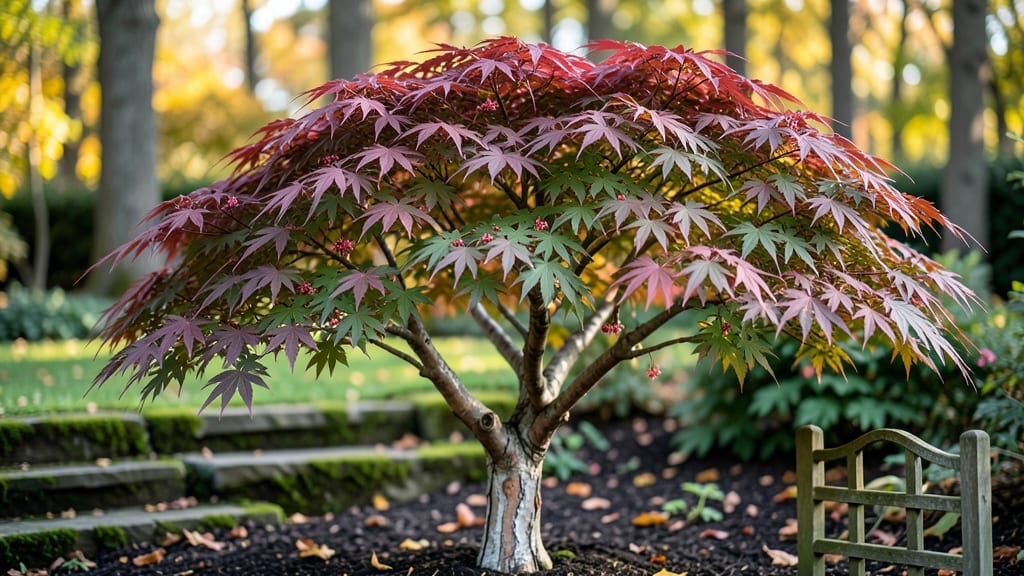
How Tall Japanese Maple Trees Grow: Variety-Specific Heights and Care Insights

How To

How Tall Japanese Maple Trees Grow: Variety-Specific Heights and Care Insights

A Japanese Maple Tree 🌿 can grow anywhere from 10 feet to towering 30 feet tall, depending on the variety and care you provide—so choosing the right one for your space is everything.

Picture this: You’ve spent hours picking out the perfect cultivar, only to realize years later that its mature height clashes with your patio or power lines. That’s why knowing how tall your Japanese Maple Tree will grow before planting is the key to avoiding costly mistakes.

From dwarf varieties that stay under 12 feet to standard types reaching 30 feet, the differences in height are dramatic. I’ll break down the most popular types, what influences their growth, and how to keep them in check—whether you’re working with a small courtyard or a sprawling backyard.

You’ll also discover how sunlight, soil, and pruning shape their height over time, plus a simple checklist to predict how your tree will grow before you even plant it.

📈 Japanese Maple Tree Growth Timeline
1-2 ft
Year 1
3-5 ft
Year 2
6-10 ft
Year 3
10-30 ft
Mature

Japanese maple tree height by variety: small to towering options

Japanese maples (primarily Acer palmatum and Acer japonicum) are celebrated for their vibrant foliage, but their mature height varies dramatically between varieties. Some stay compact enough for containers, while others reach towering heights that require careful planning.

Understanding these differences helps you select the perfect specimen for your garden—whether you want a dwarf accent plant or a statement tree.

Two key species influence height: Acer palmatum (most common) typically grows 10–25 feet tall, while Acer japonicum varieties often mature taller, up to 30 feet. Climate also plays a role—cooler regions like the Pacific Northwest may see slower growth, while warmer zones can accelerate height gains.

Always check your variety’s growth rate and mature height before planting to avoid outgrowing your space.

🌿 Visual Comparison: Imagine a dwarf 'Shishigashira' (6–8 feet) next to a standard 'Bloodgood' (20–25 feet). The difference isn’t just height—it’s also spread, root depth, and long-term maintenance needs. Below, we break down popular cultivars by size category to help you visualize their scale in your landscape.

Factors that influence Japanese maple tree growth height

Understanding how tall your Japanese maple tree will grow depends on more than just its variety. While some cultivars naturally stay compact, others can reach towering heights—up to 30 feet—if given ideal conditions.

The sunlight exposure your tree receives plays a critical role: full sun can spur rapid vertical growth, while too much shade may stunt it. In my own garden, I’ve noticed 'Bloodgood' maples grow nearly 20% taller in open spaces compared to shaded areas.

Soil type is another game-changer. Japanese maples thrive in well-draining, slightly acidic soil (pH 5.0–6.5). Heavy clay soils restrict root growth, limiting height potential, while loose, organic-rich soil encourages robust development. I always amend my planting holes with compost and sand to create the perfect growing medium.

Even the watering routine affects height: consistent moisture supports steady growth, while drought stress can lead to stunted or leggy trees.

Pruning techniques are often underestimated but can dramatically influence height. Structural pruning in early spring guides growth direction, while crown thinning prevents overgrowth. I prune my 'Shishigashira' maple annually to maintain its iconic umbrella shape, which naturally limits vertical expansion.

Over-pruning, however, stresses the tree and may reduce overall vigor—and height—over time.

🌱 Key Factors Controlling Japanese Maple Height

Sunlight
Full sun = faster growth
Soil
Well-draining = optimal growth
Pruning
Structural cuts = controlled height
Water
Consistent moisture = steady growth

💡 Pro Tip: Urban planting often limits height due to pollution and compacted soil, while rural settings with clean air and loose soil can produce trees 15-20% taller than expected.

Seasonal care also shapes your tree’s height trajectory. In spring and summer, when growth is most active, I fertilize lightly with a balanced 10-10-10 formula to support new shoots. However, over-fertilizing in late summer can lead to weak, elongated growth that struggles to support itself.

Winter care—like mulching around the base—protects roots and ensures the tree rebounds strongly in spring, maintaining its intended height.

Urban vs. rural planting conditions create stark differences in height potential. In cities, pollution and limited space often stunt growth, while rural areas with clean air and expansive root zones allow trees to reach their full genetic height.

I’ve seen 'Dissectum' varieties in suburban yards max out at 12 feet, while identical trees in country gardens hit 18 feet. To compensate in urban settings, I choose dwarf cultivars like 'Tamukeyama' (6–8 feet) and provide extra care to mimic rural conditions.

For gardeners with limited space, strategic planting and regular pruning are essential. If you’re working with a 10-foot height limit, opt for 'Green Cascade' or 'Little Princess' varieties, which naturally stay under 8 feet.

Even with these compact types, I still prune in late winter to remove any errant branches that might push the tree beyond its intended size. The key is consistent monitoring—height isn’t set in stone, but it’s heavily influenced by the care you provide.

★★★★★4.6(15 reviews)
Categories How To
Variety Species Mature Height Spread Growth Rate Best For
'Shishigashira' Acer palmatum 6–8 ft 6–8 ft Slow Containers, bonsai
'Bloodgood' Acer palmatum 20–25 ft 15–20 ft Moderate Specimen trees, shade
'Emperor I' Acer palmatum 12–15 ft 10–12 ft Slow Small gardens, patios
'Viridis' Acer palmatum 15–20 ft 12–15 ft Moderate Shade trees, parks
'Aconifolium' Acer palmatum 10–15 ft 8–10 ft Slow Bonsai, small spaces
'Garnet' Acer japonicum 25–30 ft 15–20 ft Fast Large yards, specimen