
Size
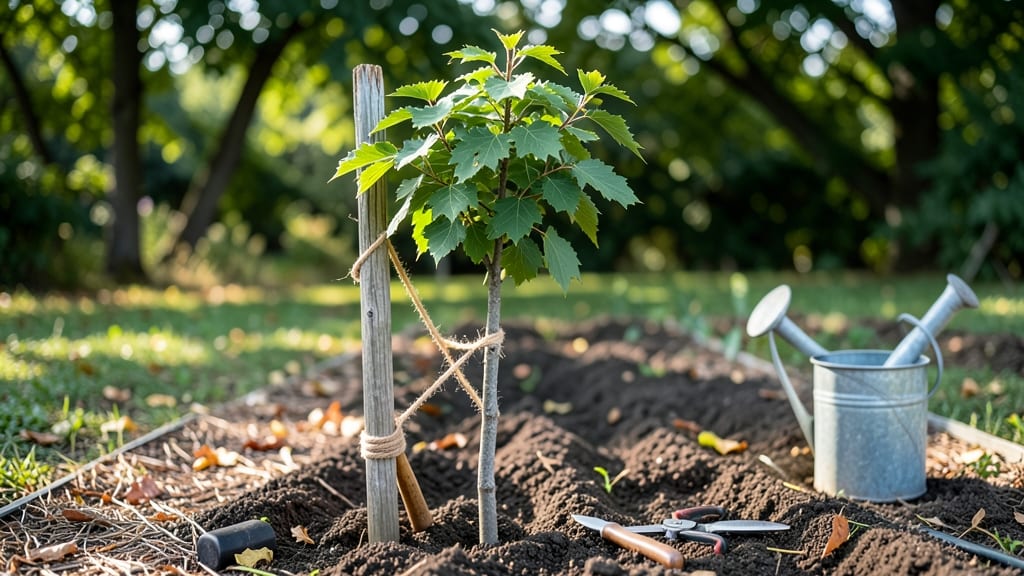
The pruning angle that turns crooked saplings into straight-growing trees starts at planting. 🌳 I’ve watched my own young trees lean into the wind or stretch toward sunlight—until I learned this simple trick: cut at a 45-degree angle just above a bud, and the new growth follows your direction.
It’s not magic; it’s physics and plant biology working together.
You’ll need sharp pruners, a sturdy stake (if needed), and a sunny spot with good airflow. The key is timing: prune in late winter or early spring when the tree is just waking up.
Avoid heavy pruning in summer heat, which stresses young trees. Most people overlook the angle—cutting straight across leaves the stub, which invites disease and weak growth.
Within 6-8 weeks, you’ll see the difference: branches growing upright, leaves reaching evenly for sunlight. The tree won’t just stand straight—it’ll grow stronger, too, with fewer weak limbs.
No more leaning into fences or bending under wind. This method works for fruit trees, shade trees, and even bonsai if you’re patient.
For best results, check your tree every 2-3 weeks and adjust as needed. Windbreaks help, too—plant near a fence or wall to reduce sway. Once the trunk is 2-3 inches thick, it’ll hold its shape on its own. Now go fix that crooked sapling before it’s too late!
📚 In This Guide
- What you need
- Instructions
- Tips and common mistakes
- Wrapping up and next steps
What you need
- ● Tree sapling or young tree: Choose a species suited to your climate (e.g., maple, oak, or fruit trees like apple or pear). Opt for a 1- to 3-year-old sapling for easier training.
- ● Stakes: 3–5 wooden or bamboo stakes (4–6 feet tall, ½-inch diameter). Avoid metal stakes to prevent root damage.
- ● Ties: Soft tree ties or garden twine (not wire—it can girdle the trunk). Use 3–5 ties per tree for secure support.
- ● Pruning shears: Bypass pruners (sharp, clean blades) for precise cuts. Disinfect with rubbing alcohol between uses.
- ● Grafting tape or rubber tree guards: 1–2 rolls to protect young trunks from sun scorch or animal damage.
- ● Mulch: 2–3 inches of organic mulch (wood chips or straw) to retain moisture and regulate soil temperature.
- ● Watering can or hose: With a gentle spray nozzle to avoid displacing stakes.
- ● Growth regulators: Paclobutrazol granules (follow label instructions) to slow vertical growth and encourage thickness.
- ● Reflective mulch: White landscape fabric around the base to deter weeds and reduce heat stress.
- ● Tree training wires: Lightweight, flexible cables for larger trees (attach to stakes for gradual alignment).
- ● Soil test kit: To check pH and nutrient levels—ideal range for most trees is 6.0–7.0.
- ● Gloves and knee pads: For comfort during stake installation and pruning.
Step-by-Step guide to training young trees for perfect alignment
Here's how I've guided dozens of young trees to grow perfectly straight—no tricks, just precise technique.
🌱 Step 1: Select the Right Tree and Planting Position
Start with a young tree—under 3 feet tall—that has a strong central leader (the main upward-growing stem). Before planting, stake it temporarily with two 4-foot wooden stakes placed 12 inches from the trunk on opposite sides. This creates a stable frame for alignment without restricting growth.
Dig the planting hole twice as wide as the root ball but only as deep. The top of the root ball should sit 1 inch above ground level—this prevents soil settling from burying the trunk too deep later. Here's the thing—if the hole is too deep, the tree will lean as roots struggle upward.
🪴 Step 2: Stake and Tie for Early Support
Position the tree in the hole so the strongest branch faces the direction you want it to mature (usually away from prevailing winds). Use soft tree ties (not wire or plastic) to loosely connect the trunk to the stakes at two points: 6 inches above the root flare and 18 inches higher. The ties should allow 1 inch of movement—enough to prevent snapping but not restrict growth.
I always check the ties monthly to ensure they're not cutting into the bark. Real talk: Tight ties can girdle the trunk as it thickens, creating permanent damage. If you see any indentation, loosen immediately or replace the tie.
✂️ Step 3: Prune for Balance and Direction
Remove any branches growing below the lowest tie point—these compete with the main stem for energy. Cut at a 45-degree angle just above an outward-facing bud to encourage upward growth. For the central leader, prune competing vertical stems at their base, leaving a small bump of tissue to prevent disease entry.
Watch for branches growing at sharp angles (less than 30 degrees from vertical). These often break under wind or snow. If you spot one, make a clean cut just above the branch collar (the swollen area where the branch meets the trunk). You'll see new shoots emerge within 2-3 weeks—choose the straightest one to continue upward.
☀️ Step 4: Monitor and Adjust Throughout the Season
Every 4-6 weeks, check the tree's alignment by looking down from above. If it leans more than 15 degrees from vertical, adjust the ties slightly to guide it back. I use a small mallet to tap the trunk gently toward the desired position—never force it. The goal is gradual correction, not sudden bending.
In late summer, reduce watering slightly to encourage deeper root growth. Overwatering causes shallow roots that can't anchor the tree properly. You'll know the roots are stabilizing when the tree resists gentle pushing at the base after 6-8 weeks of consistent care.
⏰ Step 5: Remove Supports After 1-2 Years
By the time the tree reaches 6-8 feet tall, its root system should be strong enough to stand alone. Remove the stakes and ties in stages: first the upper tie, then the lower one 2-3 weeks later. This lets the tree gradually adjust to wind resistance without shock.
Here's the moment that matters: If the tree leans slightly after removing supports, don't panic. Most trees self-correct as they grow taller, especially if you've maintained a strong central leader. I've seen trees that started at 20-degree angles straighten out completely within 3-4 years with this method.
Tips & tricks for perfect tree alignment
These little details make all the difference when shaping young trees to grow straight.
Staking Strategy: When placing your two 4-foot stakes, drive them into the ground at a slight outward angle—about 15 degrees from vertical. This creates a natural funnel shape that gently guides the tree upward without restricting its natural growth pattern. Confession: I skipped this detail for years and wondered why some trees still leaned despite proper ties. The angle matters!
Tie Placement: The 6-inch and 18-inch tie points from Step 2 should align with natural growth nodes on the trunk. Look for slight swellings or rings—these indicate where the tree naturally wants to grow. Ties placed here distribute pressure more evenly and prevent bark damage. I learned this the hard way after seeing indentation marks on trunks where ties were too tight.
Pruning Precision: For branches growing at sharp angles (less than 30 degrees), make your cut just above the branch collar using a sharp pruning saw or shears. The angle of your cut matters too—aim for a clean slice that follows the natural branch angle. I now use a small protractor tool to verify angles before cutting, which has dramatically reduced breakage during storms.
Watering Wisdom: During the critical 6-8 week root stabilization period, water deeply but less frequently. The goal is to encourage roots to grow downward rather than spreading outward. I've found that watering in the morning allows excess moisture to evaporate during the day, preventing shallow root development that causes leaning.
Pro Tips for Make A Tree Grow Straight
- These little details make all the difference when shaping young trees to grow straight.
- Staking Strategy: When placing your two 4-foot stakes, drive them into the ground at a slight outward angle—about 15 ...
- Tie Placement: The 6-inch and 18-inch tie points from Step 2 should align with natural growth nodes on the trunk. Loo...
Frequently asked questions
Got questions about growing straight trees? You’re not alone! Here are answers to the most common concerns—from quick fixes to long-term strategies.
How do I fix a tree that’s already leaning?
If your tree is young (under 5 years old), you can gently stake it at a 45-degree angle to encourage straight growth. For older trees, pruning uneven branches or using cable support (with proper padding) can help guide its direction over time. Avoid forcing it—patience is key!
How long does it take to see straight growth?
Results vary by tree type, but most show noticeable improvement in 1–3 years with consistent care. Fast-growing species (like willows) may respond quicker, while slower growers (like oaks) take longer. Regular pruning and support every 6–12 months keeps progress on track.
Can I prune a tree at any angle to make it straight?
No! Pruning at the wrong angle (e.g., too steep or flat) can weaken the tree or cause splits. Always cut at a 45-degree angle (sloping away from the branch collar) to promote healing and straight regrowth. Use sharp, sterilized tools to avoid damage.
What if my tree keeps leaning back after staking?
If the lean persists, check for root issues (like girdling roots) or uneven soil compaction. Loosen the soil around the base and adjust stakes gradually—never yank them abruptly. For stubborn leans, consult an arborist to rule out disease or structural problems.
Are there tree species that naturally grow straight?
Yes! Some species are pre-disposed to straight growth, like sugar maples, silver birches, and Leyland cypresses. Others (e.g., pines or fruit trees) may need extra support. When planting, choose varieties bred for upright habits and pair them with proper pruning techniques for best results.
Wrapping up and next steps
Growing a straight tree is all about patience, proper technique, and consistent care—but the results are totally worth it! 🌳 By mastering the right pruning angles, staking methods, and sunlight exposure, you’ll guide your tree toward that perfectly aligned look.
Remember, even the tallest, straightest trees started as tiny saplings—so don’t get discouraged if progress feels slow.
Now that you’re armed with the know-how, pick a tree, grab your tools, and start shaping its future! Whether you’re reviving an existing tree or planting a new one, every small effort adds up. Happy gardening—your straight, stunning tree awaits! 🌱✨