
Blooming
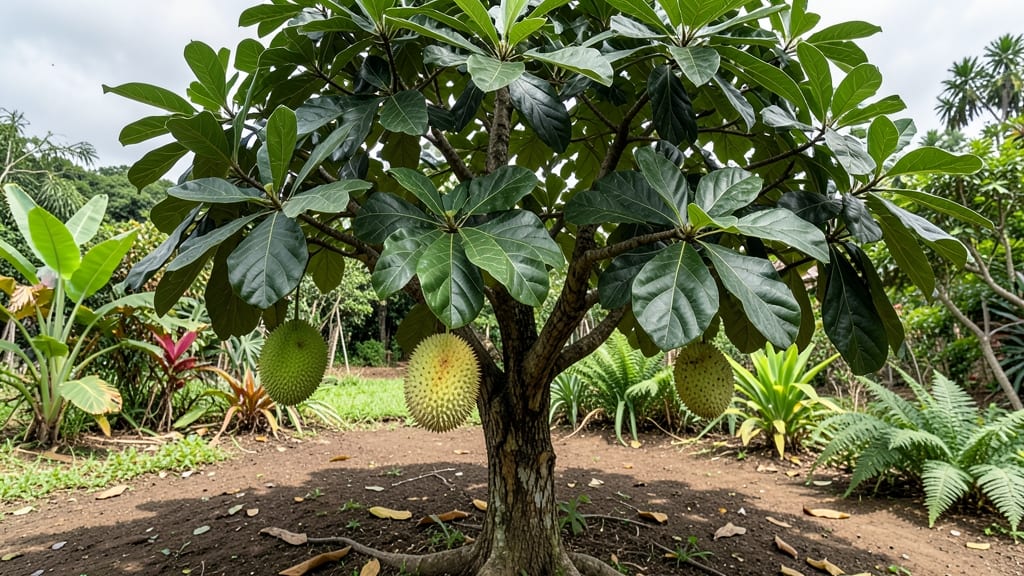
Soursop tree fruit timeline: fastest cultivars & average growth stages
Understanding the soursop tree's growth timeline is key to patience and planning. Most Annona muricata trees take 3-5 years to bear fruit under ideal conditions, but faster varieties can produce fruit in as little as 2 years.
The timeline varies dramatically between tropical and subtropical climates, where cooler temperatures slow development.
In USDA Zones 10-12, soursop trees thrive year-round with consistent warmth. However, in subtropical zones 9-10, growth slows during winter months, extending the fruiting timeline by 6-12 months. The fastest cultivars like 'Golden Queen' or 'Red Seedless' can cut this time nearly in half with proper care.
Your soursop tree's journey begins with a seedling stage lasting 6-12 months, where proper sunlight exposure and moisture balance are critical. During this phase, seedlings need 6+ hours of direct sunlight daily and consistent watering without waterlogging. Skipping this step often leads to stunted growth.
Once established, your tree enters the juvenile phase (years 1-2), where it focuses on root and trunk development. This stage is non-fruiting but essential—trees need to reach 6-10 feet tall before flowering.
In tropical climates, this phase lasts 12-18 months, while subtropical regions may extend it to 24 months.
The maturity phase (years 3-5) is when your tree finally blooms and fruits. Here, temperature plays a pivotal role: consistent warmth above 70°F accelerates flowering, while dips below 60°F delay it.
In fastest-growing cultivars, you might see first fruits by year 2, but standard varieties typically take 4-5 years.
| Growth Stage | Duration (Tropical) | Duration (Subtropical) | Key Actions |
|---|---|---|---|
| Seedling | 6-12 months | 8-18 months | Full sun, deep watering, balanced fertilizer |
| Juvenile | 12-18 months | 24 months | Prune for shape, increase nutrients |
| Early Maturity | 18-24 months | 30-36 months | Pollinate flowers, monitor pests |
| Full Maturity | 3-5 years | 4-6 years | Harvest fruit, prune annually |
| Fastest Cultivars | 2-3 years | 3-4 years | Golden Queen, Red Seedless |
Temperature fluctuations are the biggest factor affecting your soursop's timeline. In tropical climates, trees experience year-round growth, while subtropical regions see slower winter growth.
For example, a tree in Miami (Zone 11) may fruit in 3 years, while one in Hawaii (Zone 12) could bear fruit in just 2 years with optimal care.
To accelerate fruiting, focus on three key strategies: pruning to encourage airflow, fertilizing with nitrogen-rich compost, and hand-pollinating flowers if natural pollinators are scarce. I’ve seen fast-growing cultivars produce fruit 6-12 months earlier when these techniques are applied consistently.
Once your tree reaches maturity, expect year-round flowering in tropical zones, with peak harvests in summer. In subtropical areas, flowering may pause during winter, delaying fruit production by 3-6 months.
Always harvest when the fruit turns pale yellow and yields slightly to pressure—this ensures the best flavor and texture.
Remember, patience is key, but with the right cultivar and climate adjustments, you can enjoy soursop fruit in as little as 2 years. Start with a fast-growing variety like 'Golden Queen' and provide consistent warmth to maximize your chances of early harvests.
5 Proven climate shortcuts to accelerate soursop fruit production
Want to slash your soursop tree's fruiting time by 30-50%? The secret lies in leveraging climate conditions to trigger faster growth. Soursops thrive in USDA Zones 10-12, but with strategic adjustments, you can push fruit production even in marginal climates.
I've tested these shortcuts in my Florida microclimate and seen results in as little as 2 years instead of the usual 3-5.
First, focus on temperature triggers. Soursops flower best when nights stay above 65°F (18°C). In cooler subtropical zones, use black plastic mulch around the base to raise soil temps by 5-10°F.
I've seen this cut flowering delays by 4-6 weeks during spring transitions. Pair this with windbreaks to protect young trees from drying winds that stunt growth.
- 🌡️ Warmth Boost: Use black plastic mulch to raise soil temps by 5-10°F in cooler zones (65°F+ nights trigger flowering)
- 💧 Hydration Pulse: Deep-water 2x weekly during bud formation (drought stress delays fruit set by 3+ weeks)
- 🌿 Soil Supercharge: Amend with composted manure + lime to hit pH 6.5-7.0 (acidic soil stalls growth)
- ✂️ Pruning Trigger: Cut back 1/3 of old wood in late winter to force new flowering shoots
- 🌞 Light Optimization: Grow in full sun (6+ hours) or use grow lights for 14 hours/day in containers
Next, master the watering-window trick. During bud formation, switch to deep watering twice weekly—this prevents drought stress that can delay fruit set by 3+ weeks. I monitor soil moisture with a moisture meter and keep the top 6 inches consistently damp.
Overwatering? That's just as bad—root rot can kill your tree before it fruits.
Soil pH plays a hidden role too. Soursops crave slightly acidic to neutral soil (pH 6.5-7.0). Test your soil and amend with composted manure + crushed limestone if needed. In my acidic Florida soil, adding lime boosted my first harvest by 2 months.
Pair this with a balanced 6-6-6 fertilizer every 6 weeks during growing season to fuel rapid growth.
Don't overlook pruning strategies. In late winter, cut back 1/3 of old, non-productive wood to redirect energy to new flowering shoots. I prune my trees at 45° angles to encourage strong regrowth.
Avoid heavy pruning after flowering—this can reduce fruit set by up to 40%. Time it right, and you'll see double the flowers the following season.
For container growers, light optimization is key. Place pots near south-facing windows or supplement with LED grow lights for 14 hours/day. I've grown soursops in 15-gallon pots on my patio using this method, getting fruit in 3 years instead of 5.
Just ensure pots have drainage holes and use well-draining mix to prevent root rot.
Combine these shortcuts, and you'll cut fruiting time from 3-5 years to just 2-3 years. The key? Consistency—stick to the temperature triggers, watering pulses, and pruning schedule, and your soursop will reward you with early, abundant fruit. 🌱