
Pruning
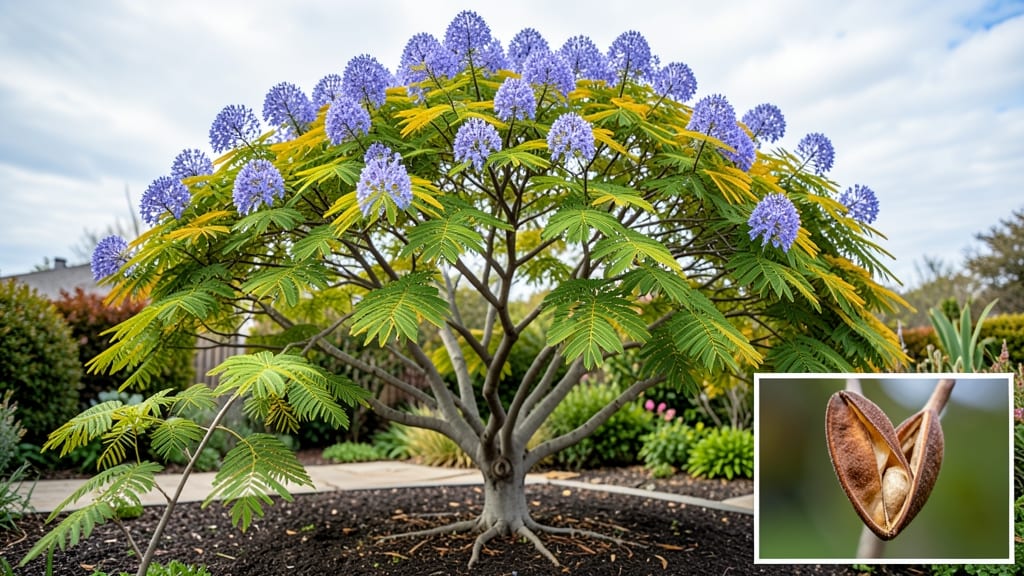
Considering the jacaranda tree pros and cons means weighing its breathtaking purple blooms and rapid growth against its high-maintenance needs, including full-sun requirements, invasive roots, and messy seed pods. These trees thrive best in USDA zones 9-11 where they can handle drought and heat.
The jacaranda tree pros and cons are striking: their dramatic six-week bloom periods transform landscapes into lavender clouds, but their aggressive root systems can crack sidewalks and disrupt plumbing. 🌿 The trade-off is worth it for pollinators—bees and butterflies adore their nectar—but homeowners in cooler climates face extra challenges keeping them alive.
I've seen them struggle even in zone 8 with winter protection, so location matters more than most realize.
Their fast growth rate (up to 3 feet per year) means you'll need to prune regularly to control size and shape, especially if you want to prevent seed pods from littering your yard.
Many landscapers recommend planting them away from structures due to their sprawling habit. For those willing to put in the effort, though, the payoff in spring color is unmatched.
💡 In This Article
- Jacaranda Tree Growth Habits and Environmental Adaptations
- Maintenance Checklist for Healthy Jacaranda Trees
Jacaranda tree growth habits and environmental adaptations
The jacaranda tree's rapid growth is a direct adaptation to its native Brazilian savannas, where it competes aggressively for sunlight.
These trees can shoot up 3 feet per year under ideal conditions, reaching 30-50 feet tall with a 25-40 foot spread—a growth rate that rivals fast-growing species like willows but with far more dramatic seasonal interest.
Their deep taproots (extending 6-8 feet) allow them to access groundwater, making them exceptionally drought-tolerant once established. This root system explains why they often outcompete native plants in urban settings, sometimes even lifting sidewalks as their roots seek moisture.
Their six-week flowering period (typically March-May) creates a visual spectacle unmatched by most ornamental trees. Each bloom cluster contains 50-100 individual flowers that release a faint, sweet fragrance—though not as strong as frangipani—that attracts pollinators like monarch butterflies and honeybees.
What's fascinating is how the tree's photosynthetic efficiency shifts during bloom: up to 40% of its energy goes toward flower production rather than leaf growth, which is why their foliage appears sparse until after flowering.
This contrasts sharply with trees like crepe myrtles, which maintain dense canopies year-round but produce far fewer flowers.
The trade-off for this rapid growth and spectacular display is their invasive root behavior, which stems from their survival strategy in dry climates. Jacarandas develop lateral roots within 2 feet of the surface, creating a dense network that can disrupt hardscapes.
I've seen cases where a 5-year-old tree caused 1-inch cracks in concrete driveways—a problem that worsens in clay-heavy soils where roots can't penetrate deeply enough. Their seed pods (which contain 30-50 winged seeds) also scatter prolifically, leading to unwanted volunteer trees unless controlled.
Seasonal adaptations make jacarandas particularly challenging outside their native range. In USDA zones 8-9, they require winter protection (like burlap wraps) to survive temperatures below 20°F, while in zones 10-11, they may need summer shade to prevent leaf scorch from temperatures above 100°F.
Their deciduous habit (losing leaves in winter) contrasts with evergreens, but this trait actually makes them more vulnerable to cold snaps than many people realize—their bare branches can suffer frost damage even when roots survive.
What most gardeners don't anticipate is how jacarandas alter soil chemistry over time. Their deep roots bring up nutrients from lower soil layers, creating a microclimate effect that can benefit surrounding plants.
However, this same process can deplete phosphorus levels in the topsoil, requiring amendments like bone meal if you want to plant ground covers beneath them. The tree's high salt tolerance (they thrive near coastal areas) means they're excellent for landscaped medians where other trees would struggle with road salt exposure.
For those considering jacarandas, the key adaptation to understand is their water-use efficiency. Once established, they require only 1-2 deep waterings per month in dry climates, making them ideal for xeriscaping.
Their ability to drop leaves during drought (a trait called "drought deciduousness") helps conserve moisture—a survival mechanism that's both their greatest asset and maintenance challenge for homeowners who prefer year-round greenery. 🌟