
Pests and Diseases
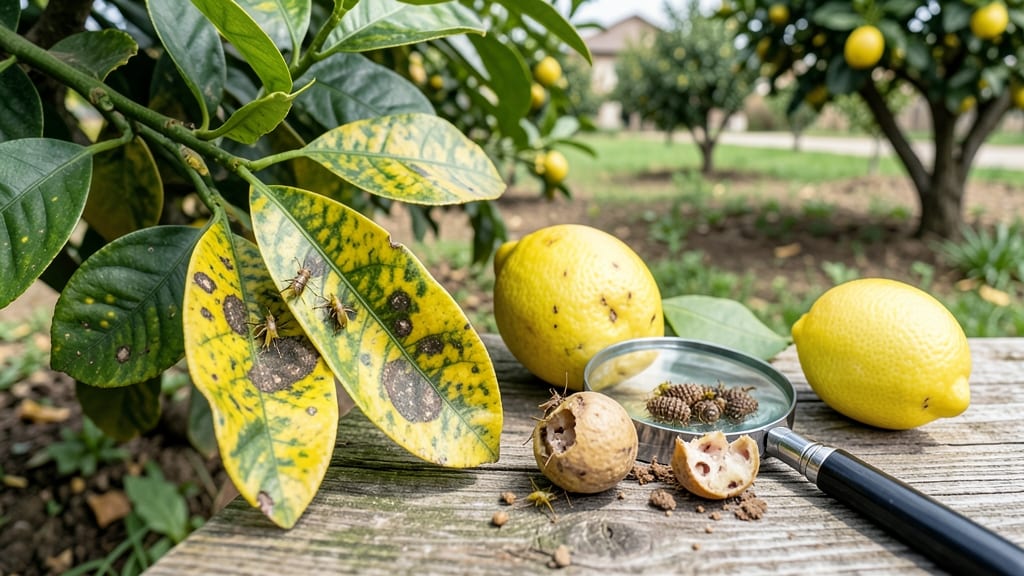
Lemon tree diseases and pests can turn your fragrant citrus tree into a sad, spotted mess—until you know these quick fixes. 🌱 I’ve battled greasy spot and scale insects myself, and the difference between a thriving tree and one struggling for life often comes down to early action.
Most gardeners wait until the damage is obvious, but the real secret is catching problems before they spread.
The worst offenders—like citrus canker, root rot, and scale insects—love warm, humid climates, which is why your lemon tree might be fighting a losing battle if you’re not pruning properly or watering at the right times.
My first year with a lemon tree, I lost three plants to greasy spot because I ignored the tiny yellow spots until they covered every leaf. Now, I check for symptoms every time I water, and I’ve kept my trees productive for five+ years.
With the right mix of organic sprays, pruning, and preventive care, you can turn things around fast. Within 2-4 weeks of treatment, you’ll see new growth pushing out, and the pests will be gone.
The key is acting before the tree’s health spirals—because once the roots or branches are damaged, recovery gets a lot harder.
This works for both backyard trees and container-grown lemons, whether you’re in a hot, humid zone or a milder climate. Let’s get your tree back to producing those sweet, tangy lemons instead of fighting for survival.
Root Causes Behind Trouble
Lemon trees, with their glossy leaves and fragrant blossoms, are a gardener’s dream—until disease or pests crash the party. 🌱😬 Understanding why these issues pop up is half the battle. Let’s break down the science behind the chaos, so you can stop guessing and start fixing.
Fungal diseases like citrus leaf spot thrive when three things align: moisture, warmth, and poor air circulation. Here’s the dirty science:
- Overhead Watering 💦 Fungal spores splash onto leaves from water droplets, creating the perfect breeding ground. Unlike drip irrigation, which delivers water to the roots, overhead sprinklers turn your tree into a fungal buffet.
- Humidity Traps 🌫️ Lemon trees love sunny days but despise soggy nights. High humidity (above 70%) keeps fungal spores active. Dense foliage or crowded trees trap moisture, while poor pruning blocks airflow, leaving lower leaves damp and vulnerable.
- Wounded Leaves ⚔️ Physical damage from hail, pests (like aphids), or even rough pruning creates entry points for fungi. Think of it like an open wound—invaders strike fast.
Pro Tip: 💡 Space your trees 8–10 feet apart to improve airflow, and water at the base in the early morning. Fungi hate sunlight on their backs!
Scale insects aren’t picky—they’ll feast on your lemon tree if it’s stressed, nutrient-deficient, or weakened by other pests. Here’s the breakdown:
- Weakened Immunity 🛡️ Trees under stress (from drought, overwatering, or poor soil) produce less sap—a natural pest repellent. Scale insects detect this weakness and move in like squatters at a foreclosure sale.
- Ant Allies 🐜 Ants don’t eat scales, but they farm them. Ants protect scale insects from predators (like ladybugs) in exchange for their sweet honeydew secretions. If you see ants marching up your tree, scales are likely already partying.
- Climate Comfort 🌡️ Scale insects love warm, dry conditions (60–85°F). If your tree is in a sheltered spot with little wind, they’ll multiply unchecked. Evergreen trees nearby? Bonus hiding spots for them.
Pro Tip: 🔥 Prune out heavily infested branches before scales spread, and use horticultural oil in late winter to smother eggs. Ant baits (like borax-based ones) can break their scale-ant alliance.
Lemon trees are tough, but extreme weather can tip the scales (pun intended) toward disaster. Here’s how:
| Condition | How It Helps Pests/Diseases | Solution |
|---|---|---|
| Prolonged Rain 🌧️ | Fungi like melanose spread rapidly; soft-bodied pests (like aphids) thrive in damp conditions. | Use fungicidal sprays (copper-based) and row covers during heavy rains. |
| Drought Stress 🏜️ | Weakened trees attract scale and spider mites, which love dry, dusty leaves. | Deep water once a week (1–1.5 inches) and mulch to retain moisture. |
| Sudden Temperature Shifts ❄️☀️ | Cold snaps weaken trees, making them susceptible to citrus canker bacteria. | Apply dormant oil in winter to protect leaves and avoid overhead watering. |
Pro Tip: 🌡️ Monitor your local humidity and temperature with a weather station. Most fungal outbreaks peak when humidity stays above 80% for >48 hours.
Now that you know the why, the how to fight back is next. Stay tuned for targeted fixes to reclaim your lemon tree’s health!
Fixing Lemon Tree Troubles Fast
When your lemon tree starts showing signs of stress—whether it’s leaf spots, sticky scale insects, or wilting branches—acting quickly can save your tree. Below are practical, step-by-step solutions tailored to common diseases and pests, plus prevention tips to keep your tree thriving. No green thumb required!
Causes: Overwatering, poor airflow, or contaminated tools. Signs: Yellow/brown spots with dark edges, leaf drop.
🍳 Step 1: Prune Infected Leaves
- Use sterilized pruners (wipe with rubbing alcohol) to remove all spotted leaves.
- Dispose of them in the trash not the compost.
👨🍳 Step 2: Improve Airflow & Light
- Thin out dense foliage to allow sunlight and air circulation.
- Space trees 6–8 feet apart if replanting.
🥘 Step 3: Apply Fungicide
- Organic option: Spray with a copper fungicide (follow label rates) every 7–10 days until new growth appears.
- Chemical option: Use neem oil (1 tsp per quart of water + a drop of dish soap) as a preventative spray.
⏰ Prevention Tips
- 💡 Water at the base (avoid wetting leaves).
- ✨ Sterilize tools before and after pruning.
- 🌡️ Space mulch 2–3 inches away from the trunk to reduce humidity.
Causes: Weak trees, dry conditions, or poor pruning habits. Signs: Sticky residue ("honeydew"), white/brown bumps on stems, yellowing leaves.
🔪 Step 1: Scrape Off Visible Infestations
- Use a soft brush or cloth dipped in soapy water to wipe off scales from branches and leaves.
🥘 Step 2: Drown Them with Oil
- Mix 1 tbsp horticultural oil per gallon of water and spray thoroughly (especially undersides of leaves).
- Repeat every 5–7 days for 2–3 weeks.
🎯 Step 3: Introduce Beneficial Insects
- Release ladybugs or parasitic wasps (available at garden centers) to eat scale naturally.
🔥 Prevention Tips
- 💡 Inspect new plants before bringing them home.
- 🌡️ Keep trees hydrated (scale thrives in drought).
- ✨ Prune regularly to remove hiding spots.
Causes: Overcrowded trees, dry soil, or weak immunity. Signs: Curling leaves, webbing, tiny black dots (frass).
🍳 Step 1: Blast Them Off
- Spray leaves with a strong stream of water to dislodge pests.
👨🍳 Step 2: Soap It Up
- Mix 2 tbsp castile soap per gallon of water and spray every 3–4 days until gone.
🥘 Step 3: Encourage Predators
- Plant marigolds or dill nearby to attract aphid-eating hoverflies.
⏰ Prevention Tips
- 💡 Use reflective mulch (aluminum foil) to deter mites.
- 🌡️ Mist leaves on hot days to boost humidity (mites hate it).
- ✨ Avoid over-fertilizing (weakens tree defenses).
Pro Tip: Always test treatments on a small branch first to avoid damaging your tree. 🌱
Frequently asked questions
How do I tell if my lemon tree has a fungal disease vs. pest damage?
Fungal diseases like greasy spot or citrus canker show up as yellow/brown spots with dark edges or black lesions on leaves, often with a greasy texture. Pests like scale insects create sticky residue (honeydew), white bumps on stems, or webbing. Check undersides of leaves—pests leave eggs or frass (tiny black dots), while fungi rarely do.
Can I use household items like vinegar or baking soda to treat lemon tree pests?
Yes, but with caution! A 1:1 vinegar-water spray (1% solution) can deter soft-bodied pests like aphids, but avoid spraying directly on leaves—it can burn them. For baking soda, mix 1 tsp baking soda + 1 tsp dish soap + 1 quart water to treat fungal issues, but test on a small area first. Both work best as preventatives, not cures.
Why do my lemon tree leaves keep getting yellow, even after treating for pests?
Yellow leaves often signal overwatering, nutrient deficiency, or root issues. Check soil moisture—lemon trees prefer dry soil between waterings. Yellowing with brown edges suggests burned roots from overwatering, while yellowing with green veins may mean iron deficiency. Test soil pH (ideal: 6.0–7.0) and consider a citrus-specific fertilizer.
How often should I inspect my lemon tree for early signs of trouble?
Check your tree weekly during growing season (spring-fall) and biweekly in winter. Focus on new growth, undersides of leaves, and stems—these are where pests hide. Early detection is key! Use a magnifying glass for tiny pests like spider mites. Pro tip: Set a reminder with your watering schedule.