
Diseases
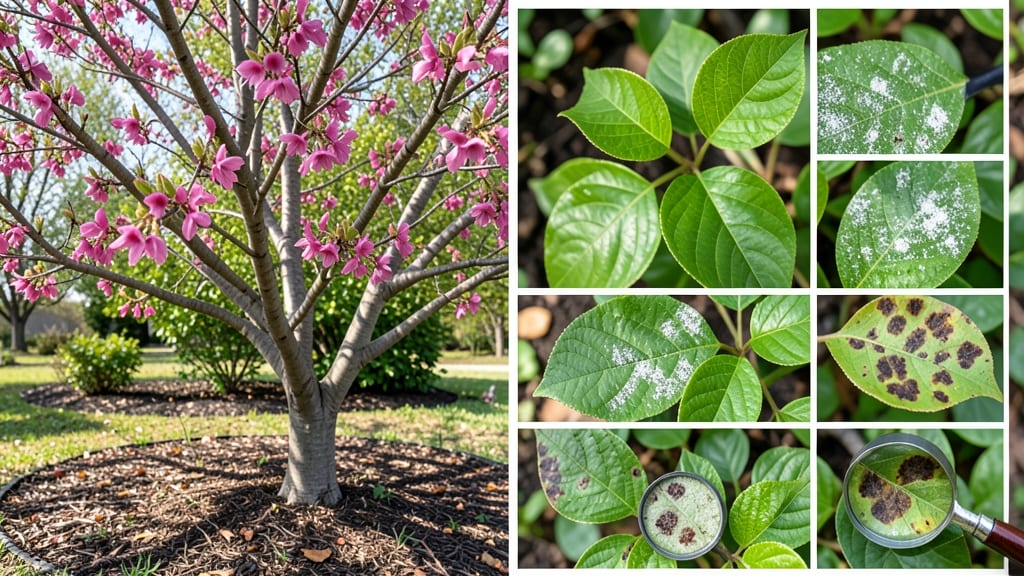
Your Oklahoma redbud tree’s pink spring blooms shouldn’t signal its last stand—those telltale leaf spots or oozing cankers mean disease, not death. 🌿 I’ve battled fungal and bacterial threats in Oklahoma’s humid summers, and the right diagnosis turns panic into prevention.
This guide cuts through the guesswork so you can save your tree before symptoms spread.
Oklahoma’s climate—hot summers and wet springs—creates the perfect storm for redbud diseases like anthracnose or bacterial leaf scorch. You’ll spot dark, sunken spots on leaves or stems that ooze when wet, or sudden wilting despite regular watering.
The key? Catching these early, when treatments still work. My trees bounce back every time I act within 2 weeks of noticing symptoms.
You’ll learn to prune infected branches at the right time, apply fungicides before spores spread, and even use household remedies like neem oil for mild cases. The goal isn’t just to treat—it’s to rebuild your tree’s defenses so it thrives through Oklahoma’s next heatwave.
No more guessing what’s wrong or how to fix it.
We’ll cover organic and chemical options, so you can choose what fits your yard’s needs. Plus, I’ll share the one trick that’s saved my redbuds from repeat infections—it’s simpler than you’d think. Let’s get your tree back to blooming like it should.
Root Causes of Redbud Tree Struggles
The Oklahoma redbud tree (Cercis canadensis) is a resilient beauty, but even it falls prey to diseases—often due to environmental stress, microbial invaders, or poor growing conditions. Understanding why these issues arise helps you take proactive steps to protect your tree.
Let’s break down the key culprits behind Oklahoma redbud tree diseases, explained in clear, actionable terms.
Fungal diseases—like anthracnose and powdery mildew—thrive when moisture lingers on redbud leaves and bark. Oklahoma’s humid summers and unpredictable rainfalls create the perfect breeding ground for these pathogens.
- How it happens: Fungal spores (often spread by wind or splashing water) land on wet foliage, germinate, and infect the tree’s tissues.
- Key triggers:
- Prolonged leaf wetness (e.g., morning dew, heavy rain, or poor drainage).
- Overhead irrigation that keeps leaves damp for hours.
- Crowded plantings that restrict airflow, trapping humidity.
- Actionable fix: Space trees 6–10 feet apart, water at the base (not overhead), and prune for better airflow. Fungicides with chlorothalonil or neem oil can help during high-risk seasons (spring/fall).
Pests like scale insects, aphids, and borers don’t just feed on redbuds—they create entry points for diseases. When a tree’s sap flows freely (due to insect bites), it becomes vulnerable to bacterial and fungal invaders.
- How it happens:
- Insects pierce bark or leaves, excreting honeydew (a sugary substance that attracts sooty mold).
- Weakened tree stress responses make it harder to fight off pathogens.
- Common Oklahoma culprits:
Pest Disease Link Japanese beetles Transmit Erwinia bacteria (causing bacterial leaf spot). Scale insects Honeydew feeds sooty mold, blocking sunlight and stressing the tree. Emerald ash borer (nearby trees) Stresses redbuds by competing for water/nutrients. - Actionable fix: Monitor for pests with yellow sticky traps or horticultural oil sprays in early spring. Introduce ladybugs or parasitic wasps for natural control.
Oklahoma’s hot summers and freezing winters can shock redbud trees, lowering their resistance to diseases. Sudden temperature drops (e.g., late-spring frosts) or heatwaves stress the tree’s immune system, making it easier for pathogens to take hold.
- How it happens:
- Cold stress: Frost cracks bark, allowing Nectria canker (a fungal disease) to enter.
- Heat stress: Drought weakens roots, reducing the tree’s ability to transport nutrients and fight infections.
- Oklahoma-specific risks:
- Late-spring frosts (April–May) damage new leaves, inviting anthracnose.
- Summer droughts (June–August) stress trees, making them susceptible to root rot.
- Actionable fix:
- Mulch with 3–4 inches of wood chips to regulate soil temperature.
- Water deeply 1–2 times per week during droughts (check soil moisture 2–3 inches down).
- Use anti-desiccant sprays (like Wilt-Pruf) before frost to protect leaves.
A redbud tree’s health starts underground. If the soil lacks essential nutrients or drains poorly, the tree becomes malnourished and disease-prone. Oklahoma’s clay-heavy soils (common in central/eastern regions) can compound the issue by suffocating roots.
- How it happens:
- Compacted soil: Restricts root growth, reducing water/nutrient uptake.
- Low pH (too acidic): Locks out phosphorus and calcium, weakening cell walls.
- Excess nitrogen: Promotes lush foliage but makes leaves more susceptible to fungal infections.
- Disease connections:
- Zinc/manganese deficiencies → leaf spot diseases.
- Poor drainage → Phytophthora root rot.
- Actionable fix:
- Test soil with a home kit (aim for pH 6.0–7.0). Amend with lime (to raise pH) or sulfur (to lower it).
- Add compost or aged manure to improve structure and fertility.
- Avoid synthetic fertilizers; opt for slow-release organic options (e.g., fish emulsion).
💡 Pro Tip: Oklahoma’s microclimates (e.g., urban heat islands vs. rural areas) can accelerate disease spread. If your redbud is near sidewalks or pavement, its roots may overheat—install root zone mulch to insulate them.
How to Treat and Prevent Redbud Tree Ailments
Now that you’ve identified the issue plaguing your Oklahoma redbud tree, it’s time to act! Early intervention is key to saving your tree from irreversible damage. Below are practical, step-by-step solutions tailored to the most common diseases affecting redbud trees in Oklahoma—from fungal infections to bacterial blights.
We’ve also included prevention tips to keep your tree thriving long-term.
🔥 Remove Infected Leaves and Debris
Fungal spores thrive in damp, decaying plant matter.
Start by pruning and disposing of any leaves, branches, or twigs showing white powdery patches (powdery mildew) or dark, sunken lesions (anthracnose). - Use sterilized pruners (wipe with rubbing alcohol or bleach solution) to avoid spreading spores. - Bag and trash infected debris—do not compost it.
🍳 Apply Fungicidal Sprays (Organic or Chemical)
Once you’ve cleaned up, treat the tree with a fungicide to stop the spread.
- For powdery mildew:
- Neem oil spray (1 tsp neem oil + 1 tsp mild soap + 1 quart water) – spray early morning or evening to avoid burning leaves.
- Baking soda solution (1 tbsp baking soda + 1 tsp oil + 1 gallon water) – reapply every 7–10 days in humid conditions.
- For anthracnose:
- Copper fungicide (follow label instructions) – effective against bacterial and fungal pathogens.
- Chlorothalonil (for severe cases) – apply when leaves are dry and reapply after rain.
🌡️ Improve Air Circulation & Reduce Moisture
Fungi love humidity. Prevent future outbreaks by:
- Thinning out dense foliage to allow sunlight and airflow.
- Watering at the base (avoid overhead sprinkling) and watering early in the day so leaves dry quickly.
- Mulching properly (2–3 inches of organic mulch, keeping it 6 inches away from the trunk).
👨🍳 Prune Infected Branches Immediately
Bacterial infections spread rapidly. Cut out and destroy any branches with:
- Dark, water-soaked spots (leaf spot).
- Oozing cankers (bacterial canker).
- Use sterilized tools and seal cuts with pruning paint (optional but helps prevent reinfection).
🔪 Clean Tools & Surroundings
- Disinfect pruners between cuts with 70% isopropyl alcohol or a 10% bleach solution.
- Remove and destroy fallen leaves and debris to eliminate bacterial reservoirs.
⏰ Avoid Overhead Watering
- Water deeply but infrequently (1–2 inches per week).
- Use drip irrigation or soaker hoses to keep foliage dry.
- Water in the morning to allow leaves to dry before evening humidity sets in.
💡 Pro Tip: Copper Sprays for Prevention
- Copper-based bactericides (like Copper Sulfate) can be applied preventatively in early spring before bacterial activity peaks.
- Reapply after heavy rains to maintain protection.
🥘 Improve Drainage First
Root rot is often fatal, but correcting soil conditions can save your tree.
- Test your soil (Oklahoma State University Extension offers free/low-cost tests).
- Amend heavy clay soil with compost or sand to improve drainage.
- Raise the tree’s base slightly with a mound of gravel if water pools around the trunk.
🌱 Transplant or Mulch Strategically
- If the tree is in poorly draining soil, consider relocating it to a higher, drier spot.
- Avoid over-mulching—keep mulch 2–3 inches deep and 6 inches from the trunk.
✨ Use Fungicidal Soil Drenches (Last Resort)
For severe root rot, a soil drench with systemic fungicide (like Propiconazole) may help, but prevention is better.
- Prevent future rot by:
- Planting redbuds in well-draining soil.
- Avoiding overwatering (especially in Oklahoma’s heat).
- Choosing resistant varieties if possible (though redbuds are generally uniform in disease susceptibility).
To keep your tree healthy and disease-free, follow these year-round tips: ✅ Inspect regularly – Check for spots, discoloration, or unusual growth every 2–4 weeks. ✅ Keep the area clean – Remove fallen leaves, twigs, and debris promptly. ✅ Prune properly – Remove dead/diseased branches in late winter/early spring (before fungal spores spread). ✅ Fertilize wisely – Over-fertilizing stresses trees; use a balanced, slow-release fertilizer in early spring. ✅ Monitor weather conditions – Oklahoma’s humid summers and spring rains are prime fungal conditions—stay vigilant!
By following these targeted treatments and prevention steps, your Oklahoma redbud can bounce back from diseases and continue gracing your landscape with its stunning pink spring blooms for years to come. 🌸🌿
Frequently asked questions about Oklahoma redbud tree diseases
What are the most common diseases affecting Oklahoma redbud trees?
The three most frequent issues are anthracnose (dark, sunken leaf spots), powdery mildew (white fungal coating), and bacterial leaf scorch (brown leaf edges). Oklahoma's humid summers create perfect conditions for these pathogens. Early spring is especially risky due to wet foliage from rain or dew.
Can I save my redbud if it already has large infected branches?
Yes, but act fast! Prune out infected branches immediately using sterilized tools, then apply a copper fungicide to prevent spread. For severe cases, consider a systemic fungicide drench like Propiconazole. The key is removing infected tissue before spores spread to healthy parts. Don't wait more than 2 weeks after noticing symptoms.
Are there organic treatments that work for redbud diseases?
For powdery mildew, mix 1 tablespoon baking soda + 1 teaspoon oil + 1 gallon water and spray weekly. Neem oil (1 tsp + 1 quart water) works against many fungal issues when applied in early morning/evening. For bacterial problems, hydrogen peroxide spray (1 part 3% H₂O₂ to 9 parts water) can help. Always test on a small area first.
How can I prevent diseases before they start?
Focus on three key practices:
- Improve airflow by pruning dense branches,
- Water at the base (never overhead) using drip irrigation, and
- Clean up fallen leaves regularly. Apply copper fungicide preventatively in early spring before spores become active. Mulch properly (2-3 inches) but keep it 6 inches from the trunk to prevent moisture buildup.
Why do my redbud leaves turn yellow even when I water regularly?
Yellowing leaves often signal nutrient deficiencies or root stress. Check for chlorosis (yellow between veins) which suggests iron/zinc deficiency in Oklahoma's alkaline soils. Test your soil pH (aim for 6.0-7.0) and amend with chelated iron or compost. If roots are waterlogged, improve drainage with sand or gravel around the base.