
Pruning
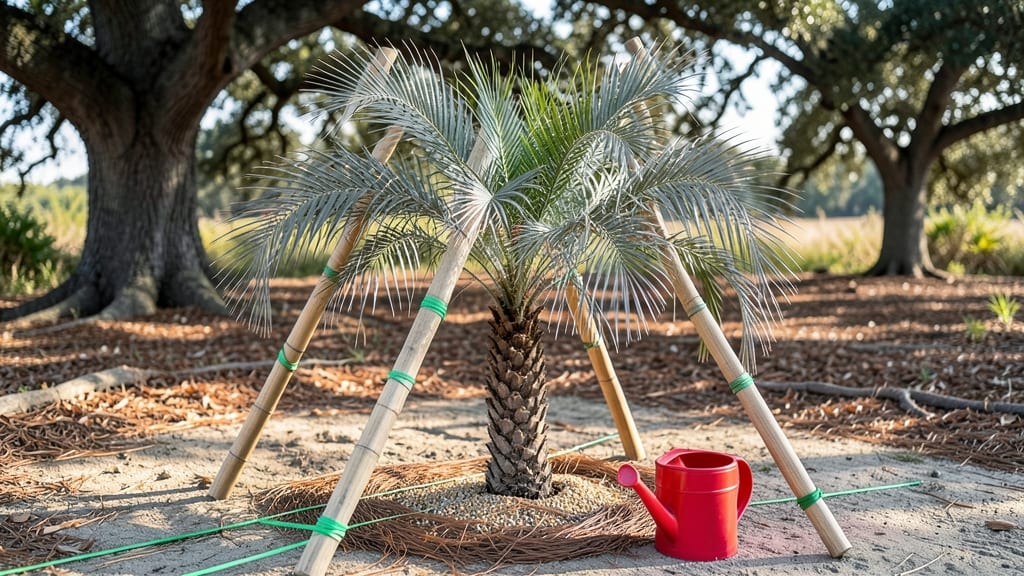
Staking palm trees isn't just about preventing topples—it's about guiding them to grow stronger and straighter than you ever thought possible. ✨ I learned the hard way when my first palm leaned dangerously after a summer storm, and now I stake every young tree in my yard as soon as they hit 3-4 feet tall.
The right technique turns floppy stems into sturdy columns that handle wind and weight like pros.
The secret lies in timing and materials: use soft, flexible stakes (like bamboo or plastic-coated wire) and tie them loosely with cotton or rubber straps—never wire that can cut into the trunk. I stake during the dry season when roots are established but before heavy winds arrive.
Too tight, and you strangle growth; too loose, and the tree sways like a drunk dancer. The goal is support without restriction.
What you'll end up with is a palm that grows taller, faster, and more upright than unstaked neighbors. The stakes stay in place for 1-2 years (or until the trunk thickens enough to stand alone), and the results?
Trees that look like they’ve been growing that way for decades—not just a few seasons. The best part? You’ll spend less time fixing leans and more time admiring your perfectly straight specimens.
Works for young palms (like Canary Island, Mexican Fan, or Mediterranean Dwarf) and even mature trees recovering from storms. Here’s how to do it right—without the common mistakes that leave trees looking like they’ve been tied up by a drunk sailor.
📚 In This Guide
- What you need
- Instructions
- Tips and common mistakes
- Wrapping up and next steps
What you need
- ● Stakes: 2–4 wooden, metal, or plastic stakes (3–4 feet tall, depending on tree height)
- ● Pro tip: Metal stakes last longer but may require protective sleeves to avoid damaging the trunk.
- ● Staking Straps or Ties: 4–6 soft, stretchy tree ties (1–2 inches wide) or wide fabric strips
- ● Pro tip: Avoid wire or tight materials—palm trunks are delicate!
- ○ Support Base: 1–2 small wooden planks or concrete blocks (optional, for stabilizing stakes)
- ● Tools: Hammer or mallet (for driving stakes)
- ● Measuring tape (to ensure even spacing)
- ● Pruners (for trimming any obstructions near the trunk)
- ● Stake guards (to protect the trunk from rubbing)
- ● Waterproof tape (to secure ties against moisture)
- ● Extra-long stakes (if your palm is exceptionally tall)
Step-by-Step guide to proper palm tree staking
Here's how to provide stable support for your palm's rapid growth without causing long-term damage.
🪴 Step 1: Choose the Right Staking Materials
Select soft, flexible materials like bamboo stakes or plastic-coated wire—never rigid metal that can girdle the trunk as it grows. I prefer 3/8-inch diameter bamboo stakes because they're strong yet gentle on tender palm tissue. For larger palms, use two stakes per tree positioned diagonally to distribute weight evenly.
Drive the stakes 6-12 inches deep into the soil, angled slightly outward from the trunk to create a natural support triangle. The top of the stake should extend 12-18 inches above the palm's current height—this ensures support as the tree grows. Use a mallet for bamboo or hand pliers for wire to avoid damaging the stake.
🌿 Step 2: Attach Stakes Without Restricting Growth
Create a loose, adjustable harness using soft garden twine or elastic plant ties. Wrap the twine around the trunk and stake in a figure-eight pattern, leaving 1-2 inches of slack at the widest part of the trunk. This prevents constriction while still providing stability. I adjust the ties every 4-6 weeks as the palm thickens—tight ties can leave permanent grooves in the trunk.
The harness should sit 6-12 inches below the palm's crown where the trunk begins to taper. This position distributes weight properly and prevents the stake from interfering with the growing tip. Never tie directly to the fronds—this can damage the delicate petioles and restrict leaf development.
✂️ Step 3: Monitor and Adjust Support System
Check the staking system every 2-3 weeks during the growing season. Look for signs of trunk rubbing against the stake or ties cutting into the bark. If you see any abrasion, loosen the ties immediately and reposition the stake. I've seen palms develop permanent scars from tight ties that never heal properly—this is the moment that matters.
As your palm grows, extend the stakes by 6-12 inches using the same soft tie method. Never simply add more height to existing stakes—this creates weak points where the stake meets the extension. For mature palms, you may need to transition to tree straps that distribute weight more evenly around the trunk.
⏰ Step 4: Remove Stakes at the Right Time
Most palms can be staked for 12-18 months before they develop sufficient trunk strength. The removal test is simple: gently push the palm at the base. If it doesn't lean significantly or the trunk doesn't bend, it's ready. I've seen palms with 3/4-inch diameter trunks support themselves well—this is your visual cue that staking is no longer needed.
Remove stakes gradually over 2-3 weeks to prevent sudden stress. Start by loosening one tie completely, then another the following week. This gives the palm time to adjust to wind forces without sudden shock. Never cut stakes abruptly—this can cause the palm to topple or develop permanent lean.
Tips & tricks for perfect palm tree staking
These simple adjustments will help you avoid common mistakes and ensure your palm grows strong and straight.
Material Selection: While bamboo stakes and plastic-coated wire are ideal, you can also use wooden stakes if wrapped with soft fabric to prevent trunk damage. Avoid metal or anything that could cut into the bark as your palm grows. I've seen palms develop permanent scars from improper materials—this is one area where taking extra time pays off.
Harness Placement: The figure-eight pattern in Step 2 is critical, but the placement matters just as much. Position the harness 6-12 inches below the crown where the trunk naturally tapers. This creates a stable support point without interfering with the growing tip. I've noticed that harnesses placed too high can actually encourage leaning rather than prevent it.
Monitoring Frequency: The 2-3 week check interval in Step 3 is perfect for most growing seasons, but adjust if you're in extreme weather. During heavy rain or wind storms, check weekly to ensure ties haven't loosened or stakes haven't shifted. I've had to reinforce systems after just one storm when I initially skipped this extra check.
Stake Extension Technique: When extending stakes by 6-12 inches, use the same soft tie method rather than simply adding height. This maintains the gradual support that helps the palm adjust naturally. I've seen palms develop weak points where stakes were improperly extended, leading to sudden breaks during wind events.
Pro Tips for Palm Tree Staking
- These simple adjustments will help you avoid common mistakes and ensure your palm grows strong and straight.
- Material Selection: While bamboo stakes and plastic-coated wire are ideal, you can also use wooden stakes if wrapped with soft fabric to prevent trunk damage.
- Harness Placement: The figure-eight pattern in Step 2 is critical, but the placement matters just as much.
Frequently asked questions
Got questions about palm tree staking? You’re not alone! Here are answers to the most common concerns to help you keep your palms standing tall and proud.
When is the best time to stake a palm tree?
Stake your palm tree before it becomes unstable—typically when it reaches 10–15 feet tall or starts leaning. Early staking (spring or early summer) gives roots time to adjust, while avoiding winter staking to prevent stress. Young palms or those in windy areas need support sooner!
How long should I leave stakes in place?
Most palms need stakes for 1–2 years, until the trunk thickens and the root system stabilizes. Check annually: if the tree wobbles or leans, keep the stakes. Remove them once the trunk is sturdy (usually 3–4 inches in diameter at the base). Over-staking can weaken the trunk!
Can I use bamboo stakes or should I buy special palm stakes?
Bamboo stakes work in a pinch, but galvanized metal or PVC stakes are better—they resist rot and last longer. For heavy palms, opt for 3–4 stakes (angled at 45°) tied with soft materials (like tree ties) to avoid trunk damage. Avoid wire or tight straps!
What if my palm tree is already leaning? Can staking fix it?
Staking can help support a leaning palm, but it won’t reverse the lean. First, check for root issues or soil erosion. If the lean is severe, consider guying lines (angled supports) or professional help. For minor leans, staking can prevent further tipping while the tree adjusts.
How tight should the ties be around the trunk?
Ties should be snug but not cutting—you should fit 1–2 fingers between the tie and trunk. Use soft, flexible materials (like rubberized tree ties or old hose) and check them monthly. Tight ties can girdle the trunk, restricting growth. Loosen ties as the trunk thickens!
Will staking hurt my palm tree?
If done correctly, staking is harmless! The key is using the right materials (no wire or plastic that digs in) and avoiding over-tightening. Poor staking can cause trunk damage, rot, or restricted growth. Always stake at a 45° angle and distribute support evenly.
Wrapping up and next steps
Mastering palm tree staking is all about balancing support with natural growth—giving your tree the strength to stand tall while letting it thrive independently. Whether you’re dealing with a young sapling or a mature palm, the right technique ensures stability without restricting its potential. 🌴✨
Now that you’re equipped with the know-how, roll up your sleeves and take action! Start by assessing your palm’s needs, gather your materials, and stake with confidence. Watch your tree grow stronger with every season—you’ve got this!