
Pruning
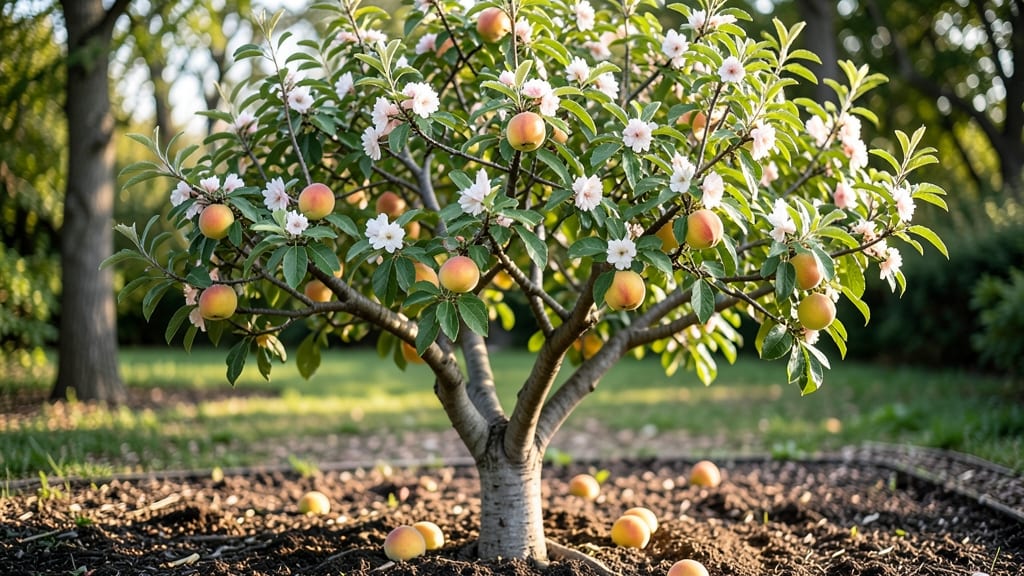
For Missouri peach tree varieties, cold-resistant options like ‘Reliance,’ ‘Contender,’ and ‘Loring’ excel in USDA Zones 5-7, delivering sweet, flavorful fruit even through harsh winters and humid summers. Opt for early-maturing types to ensure successful harvests in shorter growing seasons.
Missouri’s climate—with its unpredictable freeze-thaw cycles and high humidity—demands peach trees that can withstand stress while still producing quality fruit. 🌳 The varieties I recommend are specifically bred to handle these conditions, often requiring fewer than 500 chilling hours to trigger blooming.
For example, ‘Reliance’ matures early, avoiding late spring frosts that can devastate blossoms, while ‘Loring’ offers superior disease resistance to brown rot, a common issue in Missouri’s damp summers.
When planting, focus on well-draining soil with a pH between 6.0 and 7.0, and space trees 20-25 feet apart to allow airflow and sunlight penetration. Prune in late winter (before buds swell) to remove dead wood and thin out crowded branches—this boosts air circulation and reduces disease risk.
In winter, wrap young trees with burlap or use tree guards to protect against late-season freezes.
💡 In This Article
- Cold-Hardy Peach Tree Characteristics for Missouri Climates
- Planting and Care Guide for Missouri Peach Trees
Cold-hardy peach tree characteristics for Missouri climates
Missouri’s climate—marked by sudden temperature swings and high humidity—creates unique challenges for peach trees. The key to success lies in selecting varieties that meet 500-700 chilling hours, which Missouri’s Zones 5-7 typically provide.
For instance, ‘Reliance’ requires only 400-500 chilling hours, making it ideal for northern Missouri where winters can be harsher. These trees also need rootstocks like ‘Lovell’ or ‘Nemaguard,’ which provide resistance to nematodes and other soil-borne diseases common in Missouri’s clay-heavy soils.
The state’s humid summers (70-80% relative humidity) make disease resistance critical. Varieties like ‘Loring’ have built-in defenses against brown rot (Monilinia fructicola), a fungal disease that thrives in Missouri’s damp conditions.
Leaf curl (Taphrina deformans), another common issue, is less problematic with these cold-hardy types because their thicker bark and smaller leaves reduce infection points. 🌿 The trade-off?
Some varieties may sacrifice peak sweetness for resilience, but the flavor difference is minimal—think ‘Contender’s’ bright, tangy-sweet profile versus a grocery-store peach’s blandness.
Heat waves (often exceeding 95°F) can stress peach trees, but Missouri’s recommended varieties handle this better than tropical types. Their shallow root systems (typically 12-18 inches deep) allow them to access moisture quickly, while their semi-dwarf growth habit (12-15 feet tall) reduces water loss through transpiration.
The secret weapon? Their ability to delay fruit ripening until late summer when temperatures drop slightly—avoiding the “June drop” where trees abort flowers due to heat stress.
One often-overlooked factor is Missouri’s late spring frost risk. Early-blooming varieties (like ‘Redhaven’) can lose blossoms to 28°F frosts, but ‘Reliance’ blooms later, aligning better with the state’s average last-frost date (April 15 in Zone 6).
This timing ensures more consistent fruit set. For added protection, plant trees on south-facing slopes where cold air drains away naturally—a technique called “microclimate selection” that can raise soil temperatures by 5-10°F during frosts.
Soil pH matters too. Missouri’s native soils often test acidic (pH <6.0), but peach trees prefer 6.0-7.0. Amending with lime (calcium carbonate) before planting creates the ideal growing environment. The result? Healthier trees with stronger immune systems to fight off Missouri’s most persistent pests—like peach tree borers—which target stressed trees.
A well-chosen variety combined with proper soil prep means fewer chemical interventions and more fruit for your effort.
Consider this: A ‘Loring’ peach tree in Missouri’s Zone 6 can yield 100-150 pounds of fruit annually when properly cared for, compared to 50-80 pounds for a less-hardy variety. The difference comes down to resilience built into the tree’s genetics—something you can’t replicate with aftercare alone. 🌱