
Flowers
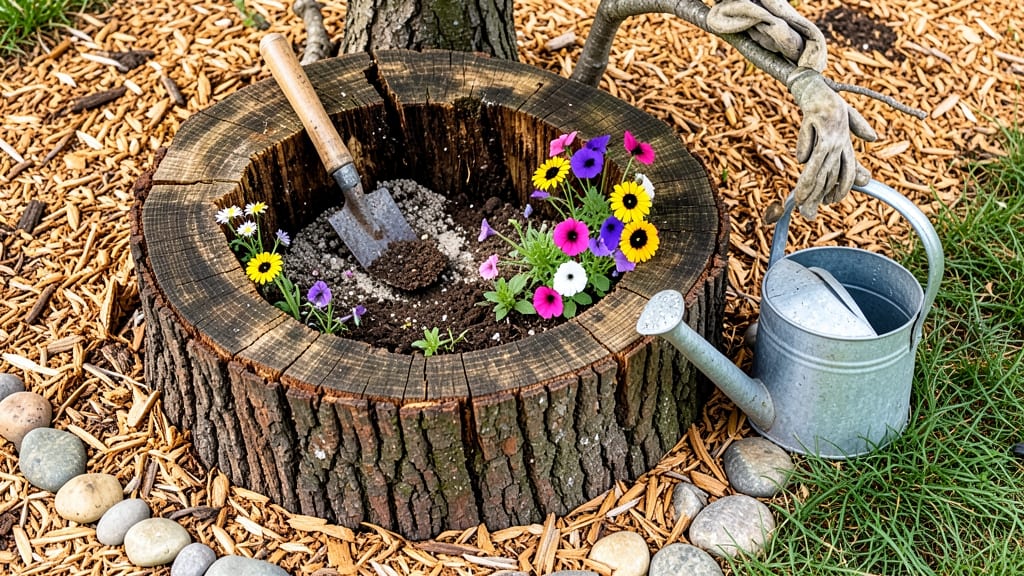
Transforming tree stumps into vibrant vertical gardens by planting flowers in tree stumps turns an eyesore into a conversation starter. 🌿 The right flowers and a little prep work turn these stumps into lush, year-round displays that outshine traditional garden beds.
Start with a clean, sealed stump—drainage holes and a waterproof liner prevent rot while keeping roots happy. Impatiens, ferns, and moss thrive in the moist conditions, while succulents need well-draining soil mixes. The key is matching the plant to the stump’s microclimate.
You’ll end up with a striking garden feature that blooms in summer, stays green in fall, and even holds interest in winter with evergreens. The best part? It’s eco-friendly, repurposing what would otherwise be waste. Works for any yard size, from suburban backyards to urban patios.
Here’s how to make it happen without the guesswork!
📚 In This Guide
- What you need
- Instructions
- Tips and common mistakes
- Wrapping up and next steps
What you need
- ● Tree stump: Freshly cut (preferably within the last 6–12 months) or naturally decayed, with a minimum diameter of 6 inches (larger stumps = more planting space!).
- ● Drill or auger: A 1/2-inch to 3/4-inch bit (adjust size based on flower pot diameter).
- ● Small flower pots: 3–6 inches in diameter, with drainage holes (1–2 per stump hole, depending on stump size).
- ● Potting soil: Well-draining, peat-free mix (add perlite or sand for extra aeration if needed).
- ● Slow-release fertilizer: Balanced 10-10-10 or organic options (follow package instructions for dosage).
- ○ Moss or sphagnum moss: Optional but recommended to cover the stump and retain moisture (use 1–2 pounds per stump).
- ● Waterproof sealant: Non-toxic, outdoor-grade (e.g., polyurethane) to protect the stump from rot (apply after planting).
- ○ Decorative stakes or twine: Optional for securing pots or moss in place.
- ● Stump prep: Ensure the stump is clean and dry (remove bark or debris if needed). For fresh cuts, let it sit for 1–2 weeks to harden slightly.
- ● Safety first: Wear gloves and safety goggles when drilling to avoid splinters or debris.
- ● Climate check: If planting in a hot, dry climate, opt for drought-tolerant flowers (e.g., succulents, lavender).
- ● Flower selection: Choose compact, shallow-rooted varieties like impatiens, ferns, or trailing ivy (avoid heavy plants that may topple pots).
Step-by-step guide to planting flowers in tree stumps
Turn old stumps into eye-catching vertical gardens with these simple steps—perfect for small spaces or dramatic yard accents.
🪴 Step 1: Prepare the Tree Stump for Planting
Start by cleaning the stump thoroughly with a wire brush or sandpaper to remove loose bark, debris, and any moss or fungi growing inside. This step is critical because decaying material can attract pests or rot your new plants. I like to use a stiff-bristled brush to scrub the inner walls and edges, making sure the surface is smooth and stable for planting.
Next, check for any cracks or hollow spots. If the stump has deep crevices, fill them with a small amount of hydrogel crystals (if using) or simply pack them with extra soil to create a secure base for your flowers. The goal is to create a stable planting surface where roots can anchor properly. For larger stumps, you might need to prop open any narrow sections with small sticks to allow proper drainage.
🌱 Step 2: Choose and Plant Suitable Flowers
Select flowers that thrive in shallow, well-draining conditions—annuals like petunias, impatiens, or begonias work beautifully. Avoid heavy perennials or deep-rooted plants, as they’ll struggle in the confined space. Start by placing a 1-2 inch layer of potting mix at the base of the stump to create a planting bed.
Gently press the soil into the crevices and edges of the stump, ensuring it fills all the nooks but doesn’t compact too tightly. Place your plants in the soil, spacing them 3-4 inches apart to allow room for growth. For smaller stumps, you can tuck in 3-4 plants, while larger ones can hold up to 6-8 plants. Water lightly after planting to help the soil settle around the roots.
💧 Step 3: Water and Mulch for Retention
Water the newly planted stump thoroughly until the soil is evenly moist but not soggy. The key here is to avoid overwatering, as stumps drain poorly and can become waterlogged. I like to use a small watering can or hose with a gentle spray to ensure the soil absorbs moisture without eroding. Check the soil after 10-15 minutes—if it’s still dry, water again.
Apply a 1-inch layer of mulch around the base of the stump to help retain moisture and suppress weeds. Use organic mulch like shredded bark or pine needles, keeping it 1 inch away from the plant stems to prevent rot. This layer also adds a polished look to your vertical garden, making it a standout feature in your yard.
☀️ Step 4: Provide Care and Maintenance
Place your stump garden in a location with 4-6 hours of sunlight daily, depending on the flower types you’ve chosen. Most annuals thrive in morning sun and afternoon shade, while some varieties like petunias can handle full sun. Watch for signs of stress—wilting leaves or yellowing indicate either too much sun or insufficient water.
Water your stump garden every 2-3 days during the first week, then adjust based on weather. Stumps dry out faster than ground-level gardens, so check the soil with your finger—if the top ½ inch feels dry, it’s time to water. Fertilize lightly with a balanced liquid fertilizer every 4-6 weeks to keep your flowers blooming vibrantly all season.
✂️ Step 5: Prune and Refresh for Long-Term Beauty
Deadhead spent blooms regularly to encourage continuous flowering and keep your stump garden looking fresh. Trim back leggy or overgrown stems to maintain a neat appearance, cutting just above a set of leaves or a healthy bud. This step also helps redirect the plant’s energy toward producing more flowers rather than excess foliage.
By late summer or early fall, you may notice the potting mix drying out faster or flowers slowing their growth. At this point, refresh the mulch and consider adding a slow-release fertilizer to extend the blooming season. If your annuals finish their cycle, remove them and replant with cold-hardy varieties like pansies or heuchera for a winter display.
Tips & tricks for stunning vertical stump gardens
Transforming tree stumps into vibrant planters takes a few smart tricks to ensure your flowers thrive in their unusual home.
Stump Stability First: Before planting, test your stump's structural integrity by gently pressing on the sides. If it feels spongy or hollow, reinforce with wooden stakes or a lightweight wire mesh to prevent collapse, especially for larger stumps. This prevents your entire garden from toppling when you least expect it—trust me, I've seen it happen after heavy rain.
Drainage is Non-Negotiable: The 10-15 minute water check after planting isn't just about moisture—it's your chance to observe drainage. If water pools at the base after this time, your stump needs better airflow. Drill small drainage holes near the bottom (if safe) or add a layer of pebbles before the potting mix to prevent root rot. Stumps naturally hold moisture, so proper drainage makes all the difference.
Sunlight Strategy: When choosing your 4-6 hours of daily sunlight, consider the stump's orientation. North-facing stumps get less direct sun, so opt for shade-tolerant varieties like impatiens. South-facing stumps can handle full sun petunias, but monitor for wilting during peak afternoon heat. A simple test: place your stump in the desired location for a full day before planting to track sunlight patterns.
Seasonal Swap Secret: In Step 5, when annuals finish their cycle, don't rush to remove everything. Instead, tuck in cold-hardy pansies or heuchera for winter interest—they'll thrive in the same shallow conditions. This creates a year-round display with minimal extra work, and you can always pull them up in spring to replant annuals. It's like having a built-in seasonal rotation!
Pro Tips for Planting Flowers In Tree Stumps
- Transforming tree stumps into vibrant planters takes a few smart tricks to ensure your flowers thrive in their unusual home.
- Stump Stability First: Before planting, test your stump's structural integrity by gently pressing on the sides.
- Drainage is Non-Negotiable: The 10-15 minute water check after planting isn't just about moisture—it's your chance to observe drainage.
Frequently asked questions
Got questions about transforming tree stumps into vibrant flower beds? Here are some of the most common ones—and their answers—to help you get started with confidence!
What’s the best time of year to plant flowers in a tree stump?
Spring or early fall are the ideal times! Planting in spring gives flowers time to establish roots before summer heat, while fall planting allows roots to grow before winter dormancy. Avoid planting in extreme heat or freezing temperatures for best results.
Do I need to remove the stump completely before planting?
Nope! The stump itself acts as a natural planter—just make sure it’s clean, dry, and free of decay. If the stump is rotting or moldy, sanitize it with a 10% bleach solution before planting. A hollowed-out stump works perfectly as a vertical garden!
How often should I water flowers in a tree stump?
Watering depends on your climate, but generally, keep the soil consistently moist (not soggy) for the first few weeks. Once established, water deeply 2-3 times per week during dry spells. A self-watering system or drip irrigation can help maintain moisture in the confined space.
What are the best flowers for tree stump gardens?
Opt for compact, drought-tolerant varieties like succulents (sedum, echeveria), ferns, impatiens, or creeping thyme. Avoid heavy or sprawling plants—they’ll overcrowd the small space. Native plants thrive best in local climates!
What do I do if my flowers aren’t growing well in the stump?
Check for these common issues:
- Poor drainage: Ensure the stump has drainage holes and isn’t holding excess water.
- Lack of sunlight: Most flowers need 4-6 hours of sun daily—relocate if needed.
- Nutrient deficiency: Use a slow-release fertilizer or compost to boost soil health.
Wrapping up and next steps
Transforming old tree stumps into vibrant vertical gardens is a creative way to breathe new life into your outdoor space—and you’ve got all the tools to make it happen! 🌸 Whether you’re drawn to wildflowers, succulents, or lush ferns, this project adds color, texture, and even wildlife appeal to your yard.
Start small, experiment with designs, and watch your stump garden thrive year after year.
Ready to take the next step? Grab a stump, pick your flowers, and let your green thumb shine! 🌱 For extra inspiration, check out our guide on low-maintenance plants or share your progress with the gardening community—happy planting!