
Pruning
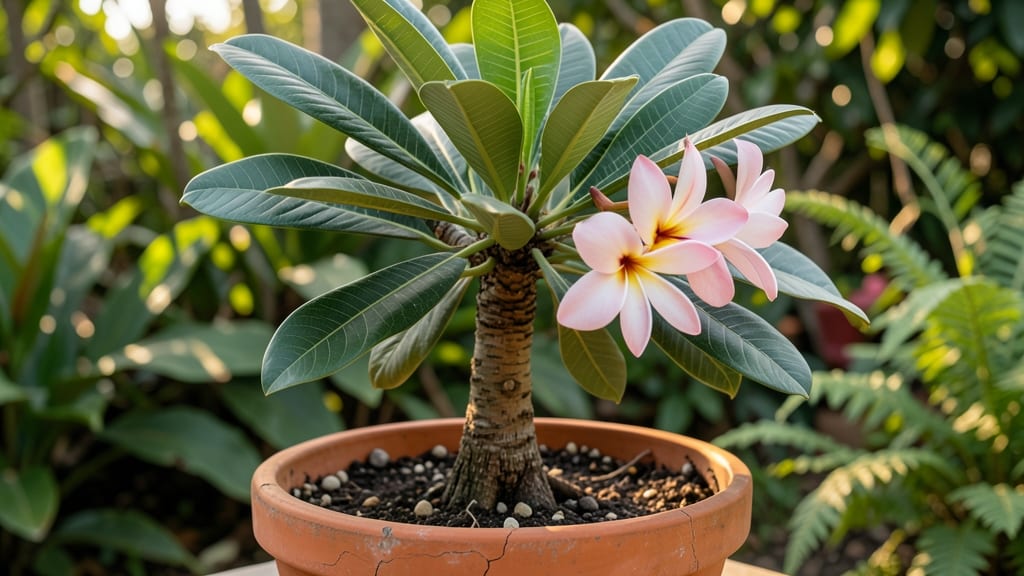
Your Arizona plumeria tree can bloom year-round with the right pruning—desert-resistant trimming is the secret. 🌵 I’ve learned that cutting back before monsoon season (around June) keeps these tropical beauties thriving in our extreme heat, while avoiding winter dieback.
The key is shaping for airflow and sunlight without over-pruning, because plumeria in Arizona already fights drought and alkaline soil.
Start with sterilized pruners and focus on removing dead wood and crossing branches first. Then, trim back leggy growth by about one-third to encourage bushier blooms. The goal is to maintain an open canopy so airflow circulates—this prevents fungal issues that plague Arizona’s humid summers.
I’ve seen plumeria trees go from sparse blooms to nonstop flowers after just one proper pruning session.
After trimming, give your plumeria a light feeding with a balanced fertilizer (10-10-10) to support new growth. Water deeply but infrequently—once a week in summer, less in winter—to mimic the desert’s natural rhythm.
The result? A tree that stays lush, fragrant, and covered in blooms even when others struggle in the heat.
For beginners, the biggest mistake is pruning too late in the season or cutting into old wood—plumeria blooms on new growth, so timing matters. If your tree looks stressed, check for aphids or scale (common in Arizona) and treat with neem oil.
With the right approach, your plumeria will reward you with months of fragrant blooms and become the star of your desert landscape.
📚 In This Guide
- What you need
- Instructions
- Tips and common mistakes
- Wrapping up and next steps
What you need
- ● Pruning shears: Bypass pruners (sharp, clean, and sterilized with rubbing alcohol to prevent disease). Recommended: Felco F2 or equivalent.
- ○ Loppers: For thicker branches (1.5"–2" diameter). Optional: Loppers with a ratchet mechanism for ease.
- ● Hand saw: Pruning saw with a fine-tooth blade (for stubborn, woody stems).
- ● Gloves: Heavy-duty gardening gloves (cut-resistant, like Mechanix Wear or Tiger Claw).
- ● Disposable pruning bags: 2–3 large bags (for collecting debris and preventing pests).
- ● Rubbing alcohol (70%+) or bleach solution: 1:10 bleach-water mix (for sterilizing tools between cuts).
- ○ Pruning sealant: Optional but helpful for large cuts (e.g., Tanglefoot Tree Wound Pruning Seal).
- ● Timing: Prune in late winter to early spring (Feb–March in Arizona) to avoid frost damage or summer stress. Pro tip: Avoid pruning during monsoon season (July–Sept) to prevent fungal issues! 🌧️❌
- ● Weather: Choose a dry, overcast day (humidity <60%) to minimize sap loss and disease risk.
- ● Safety gear: Safety glasses (for debris) and closed-toe shoes (just in case!).
- ● Water source: Hose or bucket with water (to clean tools and rinse cuts if needed).
- ● Sun protection: Hat, sunscreen (SPF 30+), and light, breathable clothing (Arizona sun is no joke!).
- ● Extension pole: For high branches (3–6 ft reach).
- ● String or twine: To mark branches for removal before cutting.
- ● Compost bin: For repurposing pruned branches (Plumeria wood can be used for crafts!).
- ● Spray bottle with water: To dampen cuts and reduce sap bleeding.
Step-by-step guide for pruning plumeria trees in Arizona’s desert climate
Here’s how to keep your desert plumeria thriving—with bold blooms and strong growth all year.
✂️ Step 1: Time Your Pruning for Arizona’s Heat and Rainy Season
Plumerias in Arizona bloom best when pruned just after the monsoon season ends—typically late September to early October. This timing ensures you remove dead growth before winter dormancy while avoiding summer’s extreme heat, which stresses the plant. Prune too early, and you risk losing potential blooms; wait too long, and you’ll encourage weak, leggy growth.
Check the weather forecast first. Aim for a cool, overcast day when temperatures stay below 85°F. If you must prune in summer, do it in the early morning when the air is still cool. Avoid pruning during heatwaves—your plumeria will struggle to recover, and the open cuts can invite pests like scale insects, which thrive in Arizona’s dry heat.
✂️ Step 2: Sterilize Tools and Identify Healthy Growth
Before you cut, sterilize your pruning shears with rubbing alcohol to prevent spreading disease. Plumerias in Arizona are prone to fungal issues like sooty mold from sap-sucking insects, so clean tools are non-negotiable. I like to wipe the blades with a paper towel dipped in alcohol between cuts—it’s a small step that saves hours of cleanup later.
Look for three key growth zones: new buds, dead wood, and leggy stems. Dead wood is easy—it’s brown, brittle, and hollow when you tap it. Leggy stems are long, thin branches with few leaves, stretching toward the sun. These won’t bloom well and compete with stronger growth. Mark these with a white garden marker so you don’t accidentally cut healthy wood.
✂️ Step 3: Make Clean Cuts at the Right Angles
Use sharp, clean shears to cut just above a leaf node—the bump where leaves or branches grow. Angle your cut 45 degrees downward, about ¼ inch above the node, to shed water away from the stem. This prevents rot, which is deadly in Arizona’s monsoon humidity. If you’re unsure where the node is, count 3-4 inches down from a leaf cluster—this is usually safe.
For thicker branches, make a two-step cut: first, slice downward about ½ inch above your target, then finish with a clean cut just above the node. This prevents the bark from tearing. Avoid cutting flush with the trunk—you’ll leave a wound that won’t heal properly in our dry climate. After pruning, toss the clippings in the trash (not the compost)—they can harbor pests.
☀️ Step 4: Encourage Airflow and Sun Exposure
Thin out crowded branches to improve air circulation, which is critical in Arizona’s heat. Aim for a v-shaped canopy—this lets sunlight reach the center of the plant, where blooms form. If your plumeria grows against a wall or fence, prune the side closest to the structure to reduce moisture buildup, which can lead to fungal diseases.
After pruning, water deeply but infrequently—plumerias hate soggy roots. Wait until the top 2 inches of soil feel dry, then soak the root zone. In Arizona’s desert, this might mean watering once every 10-14 days in summer, less in winter. Fertilize lightly with a balanced 10-10-10 formula 2 weeks after pruning to support new growth.
⏰ Step 5: Monitor for New Growth and Adjust as Needed
Within 2-3 weeks, you should see new buds forming at the leaf nodes where you cut. These are your plumeria’s promise of next season’s blooms. If you don’t see any, your cuts might have been too low, or the plant was stressed by heat. In that case, wait until spring to prune lightly again—just enough to shape, not to reshape.
Watch for pests like mealybugs or aphids, which love fresh pruning wounds. Spray with neem oil if you spot sticky residue (honeydew) on leaves. In Arizona, plumerias bloom best with full sun and minimal stress, so avoid heavy pruning in summer. A little patience now means bold, fragrant blooms from late spring through fall.
Tips & tricks for desert-resistant plumeria pruning
Real talk: Pruning plumeria in Arizona’s brutal climate isn’t just about cutting branches—it’s about working with the desert’s unique challenges. These small adjustments make all the difference between a stressed plant and one that thrives.
Heat Timing Strategy: The late September to early October window is non-negotiable for Arizona plumerias. This timing aligns with the natural post-monsoon recovery period, giving your plant time to heal before winter dormancy. I’ve seen plumerias struggle when pruned too early—they’ll drop potential blooms trying to recover from summer heat stress. If you absolutely must prune outside this window, do it in early morning hours when temperatures are still below 85°F, and be prepared to monitor for stress signs like wilting or yellowing leaves.
Tool Sterilization Secret: I can’t emphasize this enough: sterilizing your pruning shears between each cut prevents sooty mold outbreaks that are common in Arizona’s dry heat. Use rubbing alcohol on a paper towel—it’s faster than flame sterilization and won’t damage your tools. For extra protection, I keep a small spray bottle of diluted alcohol (1 part alcohol to 3 parts water) handy to quickly wipe blades between cuts. This simple step has saved me from dealing with fungal infections that could have taken months to resolve.
Visual Growth Assessment: The three growth zones—new buds, dead wood, and leggy stems—each require different treatment. For identifying dead wood, I’ve found that tapping branches with a pencil works better than visual inspection alone. Healthy wood makes a hollow sound, while dead wood sounds brittle. Leggy stems are the sneakiest—they often look green but have tiny leaves and long internodes. Mark these with white garden markers before cutting to avoid accidental pruning of healthy growth that could produce next year’s blooms.
Post-Pruning Care: After making your cuts, the 45-degree angle isn’t just about aesthetics—it’s about water runoff. In Arizona’s monsoon season, this angle prevents water from pooling at the cut site, which would lead to rot. I also recommend applying a thin layer of horticultural sealant to larger cuts (over ½ inch in diameter) to protect against our dry climate’s extreme temperature swings. This step is especially important for plumerias growing in full sun exposure, where temperature fluctuations can be dramatic between day and night.
Pro Tips for Plumeria Tree Arizona
- Real talk: Pruning plumeria in Arizona’s brutal climate isn’t just about cutting branches—it’s about working with the...
- Heat Timing Strategy: The late September to early October window is non-negotiable for Arizona plumerias. This timing...
- Tool Sterilization Secret: I can’t emphasize this enough: sterilizing your pruning shears between each cut prevents s...
Frequently asked questions
Got questions about growing and pruning plumeria trees in Arizona’s desert climate? You’re not alone! Here are answers to the most common concerns—from timing to troubleshooting—so your tree stays healthy and blooms like crazy year-round.
When is the best time to prune a plumeria tree in Arizona?
Prune your plumeria after the last frost (typically late spring, around April or May) to avoid cold damage. For desert climates like Arizona, light shaping pruning can also happen in summer or early fall—just avoid heavy cuts during extreme heat (100°F+). Focus on removing dead wood and thinning crowded branches to encourage airflow and blooms.
How much can I prune a plumeria tree without killing it?
Plumerias are tough but don’t overdo it! You can safely remove up to 1/3 of the tree’s foliage in one session, but avoid drastic cuts (like hacking back to the trunk). Prune selectively to shape the tree and promote new growth—think of it like giving your plumeria a desert-friendly haircut.
Why isn’t my Arizona plumeria blooming after pruning?
Plumerias need sunlight, proper pruning, and stress to trigger blooms. If yours isn’t flowering, check these fixes:
- Light: Ensure it gets 6+ hours of direct sun daily (Arizona’s desert sun is perfect!).
- Water: Let the soil dry out between waterings—overwatering stresses the tree too much.
- Fertilizer: Use a low-nitrogen, high-phosphorus fertilizer (like 5-10-10) in spring/summer.
- Pruning: Heavy pruning in late winter/early spring can shock the tree into blooming.
Can I grow a plumeria tree in a pot in Arizona’s heat?
Potted plumerias thrive in Arizona with the right care:
- Container: Use a large pot (15+ gallons) with drainage holes to prevent root rot.
- Soil: Mix cactus/succulent soil with perlite or sand for desert-dry conditions.
- Sun: Place in full sun (e.g., patio, balcony, or ground-level container).
- Water: Water deeply but infrequently—let the top 2–3 inches of soil dry out.
- Winter: Move indoors or to a protected area if temps drop below 40°F.
What should I do if my plumeria leaves turn yellow or drop?
Yellowing or dropping leaves usually signal overwatering, underwatering, or pest issues. Try these fixes:
- Check the soil: Stick your finger 2 inches deep—if it’s soggy, cut back on water. If dry as a bone, water thoroughly.
- Inspect for pests: Look for aphids, mealybugs, or scale on stems/leaves. Treat with neem oil or insecticidal soap.
- Adjust fertilizer: Too much nitrogen causes yellowing. Switch to a balanced or bloom-boosting formula.
- Sun exposure: If leaves scorch (brown edges), provide afternoon shade during peak summer heat.
Wrapping up and next steps
Growing a plumeria tree in Arizona is a rewarding experience—especially when you master the art of desert-resistant pruning! By following the right techniques, you’ll enjoy vibrant blooms year-round while keeping your tree healthy and thriving. 🌵✨
Now that you’re equipped with the how-to and FAQs, it’s time to roll up your sleeves and give your plumeria the care it deserves. Start by scheduling your first pruning session this season—your fragrant, flower-filled oasis will thank you!