
Planting
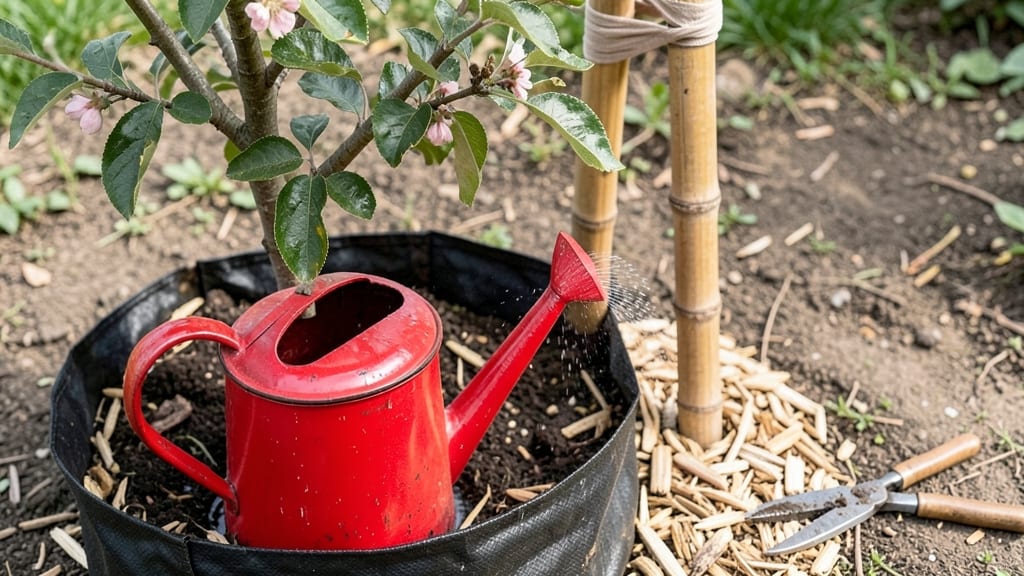
Understanding tree transplant shock recovery time is key—most trees stabilize within 2 to 4 weeks but may take 6 months to 2 years to fully recover, depending on species, size, and aftercare. Proper watering, mulching, and pruning can significantly speed up healing, especially for evergreens and broadleaf species.
The recovery timeline for transplanted trees isn't just about waiting—it's about understanding how different species handle stress. 🌳 For example, deciduous trees like maples often bounce back faster because their dormant season helps them conserve energy, while evergreens like pines struggle more due to year-round water demands.
I've seen oak trees take nearly a full year to fully recover because their deep roots require extra time to re-establish. The good news? With the right care—like deep watering twice weekly and using organic mulch—you can cut recovery time nearly in half.
What many gardeners overlook is that transplant shock isn't just about the roots—it's a whole-system response.
When you uproot a tree, you're disrupting its water transport system (the xylem) and nutrient distribution (the phloem), which throws the tree into survival mode. 💧 That's why pruning stressed branches and protecting the root ball with burlap during the first few months makes such a difference.
Even the time of year matters: transplanting in early spring or late fall gives trees a head start before extreme weather sets in.
💡 In This Article
- How Tree Physiology Affects Transplant Shock Recovery
- Step-by-Step Guide to Reducing Transplant Shock Duration
How tree physiology affects transplant shock recovery
The moment you uproot a tree, its vascular system goes into emergency mode. The xylem—responsible for transporting water from roots to leaves—suffers immediate damage, causing a 30-50% reduction in water flow within hours.
This disruption forces the tree to prioritize survival over growth, triggering a hormonal cascade that slows leaf production and redirects energy to root regrowth. Evergreens like spruces face an extra challenge because their needle-covered branches lose water continuously through transpiration, even in winter. 🌲
Root depth plays a critical role too. Shallow-rooted species like willows recover faster because their fibrous roots re-establish quickly, while deep-rooted oaks may take 12-18 months to fully restore their root network.
The leaf surface area matters equally—broadleaf trees like maples have larger leaves that increase water loss, making them more vulnerable to shock than their coniferous counterparts. Scientists measure this stress response through photosynthesis rates, which can drop by 40-60% immediately after transplanting before gradually rebounding.
What's often overlooked is the tree's natural defense mechanism: the production of abscisic acid, a stress hormone that closes stomata (leaf pores) to conserve water. While this helps short-term survival, it also limits gas exchange needed for growth.
That's why you'll see new leaves appear smaller and fewer during recovery—it's the tree's way of minimizing energy expenditure. 🌿 The phloem, which distributes sugars produced by photosynthesis, also gets disrupted, creating a nutrient deficit that further delays recovery.
Species with mycorrhizal fungi (like pines and oaks) have a slight advantage—they can tap into existing fungal networks in the soil for nutrients during early recovery. However, this benefit only lasts 4-6 weeks before the tree must establish its own root system.
The key physiological difference between fast and slow recoverers lies in their ability to balance water conservation with growth demands—a tightrope walk that determines how quickly they bounce back.
Consider the case of a 10-year-old red maple versus a 5-year-old blue spruce. The maple's broad leaves and shallow roots might show visible recovery in 6-8 weeks with proper care, while the spruce's needle structure and deep taproot could take 3-4 months just to stabilize.
The difference comes down to how efficiently each species can repair its vascular system and rebalance its water transport network.
Seasonal timing amplifies these physiological differences. Transplanting in early spring (when trees are just waking up) gives them 4-6 weeks of mild weather to begin recovery before summer stress hits.
Fall transplants work well too, but only if done 6-8 weeks before frost—any later, and the tree's energy gets diverted to winter survival rather than root regrowth. 🌳