
Watering
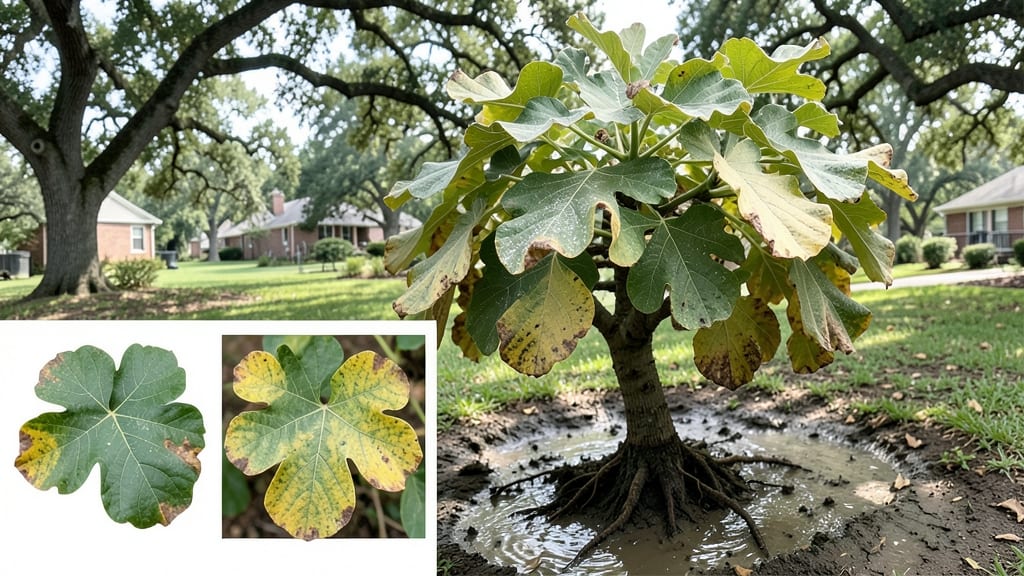
An overwatered fig tree looks like a sad, soggy mess—droopy leaves, yellowing foliage, and roots that turn mushy when you check. 🌱 I’ve seen this heartbreak too many times, especially after a heavy rain or when well-meaning gardeners overcompensate for dry spells. The first sign?
Leaves that wilt even when the soil feels damp, not dry. That’s your fig tree begging for a break from the water. The real damage hides underground: roots that rot and turn black or brown, smelling foul when disturbed.
Fungal growth might appear on the soil surface, and the bark can develop dark, waterlogged spots. It’s easy to mistake this for a pest problem or disease, but the key difference is the soggy soil—overwatering leaves roots starved for air, while pests or disease attack from the outside.
Fixing it starts with stopping all watering and letting the soil dry out completely. Improve drainage by amending the soil with perlite or sand, and consider repotting if the roots are severely damaged. Within a few weeks, you’ll see new growth as the tree recovers its balance.
Here’s the thing—fig trees are tough, but they hate soggy feet. Once you adjust your watering schedule to match your climate (think deep waterings every 1-2 weeks, not daily sprinkles), your tree will bounce back stronger than ever.
The Hidden Triggers Behind Overwatering
Overwatering your fig tree might seem like a harmless act of love—after all, who doesn’t want their plants to drink up? But too much water can turn your thriving tree into a sad, soggy mess.
Understanding the why behind overwatering is the first step to fixing it. Let’s break down the science and habits that lead to this common (but preventable) problem.
Fig trees, like most plants, hate sitting in waterlogged soil. When drainage is inadequate—whether due to heavy clay soil, compacted roots, or a lack of drainage holes in pots—excess water pools around the roots instead of draining away. This creates an anaerobic (oxygen-deprived) environment where roots suffocate.
- Heavy clay soil: Clay holds water like a sponge, preventing it from escaping. Even after rain or watering, moisture lingers, drowning the roots.
- Containers without holes: Pots without drainage openings trap water, turning the soil into a swamp. Fig trees in decorative or sealed containers are especially vulnerable.
- Root-bound plants: When roots fill the entire pot, they can’t spread out to access oxygen or distribute water efficiently, leading to localized waterlogging.
Pro Tip: 🔧 Test your soil’s drainage by filling a pot with water and timing how long it takes to drain. If it takes more than 10–15 minutes, your soil is too dense.
Fig trees are drought-tolerant, meaning they store water in their thick stems and roots. But when you water on a strict schedule—regardless of weather or soil moisture—you risk overdoing it. Common mistakes include:
- Ignoring weather conditions: Watering every 3–4 days in humid climates or after rain keeps the soil soggy unnecessarily.
- Using the "finger test" incorrectly: Sticking your finger 1–2 inches into the soil and watering if it feels dry is great, but if you’re always finding it dry, you might be watering too often.
- Automatic irrigation systems: Timers or drip systems set to run daily can drown fig trees, especially in cooler months when evaporation slows.
Pro Tip: ⏰ Water deeply but infrequently. Let the top 2–3 inches of soil dry out between waterings—fig trees thrive on inconsistency!
Not all soil is created equal. Fig trees need well-aerated, fast-draining soil to prevent water from pooling. If your soil is too rich in organic matter (like compost-heavy mixes) or lacks gritty amendments, it can retain moisture like a sponge.
- Too much compost or peat: These materials hold water tightly, suffocating roots and promoting fungal growth.
- Lack of perlite or sand: Amendments like perlite, pumice, or coarse sand improve drainage but are often omitted in "universal" potting mixes.
- Native soil with high clay content: If you’re growing figs in-ground, amending the soil with gypsum or sand can help break up compacted clay.
Pro Tip: 🌡️ For potted figs, use a mix of 60% cactus/succulent soil, 20% perlite, and 20% coarse sand. For in-ground planting, raise the tree in a mound of amended soil to encourage runoff.
When roots sit in wet soil for too long, they become prime targets for fungal pathogens like Phytophthora or Pythium. These microbes thrive in waterlogged conditions, rotting roots and blocking nutrient uptake. Signs of fungal overwatering include:
- Black, mushy roots that crumble when touched.
- White, cottony fungal growth at the soil line.
- Leaves yellowing or wilting despite dry soil on top.
Pro Tip: ✨ Prevent fungal issues by ensuring airflow around the base of the tree and avoiding overhead watering. If you suspect fungus, treat with a copper-based fungicide or hydrogen peroxide solution (1 tablespoon per gallon of water).
Now that you know the why, the next step is spotting the signs of overwatering—and fixing them fast. Stay tuned for actionable solutions to revive your fig tree!
Reviving Your Fig Tree Step-by-Step
If your fig tree is suffering from overwatering, the good news is that with the right care, it can bounce back—often stronger than before! The key is to act quickly, adjust your watering habits, and give your tree the support it needs to recover.
Below, we break down cause-specific fixes to get your fig tree thriving again, plus prevention tips to keep it healthy long-term.
---
Cause: Overwatering causes root suffocation, leading to nutrient starvation and yellowing leaves (chlorosis).
How to Fix It: 1. 🔥 Stop Watering Immediately Let the soil dry out completely before watering again. Stick your finger 2–3 inches into the soil—if it’s damp, wait.
2. 🍳 Improve Drainage Fast - For potted figs: Repot into a container with drainage holes (if missing) and use a well-draining mix (50% cactus/succulent soil + 50% perlite/pumice). - For in-ground trees: Amend the soil with compost + coarse sand (1 part compost to 3 parts sand) to loosen compacted areas.
3. 👨🍳 Prune Damaged Foliage Snip off yellow or mushy leaves with clean pruners to redirect energy to healthy growth. Avoid pruning more than 20–30% at once.
4. 🌡️ Boost Air Circulation - Move potted trees to a sunnier spot (figs need 6+ hours of sunlight). - If outdoors, trim nearby plants blocking airflow to prevent fungal growth.
💡 Pro Tip: Yellowing can also signal nutrient deficiency (like iron or magnesium). After fixing drainage, fertilize with a balanced, slow-release fertilizer (10-10-10) to replenish lost nutrients.
---
Cause: Waterlogged roots can’t absorb moisture, causing wilting even when soil is wet.
How to Fix It: 1. ⏰ Check for Root Rot Gently loosen the top 4–6 inches of soil. If roots are black, mushy, or smell foul, root rot is present. Trim affected roots with sterilized pruners (dip in hydrogen peroxide or rubbing alcohol).
2. 🔪 Repot or Refresh Soil (If Needed) - Potted trees: Remove the plant, rinse roots with water, and repot in fresh, dry soil. - In-ground trees: Dig a 12-inch-deep trench around the base, fill with gravel or perlite, then backfill with amended soil to improve drainage.
3. 💧 Water Only When Soil Is Bone-Dry Fig trees hate soggy roots. Water deeply but infrequently—once every 7–10 days in summer (less in winter). Use the "finger test" to check moisture.
4. 🌿 Support with Mulch (But Not Too Much!) Apply a 2–3 inch layer of organic mulch (straw or wood chips) around the base to retain moderate moisture—but keep it 6 inches away from the trunk to prevent rot.
✨ Prevention Hack: Elevate potted figs on feet or a saucer to prevent water pooling at the bottom.
---
Cause: Excess moisture creates the perfect breeding ground for fungi and bacteria, leading to root rot and mold.
How to Fix It: 1. 🧼 Clean & Sterilize the Pot (If Potted) - Remove the plant, scrub the pot with soapy water, then rinse with 1 part bleach to 9 parts water (rinse thoroughly). - Let the pot air-dry in sunlight for 24 hours before repotting.
2. 🍄 Treat Fungal Issues - Sprinkle fungicide (copper-based or neem oil) on the soil and roots. - For moldy soil, replace it entirely with sterile, dry potting mix.
3. 🌞 Increase Sun & Reduce Humidity - Move the tree to a sunnier, drier location (figs thrive in hot, dry climates). - Avoid overhead watering—use a drip irrigation system or water at the base.
4. 🌡️ Monitor Recovery Closely - If roots are severely damaged, the tree may need time to regrow. Keep it in bright, indirect light while it recovers. - No new growth? Consider propagating a cutting from a healthy branch.
🎯 Long-Term Fix: Use terracotta pots (they dry out faster than plastic) and self-watering pots with drainage controls to prevent future overwatering.
---
Once your fig tree is back on track, follow these easy maintenance habits to avoid overwatering again:
- 📊 Watering Schedule Cheat Sheet: | Season | Watering Frequency | Soil Depth Check | |------------------|------------------------|----------------------------| | Spring/Summer| Every 7–10 days | Dry 2–3 inches deep | | Fall | Every 10–14 days | Dry 3–4 inches deep | | Winter | Every 3–4 weeks | Dry 4+ inches deep |
- 💧 Use the Right Tools: - Moisture meter (for accuracy). - Drip irrigation (better than overhead watering).
- 🌿 Soil & Pot Upgrades: - Avoid heavy clay soil—mix in perlite or vermiculite for airflow. - Elevate pots to prevent waterlogging.
- 🍃 Watch for Warning Signs Early: - Wilting leaves? Check soil moisture before watering. - Yellow edges on leaves? Could mean overwatering or underwatering—test the soil!
--- Final Thought: Fig trees are drought-tolerant once established—underwatering is more common than overwatering! By adjusting your watering routine and improving drainage, your tree will reward you with lush green leaves and sweet fruit in no time. 🍈✨
Frequently asked questions
Why do my fig tree leaves turn yellow when I water it regularly?
Yellowing leaves often signal overwatering, but they can also mean nutrient deficiency or fungal issues. Check the soil first—if it's soggy, you're overwatering. If dry, yellowing may indicate iron or magnesium deficiency. For soggy soil, stop watering immediately and improve drainage.
Can an overwatered fig tree recover if the roots are already rotten?
Yes, but it requires immediate action! Trim any black, mushy roots with sterilized pruners, repot in fresh dry soil, and improve drainage. For severe cases, consider propagating from healthy branches. Recovery takes time—be patient and monitor soil moisture closely.
How often should I water my fig tree to avoid overwatering?
Fig trees thrive on inconsistency! Water deeply every 7-14 days in summer, letting the top 2-3 inches of soil dry completely between waterings. In winter, reduce to every 3-4 weeks. Always check soil moisture with your finger before watering.
What's the difference between overwatered and underwatered fig tree leaves?
Overwatered leaves wilt even when soil is damp, turn yellow (chlorosis), and may develop fungal growth. Underwatered leaves crisp at the edges, feel dry to the touch, and may drop entirely. The key difference? Check the soil—overwatered soil stays wet, while underwatered soil is bone-dry.
Will mulch help prevent overwatering in my fig tree?
Mulch can help, but use it wisely! Apply a 2-3 inch layer around the base, keeping it 6 inches away from the trunk to prevent rot. Organic mulch like straw retains moderate moisture while allowing airflow. Avoid thick layers that trap excess water against the roots.