
Companion Plants
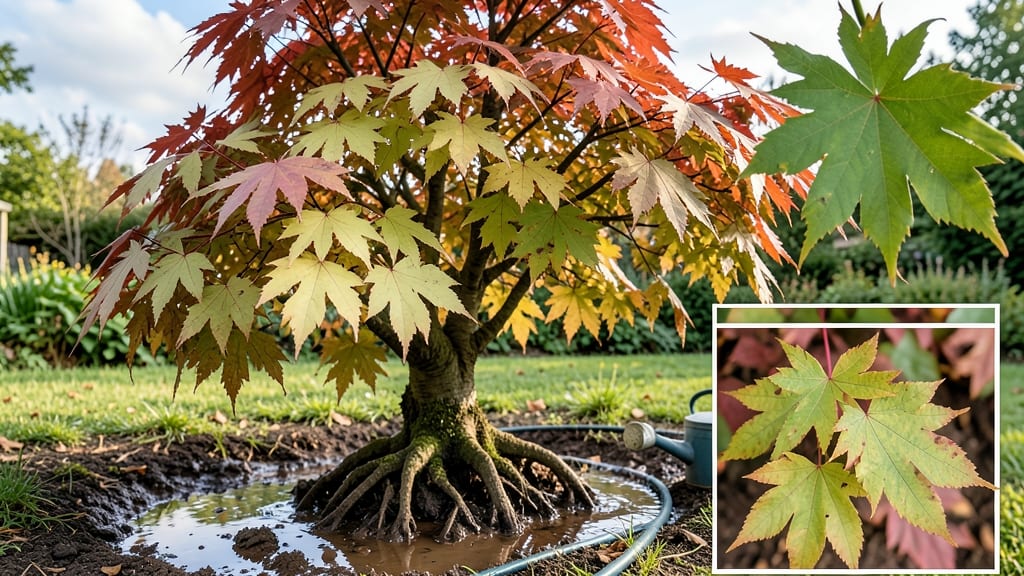
An overwatered maple tree looks like it’s drowning in its own roots—yellowing leaves, drooping branches, and a trunk that feels soft when you press it. 🌳 I’ve seen this happen after weeks of heavy rain or when well-meaning gardeners water every day, thinking more is better.
The key difference from pests or disease? No bugs, no spots, just sad, mushy roots struggling for air.
The first sign is usually leaf yellowing starting at the bottom, paired with branches that sag like wet laundry. If you dig near the roots, you’ll find them gray and slimy instead of firm and brown—classic root rot.
Unlike drought stress, the soil stays soggy, not dry, and the tree’s growth stalls completely.
Fixing it starts with cutting back watering to once a week (or less) and improving drainage. Aerate the soil with sand or compost, and prune any dead branches to help the tree focus on recovery. Within weeks, you’ll see fresh green leaves pushing through, proving your maple isn’t beyond saving.
This isn’t just about maples—overwatering affects oaks, pines, and even shrubs the same way. The trick is matching water to the season: less in spring/fall, almost none in winter. Your tree’s health depends on it.
Common Causes Of Overwatering
Overwatering your maple tree isn’t always about too much water—it’s often about how, when, and why the water isn’t leaving the soil properly. Let’s break down the key reasons this happens, so you can fix the root (literally) of the problem.
Maple trees thrive in well-draining soil, but if your garden soil is heavy clay, compacted, or lacks organic matter, water pools around the roots instead of draining away. Here’s why this happens:
- Clay Soil Traps Water: Clay particles pack tightly, creating tiny airless pockets that hold water like a sponge.
Even after rain, the soil stays soggy for days. - Compacted Soil Blocks Roots: Foot traffic, construction, or heavy machinery can compress the soil, reducing pore space for oxygen and water flow.
Roots suffocate, and excess moisture builds up. - Low Organic Matter: Soil rich in compost or mulch improves drainage, but if your soil is mostly mineral-based, water doesn’t move efficiently.
💡 Pro Tip: Test your soil’s drainage by digging a 12-inch hole, filling it with water, and timing how long it takes to drain. If it’s slower than 4 hours, amend the soil with sand, perlite, or compost to improve aeration.
Even if your soil drains well, human error plays a huge role. Maple trees (especially young ones) are often watered too frequently or in the wrong way.
- Ignoring the Soil’s Moisture Level: Sticking your finger 2–3 inches into the soil is the best way to check moisture.
If it’s damp, hold off on watering. - Watering on a Schedule: Maple trees don’t need water every day—most varieties prefer deep watering 1–2 times per week, depending on the season. - Shallow Watering: A light sprinkle wets only the top inch of soil, encouraging roots to stay near the surface where they’re more prone to rot.
⏰ Actionable Fix: Water deeply but infrequently—aim for 1–1.5 inches of water per week (including rain) and let the top 2–3 inches of soil dry out between sessions.
Mulch isn’t just for looks—it regulates soil temperature and moisture. Without it (or with the wrong type), water evaporates too quickly or pools around the trunk.
- No Mulch = Moisture Loss: Bare soil dries out fast in sun or bakes hard in heat, leading to overcompensation when you water.
- Too Much Mulch (Volcano Mulching): Piling mulch against the tree trunk traps moisture, creating a rot-prone zone where fungi thrive.
- Wrong Mulch Type: Organic mulches (like wood chips) break down and improve soil over time, but plastic or gravel can block water absorption.
🎯 Best Practice: Apply 2–4 inches of mulch in a 3-inch-wide ring around the tree (keep it 6 inches away from the trunk).
Automatic sprinklers, drip systems, or even hose attachments can deliver too much water too fast, especially if misconfigured.
- Sprinklers Overhead: Watering leaves mimics rain, but it doesn’t penetrate deep enough and can lead to fungal diseases like powdery mildew.
- Drip Lines Too Close: If emitters are placed within 6 inches of the trunk, they create a soggy pocket that roots avoid.
- Runoff from Sloped Ground: If your yard slopes toward the tree, water runs off elsewhere instead of soaking in, but if it pools, the roots drown.
🔧 Fix It: Adjust sprinkler heads to water at the base, not the canopy, and space drip emitters 12–18 inches from the trunk. For sloped areas, build a berm to direct water away.
Physical stress on roots—like girdling roots, construction damage, or improper planting—can disrupt water flow and lead to overwatering symptoms.
- Girdling Roots: Roots that wrap around the trunk strangle the tree, reducing its ability to transport water and nutrients efficiently.
- Root Pruning Without Recovery: If roots are cut during transplanting or landscaping without proper healing time, they struggle to absorb water correctly.
- Shallow Root Systems: Young maples or those in containers develop shallow roots, making them more sensitive to moisture fluctuations.
🌿 Solution: If you suspect root issues, avoid watering until the soil is dry and consider root aeration or mycorrhizal fungi to boost root health.
Sometimes, Mother Nature herself is the problem. Humid climates, heavy rainfall, or poor airflow can turn your well-meaning watering into a disaster.
- High Humidity: Damp air slows evaporation, keeping soil wet longer than usual.
- Frequent Rainfall: If you’re watering on top of saturated soil, you’re double-dosing the roots.
- Poor Air Circulation: Dense foliage or nearby structures trap moisture, creating a greenhouse effect that encourages rot.
💡 Smart Move: Skip watering if the forecast predicts rain, and prune nearby branches to improve airflow.
The #1 rule of maple tree care? Don’t water unless the soil needs it. Overwatering is often a habit, not a necessity. If you’re unsure, wait a few more days—your tree’s roots will thank you.
🔥 Remember: Yellow leaves, drooping branches, and mushy roots aren’t just about too much water—they’re about water that can’t escape. Fix the drainage, adjust your habits, and your maple will bounce back!
Reviving Your Maple Tree: Step-by-Step Fixes
Overwatering can turn your once-vibrant maple tree into a sad, soggy mess—but don’t worry! With the right approach, you can nurse it back to health. Below are practical, actionable solutions tailored to the root causes of overwatering, plus prevention tips to keep your tree thriving for years.
Cause: Excess moisture suffocates roots, leading to rot. Fix:
- Pause watering for at least 1–2 weeks to let the soil dry out.
- If the ground is muddy or smells foul, wait longer—roots need air!
- Pro Tip: 💡 Use a moisture meter to check soil dampness before watering again.
Cause: Compacted or clay-heavy soil traps water, drowning roots. Fix:
- Aerate the soil by gently loosening the top 6–12 inches with a garden fork.
- Amend the soil with:
- Compost (20–30%) to improve texture.
- Perlite or coarse sand (10%) for better drainage.
- Organic mulch (2–4 inches) around the base (but keep it 6 inches away from the trunk to prevent rot).
- For severe cases: Consider raising the planting bed slightly to encourage runoff.
Cause: Rotten or mushy roots can’t absorb nutrients, even if watering stops. Fix:
- Inspect roots carefully—healthy roots are firm and white; rotten roots are brown, slimy, or crumbly.
- Trim affected roots with sterilized pruners, cutting back to firm, white tissue.
- Disinfect tools with rubbing alcohol to prevent spreading disease.
- Warning: ⚠️ Only do this if roots are obviously rotted—healthy roots should stay intact!
Cause: Overzealous watering (or poor timing) leads to soggy soil. Fix:
- Water deeply but infrequently—maples prefer 1–1.5 inches per week (including rain).
- Water at the base, not overhead, to reduce evaporation and fungal risks.
- Best time to water: Early morning (6–10 AM) so leaves dry quickly.
- Avoid watering before rain—let nature do the job!
Cause: Overwatering flushes out nutrients, weakening the tree. Fix:
- Wait until new growth appears (sign the tree is recovering).
- Use a balanced, slow-release fertilizer (10-10-10 or 20-20-20) in early spring.
- Avoid high-nitrogen fertilizers—they encourage leafy growth but weaken roots.
- Pro Tip: ✨ Mulch with compost instead of chemical fertilizers for long-term soil health.
Once your tree recovers, prevent future overwatering with these habits:
- Test your soil annually—ideal pH for maples is 6.0–7.5.
- Install a rain gauge to track natural watering.
- Plant in well-draining soil (avoid low spots where water pools).
- Monitor leaf color—yellowing between veins often signals overwatering.
- Group maples with drought-tolerant companions (like oaks or hickories) to mimic natural forest conditions.
Final Thought: 🌿 With patience and the right care, your maple tree can bounce back stronger than ever. Start with drainage fixes, then adjust watering habits—your tree will thank you with lush, green foliage!
Frequently asked questions
How can I tell if my maple tree’s yellow leaves mean overwatering—or just normal fall color?
Fall color usually starts at the tips of leaves and moves inward, while overwatering causes yellowing that begins at the base of the leaf and spreads toward the edges. Check the soil too—if it’s soggy or smells foul, that’s your clue. Fall leaves also crisp and fall cleanly, but overwatered leaves often stay attached but limp.
Can I save a maple tree with root rot from overwatering?
Yes, but you’ll need to act fast! First, stop watering immediately and let the soil dry completely. Then aerate the soil and trim any mushy, brown roots back to healthy white tissue. For severe cases, consider root pruning to encourage new growth. Recovery can take 6–12 months, but with proper drainage fixes, many trees bounce back.
Why does my maple tree’s bark look soft or spongy near the base?
Soft, spongy bark is a red flag for root rot spreading upward—a direct result of chronic overwatering. Press gently: healthy bark should feel firm, while rotting bark gives slightly and may even ooze a foul odor. If you see this, reduce watering drastically, improve drainage, and consider consulting an arborist for professional assessment.
How often should I water a newly planted maple tree?
Newly planted maples need deep watering 2–3 times per week for the first month to help roots establish, but only if the top 2–3 inches of soil are dry. After that, taper to 1–2 times per week in summer, and almost never in winter. Always water at the base, not the leaves, to prevent fungal issues.
What’s the difference between overwatering and underwatering in maples?
Overwatering shows as yellowing leaves, drooping branches, and mushy roots, while underwatering causes crispy brown edges, wilting, and soil pulling away from roots. The key difference? Overwatered soil stays soggy, while underwatered soil is bone-dry. Both stress the tree, but overwatering is far deadlier due to root rot risk.