
Pruning
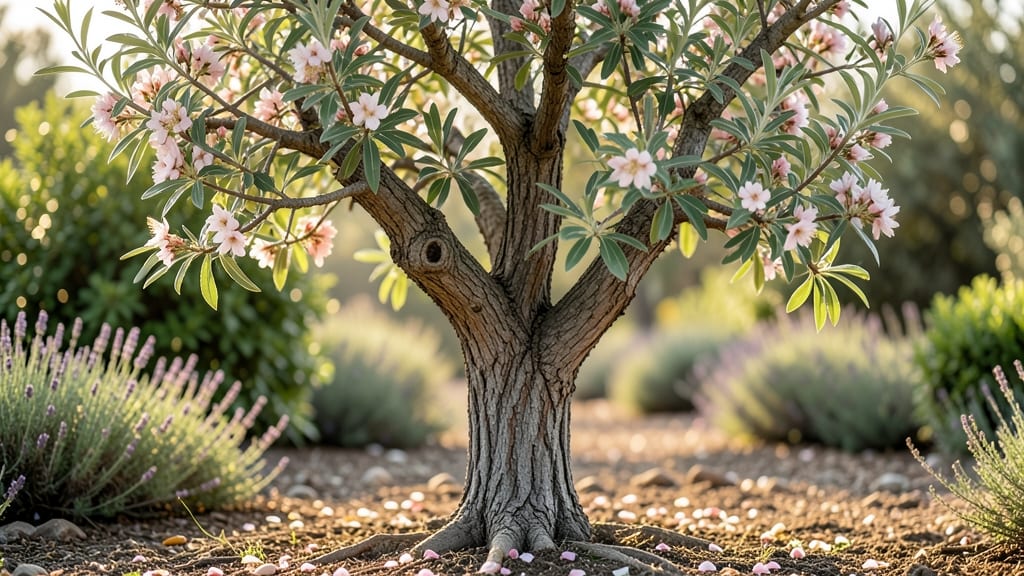
Creating the perfect almond tree environment means providing dry, temperate conditions with well-draining soil, full sun exposure, and cold winters to trigger dormancy. These trees grow best in USDA zones 5-9, where summer heat remains moderate and winter chilling hours reach 300-700.
Almond trees demand specific climate conditions to produce quality nuts, starting with winter chilling hours—those cold periods between 32°F and 45°F that reset their growth cycle.
Without enough chilling (typically 300-700 hours), trees may produce fewer nuts or none at all. 🌡️ In regions with milder winters, growers often use specialized varieties that require fewer chilling hours.
Summer heat also plays a role: while almonds need warmth for pollination, prolonged extreme heat can stress the trees, reducing yields.
Soil quality is equally critical—these trees prefer well-draining, slightly alkaline soil (pH 6.0-7.5) to prevent root rot. Sandy loam works best, but amending clay soils with organic matter can improve drainage.
Watering strategies matter too: almond trees are surprisingly drought-tolerant once established, but they need deep, infrequent watering during dry spells to encourage strong root growth. A 2-3 inch mulch layer helps retain moisture while keeping roots cool.
💡 In This Article
- Climate and Temperature Needs for Almond Tree Growth
- Soil and Watering Best Practices for Healthy Almond Trees
Climate and temperature needs for almond tree growth
Almond trees rely on a precise balance of seasonal temperatures to thrive, with winter chilling hours being the most critical factor. These trees require 300-700 hours of temperatures between 32°F and 45°F to break dormancy—a process called "endodormancy."
This cold period resets the tree's biological clock, ensuring proper bud development and fruit set in spring. Without sufficient chilling, trees may produce sparse or no nuts, as their flowering cycle gets disrupted.
For example, varieties like 'Nonpareil' need around 600 chilling hours, while low-chill varieties like 'Carmel' manage with just 300 hours, making them suitable for warmer regions.
The transition from winter to spring is equally vital, as almonds bloom early—often before leaves emerge—and need warm daytime temperatures (65°F+) for successful pollination. However, late spring frosts can devastate flowers, leading to poor yields.
In California's Central Valley, where 80% of U.S. almonds are grown, growers use frost prediction models and wind machines to protect blossoms during critical bloom periods (typically February-March).
Summer heat also matters: while almonds tolerate dry, hot conditions, temperatures above 95°F can stress trees, particularly during nut development, reducing both size and quality.
Microclimates play a surprising role in almond cultivation. Coastal areas often provide milder winters but may lack sufficient chilling hours, while inland valleys like California's San Joaquin Valley offer ideal temperature swings. Elevation also factors in—higher areas (1,000-2,000 feet) may experience cooler nights and warmer days, creating perfect conditions.
For instance, Oregon's Umatilla Basin produces high-quality almonds thanks to its 400-600 chilling hours and dry summers, despite being outside California's traditional growing region. 🌡️
Pollination adds another layer of temperature sensitivity. Almonds are self-sterile, requiring cross-pollination between different varieties. Bees are most active at 70-85°F, so warm spring days maximize pollination efficiency. In cooler regions, growers may plant early-blooming varieties to align with bee activity windows.
The timing of frost is equally critical—if a late frost hits after pollination but before nut set, it can kill developing flowers without affecting the tree's overall health, leading to "frost rings" where no nuts form along certain branches.
Regional adaptations highlight how growers work with climate constraints. In Spain's Murcia region, almond trees thrive with 500-600 chilling hours and Mediterranean dry summers, producing 40% of global almonds. Meanwhile, Australia's Riverland region uses irrigation to supplement natural rainfall, as its 250-350 chilling hours require low-chill varieties.
These examples show how understanding local climate nuances allows almond cultivation in diverse environments, from California's vast orchards to Spain's ancient groves.