
Pests and Diseases
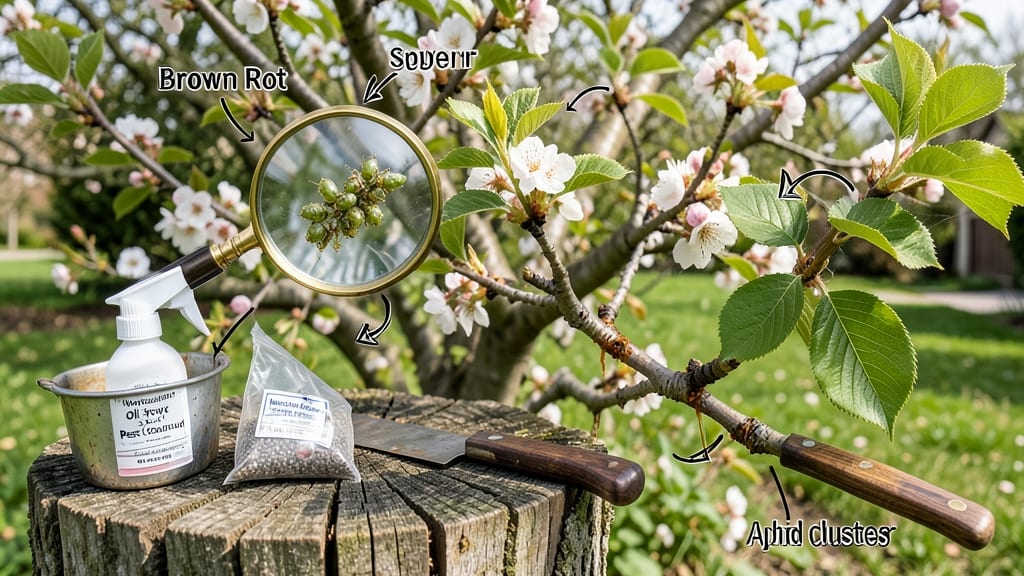
Your cherry tree’s healthy fruit starts with knowing the sneaky pests and diseases that target them—before they strike. 🌱 I’ve watched brown rot turn sweet cherries into mushy messes and aphids turn leaves into sticky traps, but there are ways to stop them before they ruin your harvest.
The worst offenders? Brown rot (that fuzzy gray mold on fruit), cherry leaf spot (tiny black specks on leaves), and borers (hollow stems that collapse suddenly). These aren’t just nuisances—they can kill a tree if ignored. The good news?
Catching them early with simple checks (like inspecting leaves weekly) gives you the upper hand. You’ll learn how to prune for airflow, spray organic fungicides at the right time, and even use neem oil to smother pests without harsh chemicals.
The key is acting fast—once symptoms appear, it’s already too late for that season’s fruit. Whether you grow sweet, tart, or ornamental cherries, these steps keep your tree thriving year after year. Let’s protect that harvest!
Root Causes Behind Tree Struggles
Cherry trees are prized for their sweet fruit and stunning blossoms, but pests and diseases can turn their beauty into a battle. Understanding why these problems arise is the first step to protecting your tree.
Below, we break down the science behind the most common culprits—from environmental factors to biological invaders—and explain how they exploit vulnerabilities in your cherry tree.
Cherry trees thrive under specific conditions, and when those conditions shift, their natural resistance drops. Here’s how environmental factors create openings for pests and diseases:
- Waterlogged or Drought-Stressed Soil
Too much or too little water disrupts nutrient uptake and root health. Phytophthora root rot, a fungal disease, thrives in soggy soil, while drought-stressed trees become easy targets for borers and spider mites. Actionable fix: Ensure proper drainage and water deeply but infrequently (1–2 inches per week).
- Extreme Temperature Swings
Cherry trees are sensitive to sudden cold snaps or heatwaves. Brown rot fungus (which causes blossom blight) spreads faster in wet, warm springs, while winter dieback occurs when temperatures fluctuate wildly. Actionable fix: Mulch around the base to regulate soil temperature and avoid overhead watering before dusk to reduce fungal spores.
- Poor Air Circulation
Dense foliage or overcrowded plantings trap moisture, creating a humid microclimate perfect for powdery mildew and leaf spot diseases. Actionable fix: Prune to open the canopy and space trees 15–20 feet apart.
Pests and pathogens don’t just appear—they target trees that are already compromised. Here’s how they strike:
| Pest/Disease | Why It Attacks | Trigger Factors |
|---|---|---|
| Western Cherry Fruit Fly | Lays eggs in ripening fruit, causing larvae to feed inside. | Warm summers (flies are inactive below 55°F) and unharvested fruit left on the tree. |
| Canker Diseases (Bacterial/Fungal) | Enters through wounds (pruning cuts, storm damage) and spreads via sap. | Poor pruning practices, wet springs, and stressed trees. |
| Japanese Beetles | Feeds on leaves, flowers, and fruit, skewering tissue with their mouthparts. | Overwatered grass (attracts grubs) and lack of natural predators (birds, toads). |
| Powdery Mildew | Fungal spores land on leaves and thrive in high humidity. | Tight plant spacing, late-season nitrogen fertilizer (promotes lush growth). |
Pro Tip: 💡 Healthy trees resist attacks better. Focus on balanced fertilization (avoid excess nitrogen) and sanitation (remove fallen fruit, prune diseased branches in dry weather).
Sometimes, the biggest threat to your cherry tree comes from well-meaning (but misinformed) gardening habits. Here’s how common mistakes invite trouble:
- Improper Pruning
Cutting too late in the season (after bud swell) or using contaminated tools spreads bacterial canker. Actionable fix: Prune in dormant season (late winter) and sterilize shears with 70% rubbing alcohol.
- Over-Fertilizing
Excess nitrogen encourages soft, susceptible growth that attracts Japanese beetles and aphids. Actionable fix: Test soil annually and use a balanced 10-10-10 fertilizer in early spring.
- Ignoring Early Signs
Waiting until pests/diseases are severe (e.g., leaf curl or fruit rot) means the tree is already compromised. Actionable fix: Inspect trees weekly during growing season and act at the first sign of trouble.
Remember: ✨ Prevention is easier than cure. By addressing these root causes—stress, biology, and human habits—you’ll give your cherry tree the best shot at staying healthy and productive.
Quick Fixes for Cherry Tree Woes
When your cherry tree shows signs of stress, pests, or disease, acting fast can save the harvest—and even the tree itself. Below are practical, step-by-step solutions tailored to the most common issues, from fungal infections to hungry insects. Prevention tips are woven in to keep future problems at bay.
---
Causes: Overwatering, poor airflow, or damp foliage invites fungal invaders like brown rot, powdery mildew, or leaf spot.
#### 🔥 Remove Infected Parts - Prune branches with dark spots, mushy fruit, or powdery coatings. - Dispose of clippings in the trash (not compost)—fungi spread easily! - Sterilize tools with rubbing alcohol between cuts to avoid cross-contamination.
#### 🌬️ Improve Airflow & Drainage - Thin out dense branches to let sunlight and air circulate. - Raise the soil level around the base (mound soil 6–12 inches high) to prevent waterlogging. - Water at the base (not overhead) and avoid late-season watering (fungi thrive in damp leaves).
#### 💡 Prevention Pro Tips - Apply copper fungicide (like Bordeaux mix) in early spring and after rain. - Mulch with straw (not wood chips) to reduce soil moisture retention. - Plant resistant varieties (e.g., ‘Stella’ or ‘Montmorency’) if fungal issues recur.
---
Causes: Weak trees attract pests like Japanese beetles, cherry fruit flies, or bark borers.
#### 🍳 Handpick & Trap Early - Shake beetles into soapy water (1 gallon water + 1 tbsp dish soap) during peak feeding (June–July). - Hang pheromone traps for fruit flies in early summer—check weekly and dispose of trapped insects. - Scrape off egg masses (tiny white dots on branches) with a stiff brush.
#### 👨🍳 Organic Sprays for Heavy Infestations - Neem oil (1 tbsp + 1 tsp mild soap per gallon of water) sprays every 7–10 days for beetles and mites. - Kaolin clay (Surround WP) creates a protective barrier against fruit flies. - Beneficial nematodes (like Steinernema carpocapsae) target borer larvae in the soil.
#### 🔪 Physical Barriers & Tree Health - Wrap trunks with burlap or aluminum foil in early spring to deter borers. - Strengthen the tree with balanced fertilizer (10-10-10) in early spring to boost resilience.
#### ⏰ Timing Is Key - Treat for beetles at dawn or dusk when they’re most active. - Avoid sprays during bloom to protect pollinators.
---
Causes: Viruses (like cherry leaf spot) or bacterial cankers spread via tools, wind, or infected plants.
#### 🥘 Sterilize & Isolate - Remove and burn severely infected branches (don’t compost!). - Disinfect pruners with bleach (1 part bleach to 9 parts water) or 70% isopropyl alcohol. - Isolate new trees for 1–2 years to monitor for symptoms.
#### 🌡️ Chemical & Cultural Controls - Copper-based bactericides (like Copper Soap) for bacterial cankers—apply every 2–3 weeks in wet seasons. - Prune for sunlight: Open the canopy to reduce humidity inside the tree. - Test soil pH (ideal: 6.0–6.5)—acidic soil worsens bacterial spread.
#### 🎯 Long-Term Prevention - Buy certified disease-free trees from reputable nurseries. - Rotate sprays (e.g., copper → neem → sulfur) to prevent resistance. - Monitor nearby trees—viruses spread quickly in orchards.
---
Even with pests, a healthy tree fights back better.
Follow these year-round habits: - Water deeply but infrequently (1–1.5 inches per week, less in winter). - Fertilize in early spring with low-nitrogen, high-potassium (5-10-10) for fruit health. - Inspect monthly for early signs (holes, discoloration, sticky residue). - Encourage wildlife: Birds eat beetles, and ladybugs hunt aphids—plant native flowers nearby!
--- 💡 Pro Tip: Keep a tree care journal to track treatments, weather, and pest patterns. Spotting trends early saves time and money!
Frequently asked questions
How do I tell if my cherry tree has brown rot vs. just ripening fruit?
Brown rot shows as fuzzy gray mold on fruit (not just color change) and spreads rapidly. Healthy ripening cherries soften evenly without mold. Check for infected blossoms in spring—they’ll have brown, mushy centers. Remove fallen fruit immediately to stop spores from spreading.
Can I use the same sprays for pests and diseases on my cherry tree?
No—pesticides and fungicides target different problems. Use neem oil for pests (beetles, aphids) and copper fungicide for diseases (brown rot, leaf spot). Always apply them at different times (e.g., neem at dawn, copper after rain) to avoid chemical conflicts.
Why do my cherry leaves have holes but no visible pests?
This could be Japanese beetles (they chew leaves from the edges) or borers (larvae tunnel inside branches). Check undersides of leaves for beetles or sawdust-like frass near holes. Wrap trunks with burlap in spring to trap emerging beetles.
Is it too late to treat my cherry tree in late summer?
Some treatments still work! Focus on preventing next season: Prune out diseased branches, apply dormant oil (for overwintering pests), and fertilize with potassium-rich mix to strengthen roots. Avoid heavy sprays now—they can harm beneficial insects.
How often should I inspect my cherry tree for pests?
Check weekly during growing season (spring through summer) and monthly in winter. Look for early signs: sticky residue (aphids), tiny holes (borers), or discolored spots (diseases). Early detection lets you act before problems spread.