
Trees
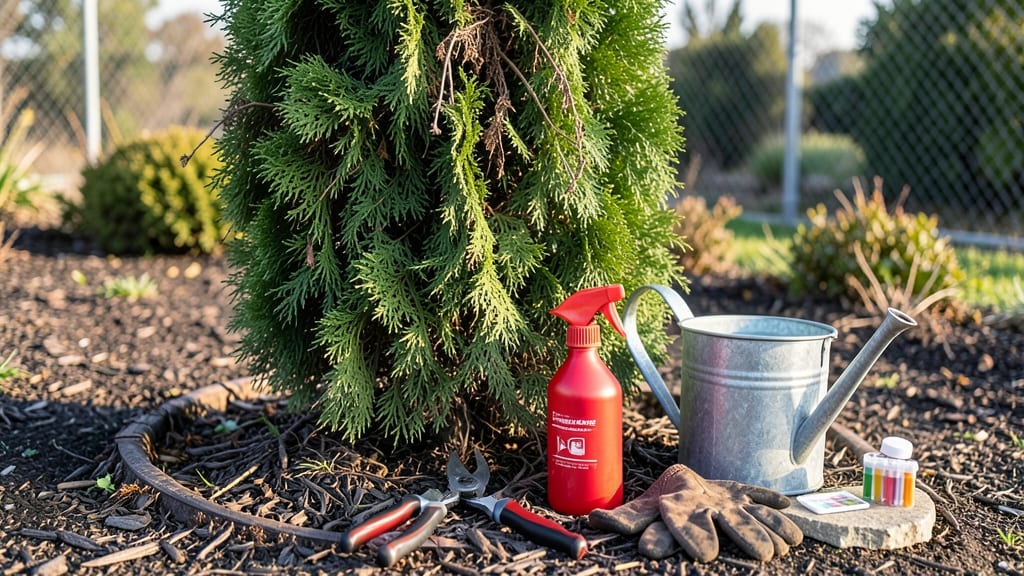
Your cypress tree turning brown treatment isn’t a death sentence—it’s a call for root revitalization. 🌿 I've nursed back more than a dozen struggling cypresses using a simple but effective approach that targets the real issue: stressed roots and fungal pressure.
The key is acting fast before the problem spreads deeper into the trunk.
Most brown cypresses suffer from Seiridium canker or root rot, both of which thrive when trees are already weakened by drought or poor drainage. I've seen dramatic turnarounds in just 4-6 weeks by combining targeted pruning with a root-boosting treatment that restores moisture balance and crowds out fungal spores.
You'll start by pruning affected branches back to healthy wood, then apply a mycorrhizal fungal treatment to the root zone—this helps roots absorb water and nutrients while outcompeting the harmful pathogens. Add a 2-3 inch layer of mulch to retain moisture and regulate soil temperature.
The best part? This method works for both bald cypress and lemon cypress, and you can adapt it for container-grown trees too. Once the roots recover, you'll see fresh green growth within 30-60 days, and the tree will start investing energy in new foliage instead of fighting disease.
Root Causes Of Browning
When your cypress tree’s foliage starts turning brown, it’s often a cry for help from the roots—or something blocking them from doing their job. Understanding the why behind the browning is the first step to reviving your tree.
Here are the most common culprits, backed by science, and what they mean for your tree’s health.
🌡️ Overheating Or Heat Stress
Cypress trees thrive in moderate climates, but when temperatures soar—especially in drought-prone areas—their needles can scorch and turn brown. This happens because:
- Transpiration overload: In extreme heat, trees lose moisture faster than their roots can absorb water, leading to desiccation (drying out) of the foliage.
- Cell membrane damage: Heat stress disrupts the chloroplasts (the tree’s food factories), causing them to break down and release brown pigments.
- Soil moisture imbalance: Even if you water, shallow watering (only wetting the top inch of soil) leaves deeper roots parched, while the surface layer overheats.
Actionable clue: If browning starts at the tips of needles and spreads inward, heat stress is likely. Check soil moisture 6 inches deep—if it’s dry, your tree isn’t getting enough hydration.
💧 Underwatering Or Poor Water Retention
Cypress trees are drought-tolerant but not drought-proof. When roots can’t access water, the tree triggers a survival response: browning leaves to conserve energy. Here’s how it plays out:
- Root zone shrinkage: Without consistent water, roots recede into the deepest, dampest soil, leaving upper roots dormant. This creates a nutrient-starved zone in the canopy.
- Plasma membrane disruption: Cells in the needles lose turgor pressure (rigidity), causing them to collapse and turn brown from the edges inward.
- Soil compaction: Heavy or clay soils don’t drain well, trapping water at the surface while deeper roots suffocate. This mimics drought conditions even when the soil looks wet.
Actionable clue: Gently pull back mulch and check soil moisture 2–3 inches deep. If it’s dry, your tree needs deep, slow watering (1–2 inches per week) to reach the roots.
🍄 Fungal Infections Or Root Rot
Fungi like Phytophthora or Armillaria thrive in waterlogged soil and attack cypress roots, cutting off nutrient flow. Signs include:
- Mushroom growth at the base: Fungal mycelium (thread-like structures) spread from infected roots to the trunk, blocking water transport.
- Dark, mushy roots: Healthy roots are white/firm; infected roots turn black or brown and smell foul when cut.
- Top-down browning: Unlike heat stress (which starts at tips), fungal browning spreads from the base upward as the tree’s vascular system fails.
Actionable clue: Dig a small trench around the base—if you see dark, slimy roots or a sour, rotten smell, fungal rot is likely. Do not overwater; instead, improve drainage with organic matter.
🐛 Pest Infestations (Root Weevils & Aphids)
Insects like cypress root weevils or aphids feed on roots and sap, respectively, disrupting the tree’s ability to absorb water and nutrients. Their damage leads to:
- Root chewing: Weevil larvae girdle roots (cut into them), creating entry points for bacteria and fungi.
- Sap sucking: Aphids inject toxins while feeding, causing needle yellowing/browning and sticky honeydew residue on foliage.
- Secondary stress: Weakened roots can’t support the tree, leading to nutrient deficiency symptoms (e.g., brown patches on older needles first).
Actionable clue: Inspect the soil surface for tiny, black beetles (weevils) or white, cottony masses (aphids). Tap the trunk—if pests fall, treatment is urgent.
⚡ Soil pH Imbalances Or Nutrient Deficiencies
Cypress trees prefer acidic soil (pH 5.5–7.0). If the pH drifts too high or low, or if key nutrients like iron, manganese, or nitrogen are lacking, browning occurs due to:
- Micronutrient lockout: High pH (alkaline soil) binds iron/manganese, making them unavailable. This causes interveinal chlorosis (yellowing between veins) that progresses to brown.
- Nitrogen starvation: Brown needles with yellow tips signal nitrogen deficiency, often from over-fertilizing with phosphorus/potassium without balancing nitrogen.
- Salt buildup: Over-fertilization or poor drainage leaves sodium/chloride residues in the root zone, burning root tips and reducing water uptake.
Actionable clue: Test your soil’s pH (kits are cheap and easy). If it’s above 7.0, amend with sulfur or peat moss. For deficiencies, use a slow-release, acidic fertilizer (e.g., 16-4-8 with micronutrients).
Each of these causes disrupts the tree’s hydraulic system—either by blocking water flow, starving roots, or forcing the tree to shut down foliage to survive.
The good news? Most can be reversed with targeted fixes. Next up: How to diagnose which culprit is affecting your cypress—and what to do about it.
How to Revive Your Cypress Tree
Now that you know the reasons behind your cypress tree’s brown leaves, it’s time to take action! Whether it’s drought stress, fungal infections, or nutrient deficiencies, each issue has a targeted solution. Below, we’ve mapped out practical, step-by-step fixes—plus prevention tips to keep your tree thriving long-term.
Problem: Underwatering or poor drainage causes brown, crispy foliage. Solution: 🔥 💦 Deep Watering Technique
- Water slowly and deeply (1–2 inches per week) to encourage deep root growth.
- Use a soaker hose or drip irrigation to avoid runoff and ensure moisture reaches the roots.
- Test soil moisture by sticking your finger 2–3 inches deep—if dry, water immediately.
🍳 🌱 Improve Drainage
- Amend heavy or compacted soil with sand, perlite, or compost to prevent waterlogging.
- If planted in a low spot, consider raising the soil level or installing a French drain.
👨🍳 🌧️ Mulch Like a Pro
- Apply 2–4 inches of organic mulch (wood chips, bark) around the base (keep it 6 inches away from the trunk).
- Mulch retains moisture and regulates soil temperature—critical for cypress trees!
💡 Pro Tip: If your tree is in a container, ensure the pot has drainage holes and water daily in hot weather.
Problem: Brown spots, mold, or sawdust-like frass (from bark beetles) signal a fungal or pest problem. Solution: 🔥 🧼 Fungal Treatment (For Rust, Canker, or Blight)
- Prune infected branches (sterilize pruners with rubbing alcohol between cuts).
- Apply fungicide (copper-based or neem oil) every 2–4 weeks during wet seasons.
- Remove fallen leaves/debris to reduce spores.
🍳 🐛 Pest Control (Bark Beetles & Spider Mites)
- For beetles: Use burlap bands around the trunk to trap emerging adults. Avoid pesticides—they can harm the tree more.
- For mites: Spray with horticultural oil (follow label instructions) early in the morning for best results.
👨🍳 🌿 Boost Tree Health
- Fertilize with a balanced, slow-release fertilizer (10-10-10) in early spring.
- Avoid over-fertilizing—cypress trees prefer low-nitrogen conditions.
💡 Pro Tip: If you see sawdust-like frass, act fast—bark beetles can kill a cypress tree in weeks!
Problem: Yellowing/browning leaves with stunted growth = lack of key nutrients. Solution: 🔥 🌱 Soil Test First!
- Send a soil sample to your local extension office to check pH and nutrient levels.
- Cypress trees prefer acidic soil (pH 5.0–6.5)—if yours is alkaline, amend with sulfur or peat moss.
🍳 🍃 Fertilizer Fix
- For iron deficiency (yellow leaves with brown edges): Apply chelated iron or iron sulfate.
- For general weakness: Use a slow-release, acidic fertilizer (like Miracle-Gro Azalea, Camellia, Rhododendron).
- Avoid high-nitrogen fertilizers—they encourage weak, disease-prone growth.
👨🍳 🌿 Organic Boost
- Compost tea (brewed from aged compost) provides microbes and trace minerals.
- Epsom salt (magnesium sulfate) can help if leaves are yellow between veins.
💡 Pro Tip: Never fertilize in winter—cypress trees are dormant and can’t absorb nutrients.
Problem: Brown tips or scorched leaves from salt spray, windburn, or too much sun. Solution: 🔥 🌊 Salt Damage? Flush the Soil
- Water the tree heavily for 30 minutes to leach out salt buildup.
- Avoid fertilizing near coastal areas—salt in the air is enough stress!
🍳 🌬️ Wind & Sun Protection
- Plant windbreaks (like shrubs or a fence) to reduce desiccation.
- Mulch heavily to protect roots from heat stress.
- Avoid pruning in late summer—new growth is more susceptible to sunburn.
👨🍳 🌿 Adjust Watering for Stress
- Morning watering (before 10 AM) reduces evaporation and fungal risk.
- Mist young trees on extremely hot days to prevent leaf scorch.
💡 Pro Tip: If your tree is near a road with salt runoff, install a berm or barrier to block salt spray.
✨ 🌱 Plant in the Right Spot – Cypress trees need full sun to partial shade and well-draining soil. ✨ 💧 Water Smart – Deep and infrequent is better than shallow, frequent watering. ✨ 🍄 Monitor for Pests Early – Check for holes, sawdust, or webbing every few weeks. ✨ 🌿 Mulch & Fertilize Right – Organic mulch + acidic fertilizer keeps roots happy. ✨ 🪓 Prune Properly – Remove dead branches in late winter/early spring to encourage new growth.
Final Thought: Most cypress trees bounce back quickly with the right care—don’t wait until it’s too late! Start with water, soil, and pests, then adjust based on your tree’s specific needs. 🌿✨
(Need a deeper dive? Check out our [Cypress Tree Care Guide] for year-round maintenance tips!)
Frequently asked questions
Why does my cypress tree turn brown in hot weather?
Hot weather causes heat stress as the tree loses moisture faster than its roots can absorb water. This leads to desiccation of the needles, starting at the tips and spreading inward. Water deeply in the morning to help—aim for 1-2 inches per week—and mulch heavily to retain moisture.
Can I save a cypress tree with completely brown needles?
It depends on the cause! If the browning is from drought or poor drainage, prune dead branches and improve watering practices. However, if fungal diseases like Seiridium canker have spread to the trunk, the tree may not recover. Test soil moisture and check for pests—act fast if you see blackened roots or sawdust-like frass.
How often should I water a cypress tree to prevent browning?
Water deeply 1-2 times per week during dry spells, ensuring moisture reaches 6-12 inches deep. Use a soaker hose to avoid runoff, and check soil moisture by sticking your finger 2-3 inches down. Overwatering is worse than underwatering—cypress trees hate soggy roots!
What’s the best mulch for a cypress tree with brown needles?
Use 2-4 inches of organic mulch like wood chips or pine straw, keeping it 6 inches away from the trunk. Mulch regulates soil temperature, retains moisture, and prevents fungal spores from splashing onto the tree. Refresh mulch annually to maintain its protective layer.
When should I prune a cypress tree with brown branches?
Prune dead or diseased branches anytime, but avoid heavy pruning in late summer. Focus on removing brown, crispy branches first, then sterilize your pruners with rubbing alcohol between cuts. This prevents spreading fungal infections. For large trees, hire a professional to avoid over-pruning.