
Pruning
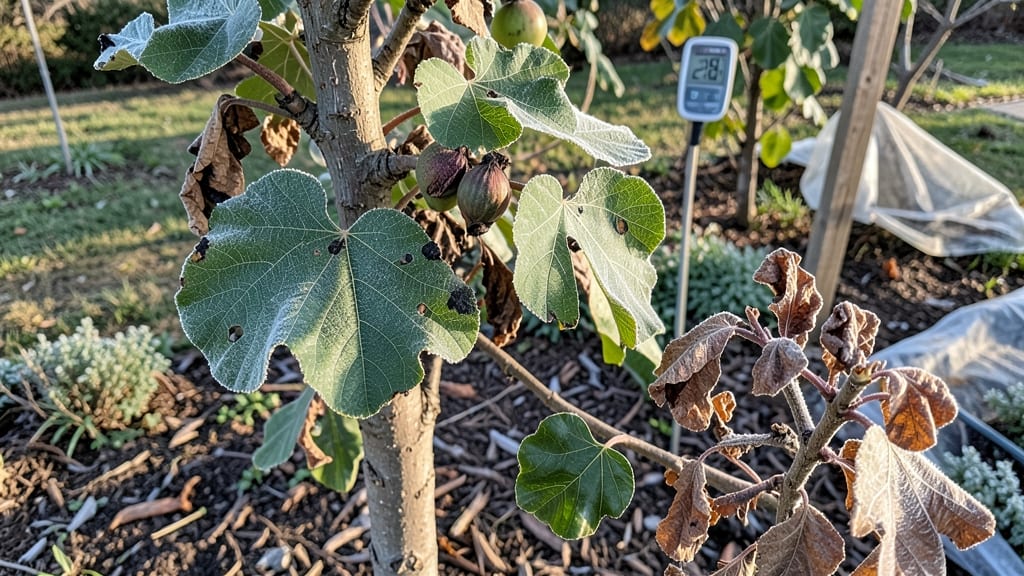
Your fig tree’s frost-damaged branches might look hopeless, but 5 strategic cuts can bring it back to life. 🌱 Last winter, my Mission fig’s blackened limbs had me convinced it was a goner—until I learned which parts to prune and how to coax new growth from the roots.
The key is acting fast and cutting with purpose, not panic.
Frost damage shows up as crispy, brown leaves, cracked bark, or branches that snap like dry twigs. The good news? Fig trees are tough—even if 80% of the top looks dead, those roots are still storing energy for a comeback.
Start by removing any branches that feel mushy or ooze sap when you cut them; those won’t recover. Use sharp pruners and make clean cuts just above a healthy bud or lateral branch.
After pruning, your tree will look skeletal—but that’s normal. Focus on protecting what’s left: wrap the trunk with burlap or frost cloth for future cold snaps, and water deeply once the soil thaws to help roots push out new shoots.
Within 4-6 weeks, you’ll spot fresh green buds where you cut, signaling the tree’s fighting spirit. Patience is key here; figs regrow slower than you’d think.
To keep frost from striking twice, plant your fig in a south-facing spot where it gets afternoon sun and shelter from north winds. Mulch heavily in fall to insulate roots, and consider a mini greenhouse frame over young trees in early spring.
With these cuts and precautions, your fig will bounce back—promise. The first harvest might be smaller, but next year’s crop will make it worth the wait.
Cold Weather’s Hidden Attack
Frost damage to fig trees isn’t just about a chilly night—it’s a complex interplay of biology, weather patterns, and the tree’s resilience. Understanding the root causes (literally and figuratively) helps you protect your fig tree before winter strikes. Here’s why frost turns lush fig leaves into crispy, brown messes.
Fig trees, native to Mediterranean and subtropical climates, are not frost-hardy. When temperatures plummet below 28°F (-2°C), their cells rupture due to ice crystal formation—a process called cytoplasmic freezing. Here’s how it breaks down:
- Cell Membrane Damage: Water inside fig cells expands as it freezes, tearing delicate membranes. This disrupts nutrient flow, causing wilting, browning, or blackened leaves.
- Vascular Blockages: Ice crystals can clog the tree’s xylem (water transport system), starving branches of moisture and nutrients.
- Metabolic Shutdown: Enzymes and proteins denature in cold, halting growth and repair processes. Even if leaves survive, buds and flowers often fail to regrow.
Actionable Insight: Most fig varieties (like Brown Turkey or Celeste) tolerate light frosts (<32°F/0°C) but suffer severe damage below 25°F (-4°C). Check your fig’s hardiness zone—if you’re in Zone 7 or colder, winter prep is non-negotiable.
Wind accelerates frost damage by stripping the insulating boundary layer of warm air around leaves. This phenomenon, called wind chill, can drop perceived temperatures by 10–20°F faster than still-air readings. For fig trees:
- Exposed Branches Take the Brunt: Leaves on windward sides lose heat 3x faster than sheltered ones, leading to uneven browning.
- Transpiration Freeze: Even in cold air, fig leaves continue losing moisture via transpiration. When soil moisture is frozen, roots can’t replenish it, causing desiccation.
- Soil Heaving: Frozen roots expand, breaking fine feeder roots—critical for water uptake during thaw.
Pro Tip: 🌡️ Use windbreaks (e.g., burlap screens or evergreen hedges) to reduce wind speeds by 50%. Mulch heavily (4–6 inches of straw or wood chips) to insulate roots and retain soil warmth.
Fig trees that flush new growth in fall are prime targets for frost. Why? Because:
Young tissue = higher water content = more vulnerable to ice damage.
- Hormonal Confusion: Figs produce auxin (a growth hormone) in response to warm fall days. If nights turn cold, the tree can’t “pause” growth fast enough.
- Thin Bark Weakness: Mature fig bark is thicker and more insulating. New shoots have paper-thin bark, offering zero protection against freezing.
- Bud Dormancy Failure: Some figs (like Chicago Hardy) enter dormancy early, but others keep growing until a hard frost hits.
Solution: 🍃 Prune back late-season growth by ⅓ in early October to harden remaining wood. Avoid fertilizing after August—excess nitrogen spurs soft, frost-sensitive growth.
Wet soil before a freeze is a double-edged sword. While roots need moisture, saturated ground conducts heat away faster, amplifying frost damage. Key issues:
| Problem | Effect on Fig Tree |
|---|---|
| Frozen Soil | Roots can’t absorb water, leading to hydraulic failure (air bubbles block xylem). |
| Thaw-Freeze Cycles | Repeated freezing/thawing shatters root tips, reducing the tree’s ability to recover. |
| Poor Drainage | Waterlogged roots suffocate, making them more susceptible to cold stress. |
Fix It: 💡 In fall, improve drainage with gypsum or sand if your soil is clay-heavy. Water deeply 1–2 weeks before the first frost to encourage roots to seek deeper, warmer soil layers.
Next up: How to diagnose frost damage vs. disease—and whether your fig tree can bounce back. Stay tuned.
Revive Your Frost-Burned Fig Tree
Frost damage can turn your fig tree’s lush leaves into crispy, brown messes—but with the right care, you can nurse it back to health. Below, we’ve mapped out practical fixes based on the type of damage, along with prevention tips to keep future freezes from wreaking havoc.
---
Before you prune, inspect your fig tree carefully. Frost damage falls into three main categories: - Light damage: Yellowing or slightly brown leaves (still flexible). - Moderate damage: Dark brown, brittle leaves or blackened tips. - Severe damage: Completely blackened branches or bark cracks.
💡 Pro Tip: Don’t panic-prune! Wait 2–3 weeks after frost to see if new growth emerges. Some figs recover surprisingly well.
---
Use sterilized pruners (rubbing alcohol or bleach wipe) to avoid spreading disease.
#### 🔥 For Light to Moderate Damage - Remove only the dead leaves/branches—figs are resilient and can regrow from healthy tissue. - Cut back to live buds (green or brown with a slight green center) just above a leaf node. - Thin out crowded branches to improve airflow and sunlight penetration.
#### 🍳 For Severe Damage (Blackened Bark or Cracks) - Cut back to a healthy branch (even if it means removing half the tree). Figs regrow quickly from the base. - Look for "eyes" (buds)—these are your tree’s lifeline.
Prune 1/4 inch above a bud, angled slightly downward. - Avoid over-pruning—figs can handle heavy cuts, but don’t remove more than 30% of the canopy at once.
⏰ Timing Matters: Prune in late winter or early spring (just before new growth starts). Avoid summer pruning, as it stresses the tree.
--- Once pruned, give your fig tree a fighting chance with these post-frost care tips:
#### 💧 Hydration & Mulching - Water deeply (1–2 inches per week) to help roots recover. Avoid soggy soil—figs hate "wet feet." - Apply 2–3 inches of mulch (straw or wood chips) around the base to insulate roots and retain moisture.
#### ☀️ Sunlight & Fertilizer Boost - Move potted figs to a sunnier spot (if possible) to encourage regrowth. - Fertilize lightly with a balanced 10-10-10 or citrus-specific fertilizer in early spring. Avoid high-nitrogen—it promotes leafy growth over fruit.
#### 🛡️ Frost Protection for Next Year - Choose cold-hardy varieties (e.g., 'Chicago Hardy,' 'Celeste') if you live in a frost-prone zone. - Use frost cloth or row covers on young trees or tender varieties during late frosts. - Plant in a microclimate—near a south-facing wall or slope where heat radiates at night.
--- Stop frost damage before it starts with these smart strategies:
| Risk Factor | Solution | When to Do It | |-----------------------|---------------------------------------|----------------------------| | Late spring frosts | Install a frost alarm or check forecasts. | Fall & early spring | | Poor drainage | Amend soil with sand or perlite. | Planting or early spring | | Young, vulnerable trees | Wrap the trunk in bubble wrap or fleece. | Winter (before frost) | | Wind exposure | Plant near a windbreak (fence, hedge). | Before planting |
💡 Pro Tip: Drip irrigation at night can raise soil temps by 2–5°F, giving young figs a survival boost.
--- Fig trees are tough survivors—many bounce back from frost damage with proper care. Patience is key: Some trees take 6–8 weeks to show new growth, but don’t give up! With the right cuts and protection, your tree could be fruit-bearing again in a season.
🚀 Need a visual guide? Check out our [Fig Tree Pruning Cheat Sheet] (link placeholder) for step-by-step diagrams!
Frequently asked questions
How can I tell if my fig tree is dead after frost damage?
Check for green buds or flexible bark under the blackened parts—these signs mean life remains. If the trunk is completely hard and hollow when tapped, or if no new growth appears after 6-8 weeks, the tree is likely dead. For potted figs, dig up and inspect the roots for any white or firm sections.
Should I cut back my frost-damaged fig tree now or wait?
Wait 2-3 weeks after the last frost to see if new growth emerges. Figs often surprise you! If no buds appear, prune in late winter/early spring (just before new growth starts). Never prune in summer—it stresses the tree when it’s already vulnerable.
What’s the best way to protect my fig tree from future frost?
Layer protection: Mulch heavily (4-6 inches of straw), wrap the trunk in bubble wrap or frost cloth, and plant near a south-facing wall to capture heat. For potted figs, move them to a garage or covered area before 32°F temps arrive.
Can I still get figs this year if my tree was frost-damaged?
Possibly, but expect a smaller harvest. If the tree survived with some healthy branches, it may produce a few late-season figs. Focus on reviving the roots first—fertilize lightly in spring and water deeply to encourage regrowth for next year’s full crop.
Why did only some branches get frost damage while others stayed green?
Wind exposure and branch thickness determine vulnerability. Exposed, thin branches lose heat faster, while thicker, sheltered branches retain warmth. The south side of the tree often fares better than the north side, which gets direct cold air.