
Pruning
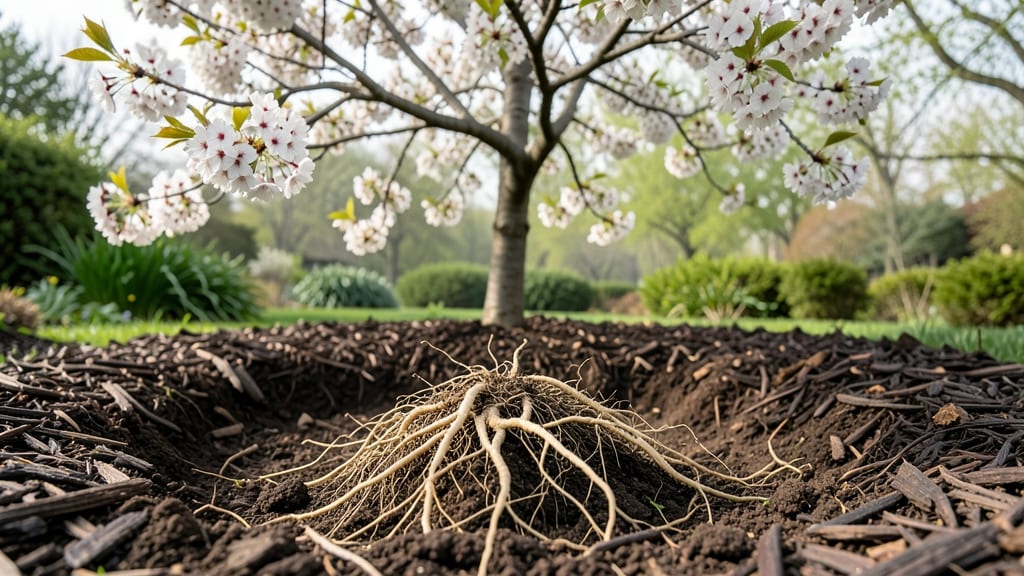
Flowering cherry tree roots spread aggressively 12–24 inches deep and up to 3–5 feet wide, competing with nearby plants for water and nutrients. Prune them in late winter or early spring before new growth begins, avoiding root damage during active seasons.
Understanding how these roots behave helps you plan your landscape wisely. 🌳 The lateral spread means they can outcompete nearby shrubs and perennials, while the deep roots make them drought-resistant once established.
I’ve seen cases where flowering cherries actually lift sidewalks over time if planted too close—something to keep in mind if you’re working with hardscaping. The best time to address root competition is during dormancy, when the tree’s energy reserves are highest for recovery.
For pruning, focus on removing only the most aggressive roots—never more than 10% of the total system at once. Using a sharp root saw or pruning shears in late winter lets you make clean cuts while minimizing stress.
After pruning, water deeply to help the tree recover, and consider adding mulch to protect any exposed roots from temperature fluctuations.
💡 In This Article
- How Flowering Cherry Tree Roots Grow and Affect Surrounding Plants
- Step-by-Step Guide to Pruning Flowering Cherry Tree Roots Safely
How flowering cherry tree roots grow and affect surrounding plants
Flowering cherry trees develop a fibrous root system that spreads both horizontally and vertically, creating a dense network beneath the soil. The lateral roots extend 3–5 feet outward from the trunk, while the taproot system dives 12–24 inches deep, anchoring the tree securely.
This aggressive spread means they can outcompete nearby plants like hostas, daylilies, or even young shrubs for water and nutrients, especially in dry conditions. 🌱 The roots also release allelopathic compounds that may inhibit the growth of some ground covers, though this effect varies by species.
The root system’s depth and width make flowering cherries surprisingly resilient to drought once established. Their ability to tap into deeper moisture sources explains why they often thrive in landscapes where other ornamentals struggle.
However, this same trait means they can lift sidewalks or driveways over time if planted too close—something I’ve observed in urban gardens where roots grow unchecked beneath concrete. The competition becomes most noticeable in spring and summer, when water demands peak and roots aggressively absorb resources.
Root pruning, when done correctly, can actually stimulate new growth by encouraging the tree to develop a denser root network. The key is to remove only 10–15% of the root mass at a time—never more—to avoid shocking the tree.
This technique is particularly useful if you’re installing a new hardscape feature, like a patio or walkway, near the tree’s drip line. The roots will regenerate, but with a more controlled spread.
Just be cautious: over-pruning can weaken the tree’s stability and reduce its ability to access water during dry spells.
One fascinating aspect of flowering cherry roots is their seasonal activity. In active growing seasons (spring to fall), roots are highly sensitive to disturbance, making pruning risky.
But during dormancy (late winter to early spring), the tree’s energy is focused on recovery, allowing it to heal clean cuts more efficiently. This is why professional arborists recommend timing root pruning for February or March, just before buds swell but before leaves emerge.
The tree’s natural growth hormones kick in shortly after, promoting faster recovery.
If you’re dealing with root competition in your garden, consider mulching to protect nearby plants while giving the cherry tree’s roots space to breathe. A 3–4 inch layer of organic mulch (like shredded bark) helps regulate soil temperature and retain moisture, reducing the tree’s need to compete aggressively.
For stubborn roots encroaching on hardscapes, root barriers made of HDPE plastic (installed vertically) can redirect growth without harming the tree. These barriers work best when placed at least 18 inches deep and 12–18 inches from the trunk.
The root system’s behavior also explains why flowering cherries often bloom more vigorously after a light root pruning—it’s a survival mechanism. By removing some roots, you’re essentially telling the tree to redirect its energy upward, resulting in larger flowers and fuller canopies the following spring.
This is why many gardeners use root pruning as a rejuvenation technique for older trees that have become overgrown or less productive. Just remember: patience is key. The tree may take 1–2 seasons to fully recover and show signs of improved health.