
How To
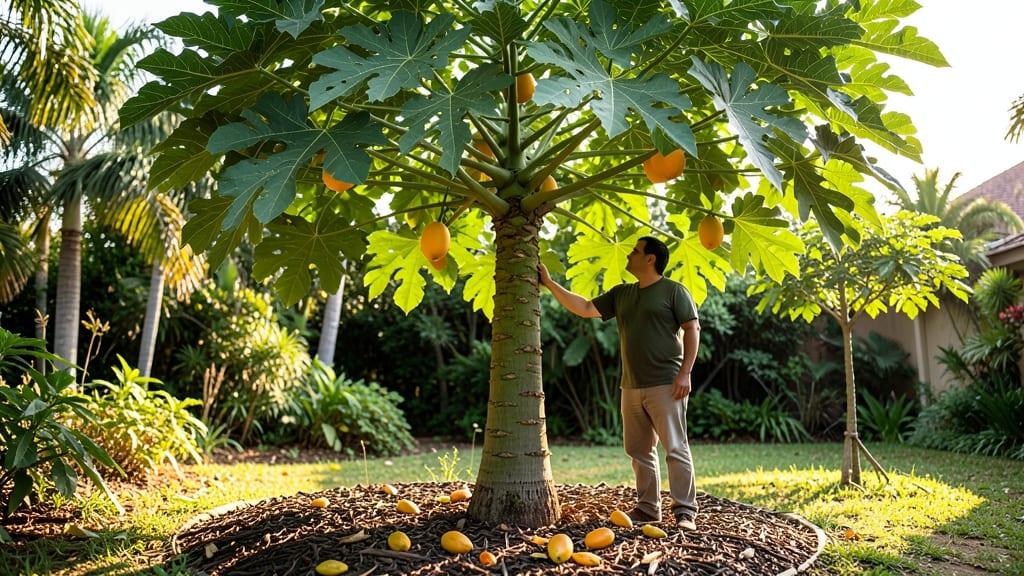
A papaya tree can grow anywhere from 10 to 30 feet tall, depending on the variety and growing conditions—so if you’ve been eyeing those sweet, tropical fruits but fretting over space, you’re in the right place.
Picture this: a 20-foot giant towering over your backyard or a compact 6-foot bush thriving in a container on your patio. The difference? Variety, care, and a little know-how. Some papayas stretch skyward like a tropical skyscraper, while others stay manageable for smaller gardens or even indoor growing.
Whether you’re working with limited space or dreaming of a full-size harvest, understanding how tall your papaya tree can grow—and how to shape it—is the first step to success.
Below, I’ll break down the height ranges by variety, the factors that push them toward the sky (or keep them grounded), and how to prune or train them for your specific setup.
From dwarf types that fit snugly in pots to standard varieties that need room to stretch, we’ll cover everything you need to know to grow the perfect papaya tree—no matter how much (or little) space you’ve got.


Papaya tree height guide: from dwarf varieties to towering giants
Choosing a papaya tree often comes down to one big question: how tall can a papaya tree grow? The answer varies dramatically depending on the variety, with some staying compact enough for patios while others become towering jungle giants.
For example, the 'Pawpaw' variety tops out at just 6-8 feet, making it perfect for small spaces, while the 'Solo' papaya can soar to 20+ feet, requiring serious garden real estate. Understanding these differences helps you pick the right tree for your space and growing goals.
Papaya trees grow incredibly fast—some varieties can reach 10 feet in just one year under ideal conditions. However, their mature height depends heavily on genetics, care practices, and growing environment. In tropical climates, these trees thrive and reach their maximum potential, while cooler regions may see stunted growth unless protected.
Let's break down the height ranges so you can visualize which papaya tree fits your space.
If you're working with limited space, dwarf varieties like 'Pawpaw' are your best bet. These trees stay under 8 feet and can even thrive in 5-gallon containers with proper care. Their compact size makes them ideal for balconies or small urban gardens, though they may produce slightly smaller fruit.
For larger properties, varieties like 'Kapoho Solo' offer impressive yields but require careful planning to accommodate their 20-foot height.
One surprising fact about papaya trees is their bushy growth habit. Even tall varieties spread wide, with some reaching 10-15 feet in diameter. This means you'll need to account for both height and width when selecting a planting spot.
In tropical regions, these trees grow so vigorously they can even become invasive if not controlled. Always check local regulations before planting, especially if you're in a warm climate.
For container growing, stick to dwarf or semi-dwarf varieties. A 15-gallon pot can support a 'SunUp' papaya for a few years, though you'll need to repot as the tree grows. Remember, papayas are not cold-hardy—even dwarf varieties will suffer if temperatures drop below 50°F (10°C).
If you live in a cooler zone, consider growing papayas in greenhouses or conservatories where you can control the environment.
Pruning plays a crucial role in managing height. Regular tip pruning can reduce vertical growth by up to 30% while encouraging bushier, fruit-bearing branches. I recommend pruning in early spring to shape the tree before the growing season peaks.
Just avoid heavy pruning late in the season, as this can delay fruiting. With the right variety and care, you can enjoy papayas without sacrificing your garden's layout.
When choosing a papaya tree
Factors that influence papaya tree height and growth speed
Papaya trees are fast-growing tropical plants, but their final height depends heavily on genetics, care practices, and environmental conditions. While some varieties can soar to 30 feet in ideal settings, others stay manageable at 6-8 feet with proper management.
Understanding these factors lets you control growth for your space—whether you're working with a small patio or a large backyard.
Sunlight exposure is the most critical factor. Papayas thrive in full sun (6+ hours daily), but insufficient light slows growth and reduces fruit production.
In subtropical zones (USDA 9-11), they grow faster with 8+ hours of direct sunlight, while cooler climates may see stunted growth if light is limited. Shade cloth (30-50%) can help protect young trees in intense heat, but never block more than 20% of light or risk dwarfing.
🌱 Key Factors Affecting Papaya Tree Growth
- 1. Sunlight: 6+ hours daily = rapid growth; 4-5 hours = stunted height (max 10-12 ft).
- 2. Soil Type: Well-draining, slightly acidic (pH 6.0-7.0) speeds growth; clay soil slows root development.
- 3. Watering: Deep watering 2-3x/week fuels growth; underwatering = compact, slow growth.
- 4. Pruning: Regular pruning (every 3-6 months) controls height; no pruning = wild, unmanaged growth.
- 5. Climate: Tropical zones (10-12) = 30 ft+; subtropical (9-11) = 15-20 ft with care.
Soil quality directly impacts root development and nutrient uptake. Papayas prefer well-draining, slightly acidic soil (pH 6.0-7.0) rich in organic matter. Heavy clay soils restrict root growth, leading to shorter, weaker trees that max out at 12-15 feet.
Amend your soil with compost or coconut coir to improve drainage and fertility. In container gardens, use a fast-draining mix (60% potting soil, 30% perlite, 10% compost) to prevent root rot, which can stunt growth by up to 50%.
Watering habits play a surprising role in height control. Papayas need consistent moisture, but overwatering causes root suffocation, while underwatering triggers stress responses that limit growth. Aim for deep watering 2-3 times per week, soaking the root zone (12-18 inches deep).
In hot climates, increase frequency to daily watering during peak summer. A simple trick: water in the morning to reduce evaporation and fungal risks, ensuring steady growth without sudden height spikes.
Pruning isn't just for shaping—it's a tool to control height and boost fruit production. Young papaya trees benefit from selective pruning to encourage a bushier, more compact form. Remove suckers (shoots from the base) and weak branches to redirect energy to stronger, fruit-bearing stems.
For taller varieties, prune the top 1-2 feet of the main stem to limit height while promoting lateral branches. Always use sterilized pruners and prune just above a leaf node to avoid disease.
Climate zones dramatically affect growth speed and final height. In tropical zones (USDA 10-12), papayas grow aggressively, reaching 20-30 feet in 2-3 years with ideal care. In subtropical zones (9-11), growth slows slightly, with mature trees typically 15-20 feet tall.
If you're in cooler zones (8 or below), grow papayas in containers and move them indoors during winter to prevent stunted growth. Frost exposure kills papaya trees instantly, so always protect them in marginal climates.
With the right conditions, you can grow a papaya tree that fits your space—whether it's a 6-foot patio dwarf or a 20-foot backyard giant. Start by choosing a variety suited to your climate, then focus on sunlight, soil, and watering for optimal growth.
A little pruning goes a long way in keeping your tree manageable while maximizing fruit yield. Happy growing! 🌴