
How To
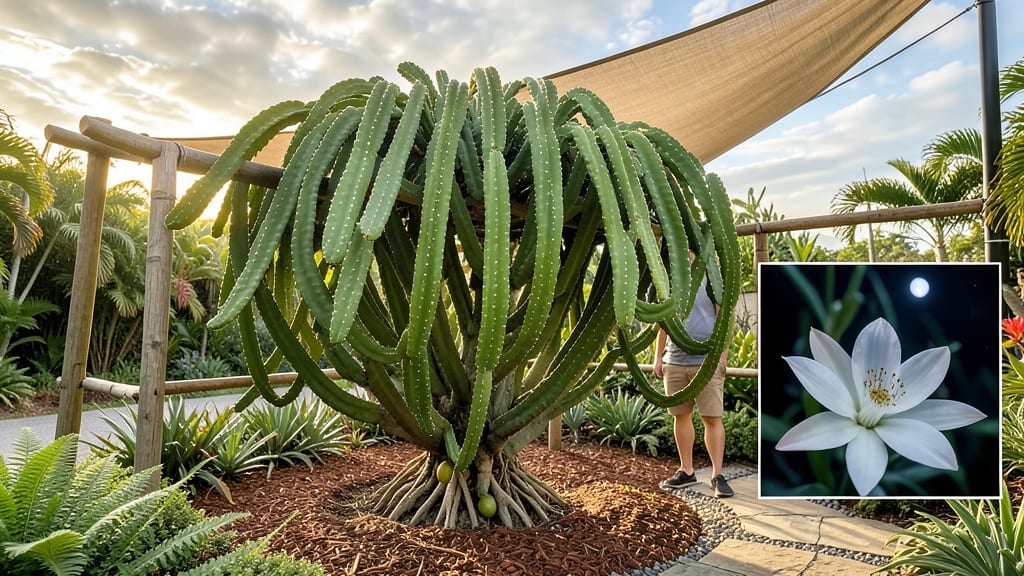
A dragon fruit tree 🐉 can grow anywhere from 10 to 25 feet tall, depending on your climate and how you cultivate it—but that range might surprise you if you're used to keeping plants in pots.
If you're dreaming of harvesting vibrant dragon fruit from your own garden—or even a cozy indoor pot—knowing how tall your dragon fruit tree will grow is the first step to planning its perfect home.
This tropical beauty can reach surprising heights, but its growth depends entirely on your climate and cultivation method.
In warm, frost-free zones like USDA 10-12, an outdoor dragon fruit tree will naturally climb trellises or sprawl across fences, while indoor varieties stay more compact unless given plenty of sunlight. Pruning and support structures can also dramatically change its final height.
Below, I’ll break down the height ranges you can expect, how to control growth for small spaces, and which varieties stay shorter for easier harvesting.


Dragon fruit tree height by climate Zone: indoor vs outdoor growth potential
Dragon fruit trees (Hylocereus spp.) are tropical vining cacti that can grow 15 to 25 feet tall outdoors in ideal conditions, but their height depends heavily on your USDA climate zone and whether you grow them indoors or outdoors.
In cooler zones (like Zone 9b), outdoor growth slows dramatically, while indoor cultivation keeps them manageable—even in containers as small as 5-gallons.
Outdoor dragon fruit trees thrive in USDA Zones 10-11, where they climb trellises, fences, or sprawl across the ground like a woody vine. Without support, they can reach 20+ feet in just 3–5 years.
In Zone 9b, winter protection (like row covers) is critical to avoid stunted growth or death. Meanwhile, indoor trees stay compact—typically 6–10 feet tall—if pruned regularly and given bright, indirect light.
Here’s how to estimate your dragon fruit tree’s mature height based on your growing conditions:
| Growing Condition | Climate Zone | Mature Height Range | Key Growth Factors |
|---|---|---|---|
| Outdoor (Ground/Container) | 10-11 | 15–25 ft | Full sun, trellis support, no frost |
| Outdoor (Ground/Container) | 9b | 8–15 ft (with winter protection) | Partial shade in winter, prune aggressively |
| Indoor (Container) | Any zone (with grow lights) | 3–10 ft (pruned regularly) | South-facing window, 6+ hrs light/day |
| Indoor (Dwarf Varieties) | N/A (no true dwarfs, but grafted types) | 4–6 ft (grafted to slow growth) | Heavy pruning, small pots (5–15 gallons) |
In USDA Zones 10–11, outdoor dragon fruit trees grow fastest when given full sun (6+ hours daily) and a sturdy trellis or fence to climb. Without support, they sprawl aggressively, reaching 20 feet in 3 years.
The Hylocereus undatus variety, for example, can top 25 feet if unpruned, while Hylocereus costaricensis (yellow-fruited) stays slightly shorter at 15–20 feet.
For Zone 9b growers, outdoor cultivation is possible but requires winter protection—like moving pots indoors or wrapping the trunk in burlap. Without protection, growth stalls below 8 feet, and the plant may die back.
Even with care, expect slower growth rates compared to frost-free zones, with mature heights capped at 10–15 feet.
Indoor dragon fruit trees are the best option for cooler climates or small spaces. With bright, indirect light (e.g., a south-facing window) and regular pruning, they stay between 3 and 10 feet tall.
Use a 5–15 gallon container with drainage holes, and rotate the pot monthly to ensure even sunlight exposure. Without enough light, indoor trees grow leggy and weak, maxing out at 6 feet.
Pruning is the #1 way to control height—whether indoors or out. Pinch back new growth tips in spring to encourage bushier, shorter growth. For outdoor trees, prune after flowering to redirect energy to fruit production rather than vertical growth.
In containers, trim vines back by 1/3 annually to maintain a manageable size.
Seasonal changes also affect height. In tropical zones (10–11), dragon fruit trees grow year-round, adding 2–4 feet per year if conditions are ideal. In Zone 9b, growth slows or stops in winter, and the plant may drop leaves.
Indoors, growth is consistent but slower, with 1–2 feet of new growth annually if given proper care.
If you’re growing dragon fruit in a small apartment or balcony, choose a grafted variety (even though true dwarfs don’t exist). Grafting onto a shorter rootstock can keep the plant under 6 feet while still producing fruit.
Pair this with regular pruning and a compact trellis to train vines horizontally.
Remember: Sunlight exposure is the biggest factor in height. Outdoor trees in full sun grow 3x taller than those in partial shade. Indoors, supplement with LED grow lights (12–14 hrs/day) to prevent stunted growth. With the right conditions, even a balcony-sized pot can yield fruit—just expect a shorter, bushier plant.
How to control dragon fruit tree height: pruning tips for small spaces or large gardens
Dragon fruit trees (Hylocereus spp.) can grow 15-25 feet tall outdoors, making them perfect for large gardens but challenging for small spaces like balconies or indoor pots. The good news? With the right pruning techniques, you can control their height while still enjoying abundant fruit production.
Whether you're growing in a ground-level garden or a 10-gallon container, pruning at the right time and with the right tools is key.
Pruning isn’t just about cutting back—it’s about encouraging bushier growth and redirecting energy toward fruit production. Dragon fruit trees naturally grow as vining cacti, so strategic pruning helps maintain a manageable shape without sacrificing yields.
For example, a well-pruned tree in a 5-gallon pot can stay under 6 feet tall, while an unpruned outdoor tree may reach 20 feet in just 3-4 years.
⚠️ callout warning
- Pruning too late in the season: Cutting back after September removes potential flower buds for next year’s harvest.
- Using dull or dirty tools: Bacteria from rusty shears can infect cuts, slowing recovery and growth.
- Over-pruning at once: Removing more than 1/3 of the plant in a single session stresses the tree and reduces fruit production.
- Ignoring the "rule of thirds": Never prune more than 1/3 of the plant’s height in a growing season.
Timing is everything when it comes to pruning dragon fruit trees. The best time to prune is early spring, right before the growing season kicks into high gear (typically February-March in most tropical/subtropical zones).
This gives your tree plenty of time to recover and produce new growth before summer heat sets in. You can also do a light pruning in late summer (around August-September) to shape the plant and remove dead or weak branches before the next growing cycle.
To prune effectively, you’ll need clean, sharp tools like bypass pruners (for smaller stems) or a pruning saw (for thicker branches). Always sterilize your tools with rubbing alcohol or a 10% bleach solution to prevent disease.
Start by removing dead or diseased branches first—these can harbor pests and diseases that spread to healthy parts of the plant. Next, cut back any overly long vines to encourage bushier growth.
Aim to reduce height by no more than 1/3 in a single session to avoid shocking the plant.
For small spaces, focus on training your dragon fruit tree to grow along a trellis, fence, or balcony railing. This not only controls height but also maximizes sunlight exposure for the leaves and flowers.
If you’re growing in a container, prune more aggressively to keep the tree compact. Use a support structure to guide vines upward and prevent sprawling.
In larger gardens, you can let the tree vine naturally but prune selectively to maintain a manageable height (around 8-10 feet) while still enjoying easy harvest access.
One of the biggest myths about pruning dragon fruit trees is that cutting back reduces fruit production. In reality, proper pruning increases yields by promoting more flower buds.
When you prune, you’re encouraging the tree to branch out, which means more stems = more flowers = more fruit. Just remember to balance height control with bushiness—don’t sacrifice too many vertical branches if you want easy-to-reach fruit.
With the right approach, you can keep your dragon fruit tree healthy, productive, and perfectly sized for your space! 🌱