
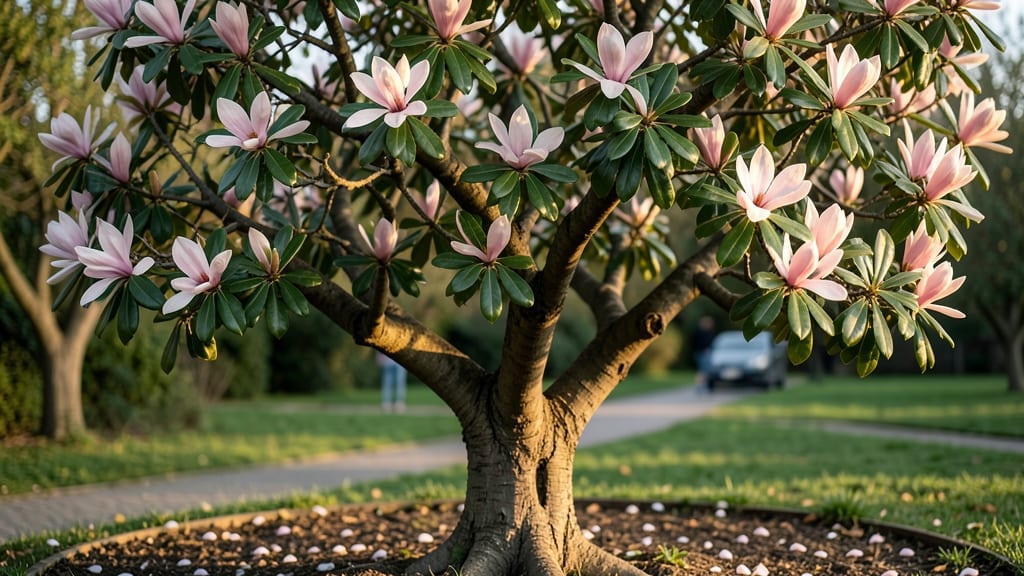
How Tall Do Magnolia Trees Grow: Exact Heights by Fastest-Growing Varieties

How To

How Tall Do Magnolia Trees Grow: Exact Heights by Fastest-Growing Varieties

A magnolia tree can grow how tall does a magnolia tree grow anywhere from 10 feet to a towering 80 feet, depending on the variety and growing conditions.

If you're dreaming of a majestic magnolia tree but unsure how much space it needs, you're not alone—many gardeners overlook the dramatic differences between varieties.

Some, like the Southern magnolia (Magnolia grandiflora), reach heights of 60–80 feet, while others, such as the star magnolia (Magnolia stellata), stay compact at just 15–25 feet.

Understanding these height ranges is the key to planning your landscape. The right variety can turn a small yard into a fragrant sanctuary or anchor a large property with dramatic seasonal interest.

Below, we’ll break down the fastest-growing types, how to estimate your tree’s future size, and care tips to encourage healthy growth.

Whether you’re planting a dwarf magnolia for a patio or a tall specimen as a focal point, knowing these details will help you choose the perfect tree for your space.

📈 Magnolia Tree Growth Timeline
1-2 ft
Year 1
3-5 ft
Year 2
6-10 ft
Year 3
10-80 ft
Mature

Magnolia tree height guide: fastest-growing varieties and their mature sizes

Choosing a magnolia tree often comes down to one key question: how tall will it grow? The answer varies wildly—from 5-foot dwarf varieties to 120-foot giants—so understanding these differences is critical before planting.

Fast-growing magnolias can add 3 feet per year in ideal conditions, while slower varieties may take decades to reach their full height. Let’s explore the top 10 fastest-growing magnolias and their mature sizes to help you plan your landscape with confidence.

Magnolia trees are prized for their fragrant blooms and glossy foliage, but their height potential can make or break your garden design.

For example, the Southern magnolia (Magnolia grandiflora) can soar to 80 feet tall, while the star magnolia (Magnolia stellata) stays a manageable 15–25 feet. Climate, soil, and care all influence growth rates, but some varieties are naturally quicker to mature.

Below, we’ll break down the fastest-growing magnolias, their mature heights, and the conditions that help them thrive.

Why height matters: A magnolia planted too close to a house or power line may require costly removal later. Meanwhile, smaller varieties like Magnolia 'Little Gem' (20–25 feet) are perfect for urban gardens. Understanding these differences ensures your tree has room to grow without becoming a nuisance. Let’s dive into the specifics with a side-by-side comparison of the fastest-growing varieties.

How to estimate your magnolia’s future height before planting

Predicting how tall your magnolia will grow is easier than you think! The key lies in understanding your USDA hardiness zone, soil quality, and sunlight exposure.

For example, a Southern magnolia (Magnolia grandiflora) in Zone 7 with full sun can reach 60–80 feet in 20 years, while a star magnolia (Magnolia stellata) in Zone 5 may only hit 15–25 feet. Start by checking your zone—this directly impacts growth potential.

Magnolias thrive in well-draining, slightly acidic soil (pH 5.0–6.5). Compacted or clay-heavy soil can stunt growth by 30–50%, so amend with compost before planting. Also, 6+ hours of sunlight per day accelerates growth, while partial shade slows it.

For instance, a Saucer magnolia (Magnolia × soulangeana) in Zone 6 with 4 hours of sun might only grow 15 feet, but with full sun, it could hit 25 feet in the same time.

🌳 Magnolia Growth Calculator

Variety: Magnolia × soulangeana (Saucer)
Zone: 7
Sunlight: 6+ hours/day
Expected Height in 10 Years: 20–25 feet
Annual Growth Rate: 2–2.5 feet/year
Spacing Needed: 15–20 feet from structures

Common mistakes can sabotage your magnolia’s height potential. Avoid planting root-bound nursery trees—these struggle to establish, growing only 1–2 feet per year instead of 3+ feet.

Poor drainage causes root rot, halting vertical growth entirely. Always plant in a location with elevated soil mounds or raised beds if your yard floods easily.

Spacing is critical—plant dwarf varieties (Magnolia 'Black Tulip') at least 8–10 feet from structures, while standard magnolias need 30+ feet. Overcrowding forces trees to compete for nutrients, reducing height by up to 40%.

For example, a Cucumbertree magnolia (Magnolia acuminata) in Zone 4 might only reach 40 feet if planted too close to other trees.

Use these three factors to refine your estimate: zone compatibility, sunlight hours, and soil amendments.

For instance, a Sweetbay magnolia (Magnolia virginiana) in Zone 8 with morning sun and organic-rich soil could hit 30 feet in 15 years, while the same tree in Zone 5 might only reach 20 feet. Adjust your expectations based on local conditions.

Remember, magnolias grow slowest in their first 3–5 years as they establish roots. After that, growth accelerates—especially with regular deep watering (10–15 gallons weekly) and balanced fertilizer (10-10-10 NPK).

By accounting for these variables, you’ll avoid surprises and create space for your magnolia to thrive—just like a properly planned landscape deserves! 🌿

★★★★★4.7(8 reviews)
Categories How To
Variety Mature Height (ft) Annual Growth Rate (ft) USDA Zones Best For
Magnolia grandiflora (Southern Magnolia) 60–80 ft 1.5–3 ft 6–10 Large landscapes, privacy screens
Magnolia × soulangeana (Saucer Magnolia) 15–25 ft 1–2 ft 4–9 Urban gardens, small yards
Magnolia stellata (Star Magnolia) 15–25 ft 1–2 ft 4–8 Early spring blooms, small spaces
Magnolia 'Little Gem' (Dwarf Southern Magnolia) 20–25 ft 1–1.5 ft 7–10 Small yards, containers (young)
Magnolia 'Black Tulip' (Dwarf Hybrid) 10–15 ft 0.5–1 ft 5–9 Bonsai-style gardens, patios
Magnolia campbellii (Campbell Magnolia) 20–30 ft 1.5–2.5 ft 6–9 Mountain gardens, woodland edges
Magnolia 'Elizabeth'* (Hybrid) 15–20 ft 1–1.5 ft 5–9 Early blooms, small landscapes