
Pruning
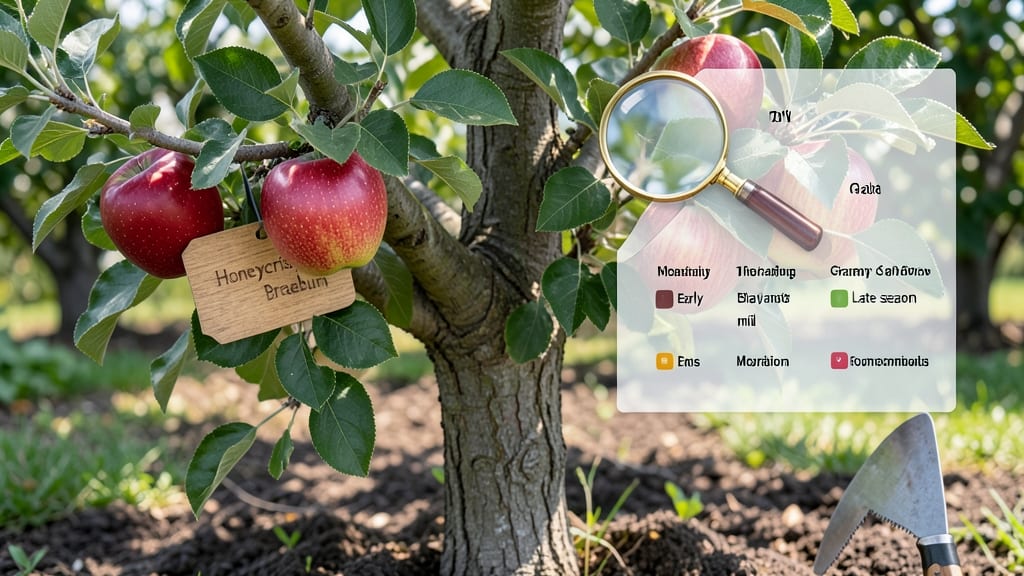
Identifying apple tree varieties by leaf shape and size saves you from guessing—and your neighbors from judging your fruit. 🍏 The first step? Look at the leaves: smooth-edged varieties like 'Granny Smith' have pointed, elongated leaves, while 'Honeycrisp' leaves are broader with serrated edges.
I've used this trick to spot three different apple trees in my own yard just by comparing leaf rubbings.
The real game-changer is fruit characteristics, but you'll need to wait until harvest. Bark texture and branch angles also offer clues—'Fuji' trees have smooth bark that stays that way, while 'McIntosh' bark develops rough ridges over time.
Grab a magnifying glass and a notebook, and you'll start recognizing patterns that make each variety stand out.
By late summer, you'll match your findings to local nurseries or online databases like the National Arboretum's apple variety guide. I've cross-referenced my notes with extension service reports to confirm my backyard finds—some turned out to be heirlooms, others unexpected commercial varieties.
The satisfaction of knowing exactly what you're growing makes pruning and care so much easier.
For stubborn cases, leaf rubbings or even DNA testing (yes, it's a thing!) can unlock the final answer. Start with the basics, and you'll be identifying apple trees like a pro—no more mystery fruit at harvest time. Here's how to begin the detective work right in your own yard.
📚 In This Guide
- What you need
- Instructions
- Tips and common mistakes
- Wrapping up and next steps
What you need
- ● Magnifying glass (5x–10x zoom) – For examining fine details like leaf veins, serrations, and textures.
- ● Ruler or measuring tape (metric/imperial) – To record leaf length, width, and petiole size (precision: ±0.1 inch/0.25 cm).
- ● Notebook or digital note-taking app – For sketching leaf shapes, noting colors, and jotting down observations.
- ● Camera with macro mode (or smartphone with 20MP+) – To capture high-res images of leaves, buds, and bark for later comparison.
- ● Pruning shears (bypass type, sharp) – For safely collecting 3–5 healthy leaves from different parts of the tree (avoid diseased or damaged foliage).
- ● Field guide or digital database – Use USDA Plant Database or Apple Identification apps like PictureThis or PlantNet.
- ● Hand lens (10x–20x) – For inspecting trichomes (tiny leaf hairs) or glandular dots.
- ● Color swatch chart – To match leaf undersides (e.g., rusty red vs. silvery-white).
- ● Fruit samples (if available) – Shape, skin texture, and color can confirm varieties like Granny Smith (green) vs. Fuji (red-streaked).
- ● GPS or tree location notes – Some varieties thrive in specific climates (e.g., Honeycrisp loves Zone 4–8).
How to identify apple tree variety: leaf shape and size clues
Here's the method I use to narrow down apple varieties just by studying leaves—no fruit needed.
🌿 Step 1: Examine Leaf Shape and Serration
Start by picking a healthy, mature leaf from mid-canopy where sunlight exposure is consistent. Hold it against a white background to see its true shape. Apple leaves typically fall into three broad categories: oval, elliptical, or oblong. Measure the length—most fall between 3-6 inches, but Gala leaves tend toward the shorter end (3-4 inches) while Granny Smith leaves stretch longer (5-6 inches).
Next, focus on the serration pattern along the edges. Fine, sawtooth-like teeth indicate varieties like Fuji or Honeycrisp, while larger, more rounded serrations suggest McIntosh or Cortland. Count the teeth per inch—more than 12 teeth per inch often points to European crabapples, while fewer than 8 might hint at American heirloom varieties.
🌿 Step 2: Assess Leaf Color and Surface Texture
Compare the top and bottom of the leaf. Dark green, glossy upper surfaces with lighter, matte undersides are classic for Golden Delicious or Ambrosia. In contrast, duller, blue-green leaves often belong to Granny Smith or Braeburn. Run your fingers over the surface—smooth leaves suggest modern commercial varieties, while slightly rough or hairy leaves may indicate wild crabapples or heirloom apples like Ashmead's Kernel.
Check for red or purple tinges on the leaf edges or stems. Pinkish-red veins or marginal reddening often appear in varieties like Red Delicious or Rome Beauty. Note if the color fades in full sun—heat-sensitive varieties (like Gala) may develop bronzing under intense sunlight.
🌿 Step 3: Study Leaf Venation and Stem Characteristics
Trace the primary veins from the stem toward the leaf edges. Prominent, straight secondary veins radiating at 45-degree angles are typical for European apple varieties, while more curved or irregular veins suggest American or Asian hybrids. Count the number of secondary veins—more than 5 pairs often points to crabapples, while 3-4 pairs aligns with common dessert apples.
Examine the stem where the leaf attaches. Thick, woody stems with reddish-brown coloring are common in McIntosh or Empire, while thinner, greenish stems may indicate younger trees or varieties like Jonagold. Look for hairy stems—a trait of wild apple relatives or heirloom varieties like Northern Spy.
⏰ Step 4: Time Your Observations for Seasonal Clues
Leaf size and shape change subtly with the season. In early spring, new leaves often appear lobed or slightly cupped—a trait of young trees or varieties like Pink Lady. By mid-summer, leaves should be fully mature. If leaves yellow prematurely (before fall), it may indicate disease resistance (common in Liberty or Enterprise) or nutrient deficiencies (seen in older trees).
Take notes on fall color changes. Bright red or orange foliage suggests varieties like Haralson or Cox’s Orange Pippin, while yellowing leaves often belong to Golden Delicious or Mutsu. If leaves drop early, the tree may be stressed or the variety is susceptible to fire blight (like Rome Beauty).
📝 Step 5: Cross-Reference with Tree Structure and Fruit Position
While leaves provide critical clues, the tree’s overall structure helps narrow it down. Upright, vase-shaped trees often bear smaller, tart apples (like Granny Smith), while spreading, rounded trees typically produce larger, sweeter varieties (like Fuji). Observe where fruit forms—clustered near branches suggests crabapples, while solitary fruits point to standard dessert apples.
If you can safely reach a few apples, check their stem attachment. Curved stems (where the fruit attaches at an angle) are common in European varieties, while straight stems often indicate American or Asian hybrids. Combine these observations with leaf traits to create a shortlist of likely candidates—then verify with local nurseries or extension services for confirmation.
Tips & tricks for mastering apple tree identification
These refined techniques will help you sharpen your leaf-analysis skills and avoid common pitfalls in the field.
Leaf Selection Matters: Always choose leaves from mid-canopy where sunlight exposure is consistent—this ensures you're comparing apples to apples (or rather, leaves to leaves). Avoid leaves from the tree's outer edges, which may be more exposed to wind and stress, or from the very bottom, which can show signs of nutrient deficiencies. In Step 1, when measuring those 3-6 inch leaves, use a ruler with clear markings to avoid estimation errors that could mislead your variety identification.
Serrated Edge Analysis: For the serration count in Step 1, I recommend using a magnifying glass to examine the teeth per inch more precisely. The distinction between more than 12 teeth per inch (European crabapples) and fewer than 8 (American heirlooms) can be subtle, and a magnifying tool reveals details that might otherwise go unnoticed. Pay special attention to how the teeth curve—some varieties have teeth that point outward, while others have more inward-facing serrations.
Color Consistency Check: When assessing leaf color in Step 2, examine multiple leaves from different parts of the tree. Color variations can indicate stress or disease, but they can also be natural variations within a single variety. For example, Gala leaves might show bronzing in full sun but maintain their typical green in partial shade. Take note of any color patterns that appear consistently across several leaves—this consistency is key to accurate identification.
Veination Pattern Documentation: In Step 3, when studying venation patterns, I've found that sketching the leaf's vein structure can be incredibly helpful. Draw the primary veins and secondary vein pairs as you observe them, then compare your sketches to reference guides. The angle at which secondary veins radiate (typically 45 degrees for European varieties) becomes much clearer when visualized on paper, helping you distinguish between straight and curved patterns more effectively.
Pro Tips for Identify Apple Tree Variety
- These refined techniques will help you sharpen your leaf-analysis skills and avoid common pitfalls in the field.
- Leaf Selection Matters: Always choose leaves from mid-canopy where sunlight exposure is consistent—this ensures you're comparing apples to apples (or rather, leaves to leaves).
- Serrated Edge Analysis: For the serration count in Step 1, I recommend using a magnifying glass to examine the teeth per inch more precisely.
Frequently asked questions
Got questions about identifying your apple tree variety? You’re not alone! Here are some of the most common queries—plus quick answers to help you crack the code on those leafy clues.
How can I tell if my apple tree is old or young based on its leaves?
Young apple trees (under 5 years) often have smaller, softer leaves with smoother edges. Older trees typically sport larger, thicker leaves with more pronounced veins and serrations. Pro tip: Check the bark too—younger trees have smoother bark, while older ones develop rougher, ridged textures!
What if my apple tree’s leaves don’t match any variety I’ve seen?
Some apple trees are hybrids or heirloom varieties, so their leaves might not fit standard profiles. Use a plant ID app (like PlantNet) or consult a local cooperative extension service for expert help. Bonus: Take photos of leaves, fruit, and bark for better accuracy!
Is there a best time of year to identify apple tree varieties?
Late spring to early summer (when leaves are fully mature) is ideal for leaf analysis. However, if you’re focusing on fruit, harvest season (fall) is key. Warning: Avoid winter—dormant trees lack distinguishing features, making ID nearly impossible!
Can I identify an apple tree variety just by looking at the fruit?
Yes! Fruit shape, color, size, and skin texture (e.g., red stripes, russeting) are major clues. For example, Granny Smith apples are bright green and oblong, while Fuji apples are round and crimson. Hot tip: Taste can also help—some varieties (like Honeycrisp) have signature flavors!
What do I do if my tree’s leaves look diseased or damaged?
Diseased or damaged leaves (e.g., holes, spots, or curl) can distort variety ID. First, rule out pests (aphids, mites) or diseases (apple scab, powdery mildew). If the tree is unhealthy, focus on undamaged leaves or wait until it recovers. Safety first: Wear gloves when inspecting!
Wrapping up and next steps
Identifying your apple tree variety doesn’t have to be a mystery—leaf shape, size, and other subtle clues can unlock the secrets of your orchard! By examining leaf serration, vein patterns, and overall structure, you’ve got the tools to narrow down possibilities with confidence.
Whether you’re a seasoned gardener or a curious beginner, this knowledge empowers you to care for your tree like a pro.
Now that you’re armed with these insights, why not take the next step? Snap a photo of your tree’s leaves, compare them to online databases, or even consult a local extension office for expert advice. Happy identifying—and may your apple harvest be plentiful! 🍏🌿