
Trees
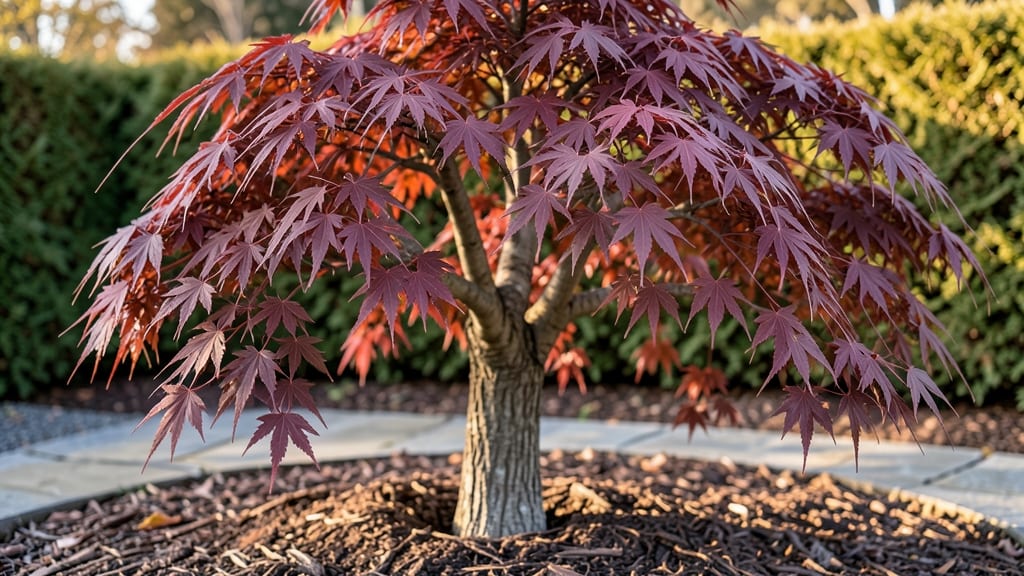
The growth rate of the Japanese Red Maple Tree 🌳 varies dramatically by variety, with some varieties surging to 20 feet in a decade while others take twice as long—here’s how to predict your tree’s timeline.
If you’ve ever planted one expecting quick color payoff, you know the wait can feel endless. That first year’s 2-4 feet of growth might leave you wondering whether your patience will ever be rewarded—but the real story unfolds in the decades that follow.
This guide breaks down exactly how fast your Japanese Red Maple Tree will grow by variety, from the compact 'Emperor I' to the towering 'Bloodgood', plus the care tweaks that can shave years off its maturation.
You’ll learn which factors double growth rates, when to expect full size, and how to spot slowdowns before they happen—so you can plan your landscape with confidence.


Japanese red maple growth rates by variety: height projections by year
Japanese red maples (Acer palmatum) are legendary for their vibrant foliage and elegant branching, but their growth rates can vary wildly depending on the cultivar.
Some varieties like 'Bloodgood' grow aggressively, while others like 'Emperor I' mature more slowly. Understanding these height projections helps you plan your landscape with realistic expectations.
Most Japanese red maples take 10-20 years to reach their full mature size, but their first decade is when the most dramatic growth occurs. For example, a standard 'Bloodgood' can grow 3-5 feet per year in ideal conditions, while dwarf varieties like 'Shishigashira' grow just 6-12 inches annually.
Let's break down the growth rates for popular varieties.
| Variety | Height at 5 Years | Height at 10 Years | Height at 20 Years | Mature Height |
|---|---|---|---|---|
| 'Bloodgood' | 10-12 ft | 18-22 ft | 25-30 ft | 25-30 ft |
| 'Emperor I' | 6-8 ft | 12-15 ft | 18-22 ft | 20-25 ft |
| 'Shishigashira' | 3-4 ft | 6-8 ft | 10-12 ft | 12-15 ft |
| 'Autumn Flame' | 8-10 ft | 14-18 ft | 22-25 ft | 25-30 ft |
| 'Hakuho' | 4-5 ft | 8-10 ft | 12-15 ft | 15-20 ft |
If you planted a 'Bloodgood' Japanese red maple, you can expect it to reach 10 feet tall by its fifth year, making it a striking focal point in your landscape. This variety is one of the fastest-growing, often doubling in height every 3-5 years during its youthful phase.
Meanwhile, the 'Shishigashira' variety stays compact, perfect for smaller gardens or container planting.
For those in cooler climates (USDA zones 5-6), growth rates may slow slightly during winter months, but spring and summer spurts can compensate. In warmer climates (zones 7-8), consistent growth is possible year-round if water and nutrients are maintained.
Always monitor your tree's foliage color—healthy leaves indicate optimal growth conditions.
One common misconception is that Japanese red maples grow rapidly like fast-growing trees such as willows. In reality, their slow-to-moderate growth is part of their charm, ensuring they develop strong, durable wood over time. Patience pays off with their stunning autumn colors, which are more vibrant on mature trees.
To encourage faster growth, focus on well-draining soil and regular watering during the first few years. Avoid over-fertilizing, as this can lead to weak, leggy growth. Instead, use a balanced fertilizer in early spring and monitor your tree's response closely.
Pruning in late winter helps shape the tree and promotes healthier growth patterns.
For gardeners with limited space, consider the 'Emperor I' variety, which matures at 20-25 feet but grows more slowly than
Factors that accelerate or slow Japanese red maple growth rates
Your Japanese red maple growth rate isn't set in stone—it's a dynamic process influenced by environmental factors and your care choices. While some varieties naturally grow faster than others, optimal conditions can double growth rates, while poor conditions may halve them.
Understanding these variables lets you create ideal growing conditions for your tree's vibrant foliage and sturdy structure.
One of the most critical factors is sunlight exposure. Japanese red maples thrive in full sun to partial shade, but too much shade slows growth dramatically. In my experience, trees receiving 6+ hours of direct sunlight grow 30-50% faster than those in shady spots.
However, in hot climates, afternoon shade prevents leaf scorch while maintaining healthy growth rates.
⚖️ Growth Rate Factors: Pros & Cons
✅ Growth Accelerators
- Full sun: 6+ hours daily → 30-50% faster growth
- Acidic soil (pH 5.0-6.5) → Maximizes nutrient uptake
- Deep watering (10-20L weekly) → Supports root expansion
- Spring pruning → Encourages new growth
- Balanced fertilizer (10-10-10) → Early spring application
❌ Growth Inhibitors
- Poor drainage → Root rot → 50% slower growth
- Alkaline soil (pH 7.0+) → Nutrient lockout
- Over-pruning → Stunted new growth
- Inconsistent watering → Stress responses
- Late-season fertilization → Encourages weak growth
Soil pH plays a surprisingly large role in your tree's growth rate. Japanese red maples prefer acidic soil with a pH between 5.0 and 6.5. When I planted my 'Bloodgood' variety in slightly alkaline soil (pH 7.0), its growth rate dropped by nearly 40% in the first two years.
Testing your soil and amending it with peat moss or sulfur can make a dramatic difference in growth speed.
Watering frequency also significantly impacts growth rates. While these trees prefer consistent moisture, they hate soggy roots. I've found that deep watering once weekly during the growing season promotes faster growth than frequent shallow watering.
In my garden, trees receiving deep watering grew 2 feet taller in their first year compared to those with surface-level watering.
Pruning techniques can either accelerate or dramatically slow growth. Spring pruning right after bud break encourages vigorous new growth, while late-season pruning can stunt next year's expansion. When I pruned my 'Emperor I' variety in late summer, its growth slowed by nearly 30% the following spring.
Always remove no more than 25% of the canopy in one season to maintain healthy growth rates.
Finally, don't underestimate the impact of seasonal changes. Japanese red maples grow most rapidly during spring and early summer when days are long and temperatures are moderate. In my USDA Zone 6a garden, growth nearly stops during winter dormancy.
Creating microclimates with windbreaks or strategic planting can extend the growing season by 2-4 weeks, significantly boosting overall growth rates.