
Trees
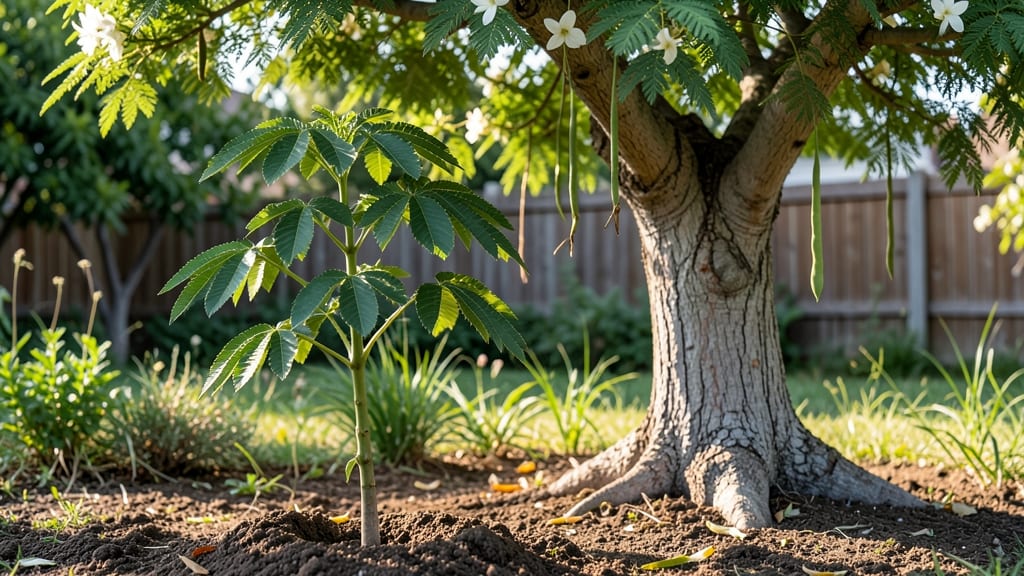
The identification of a moringa tree starts with its distinctive feathery leaves—each one a compound cluster of 10-20 pairs of tiny, oval-shaped leaflets that look like delicate lacework. 🌿 I’ve seen gardeners mistake it for a fern or even a young mulberry at first glance, but those plants lack the moringa’s signature seed pods that form in long, slender cylinders with dangling, drumstick-shaped seeds inside.
The bark gives it away too: smooth and pale green when young, maturing to a light gray with shallow grooves. Flowers appear in fragrant, creamy-white clusters before the pods form, and the whole plant has a tropical vibe even in containers.
If your plant checks these boxes, you’ve likely found Moringa oleifera—the "miracle tree" prized for its leaves, pods, and seeds.
Proper ID matters because care needs differ wildly from similar plants. Moringa thrives in hot, dry climates but wilts in frost, while lookalikes like the horse chestnut handle cold better.
A quick leaf rub test helps too: crushed moringa leaves release a slightly bitter, cabbage-like scent—nothing like the sweet aroma of citrus or mint.
Wild moringa grows in tropical Africa, Asia, and South America, but cultivated varieties now appear in nurseries worldwide. Before planting, verify with a local extension office or compare photos—misidentification could mean wasted effort (or worse, invasive species spreading). Here’s how to confirm yours for sure.
Mistakes That Confuse Moringa Trees
Identifying a moringa tree can be tricky if you’re not familiar with its key traits—especially when misidentifying it with other fast-growing trees or plants. Whether you’re a gardener, farmer, or nature enthusiast, understanding why confusion happens will help you spot the real deal.
Here’s a breakdown of the most common pitfalls and the science behind them:
The moringa tree’s pinnate compound leaves (with 3–7 leaflets) are its most defining feature. Yet, many people mistake it for:
- Neem trees – Also have compound leaves, but neem leaves are bipinnate (leaflets divided into smaller leaflets) and have a distinct bitter smell when crushed.
- Acacia species – Some acacias have similar leaf shapes, but their leaflets are smooth-edged and lack the serrated texture of moringa.
- Mimosa trees – Their leaves are bipinnate (double-compound) and often fuzzy, unlike moringa’s smooth, lance-shaped leaflets.
Why it happens: The human brain often simplifies patterns—if you’re not trained to notice fine details like leaflet arrangement or serrations, moringa can blend in with other fast-growing trees. Studies on leaf morphology show that even experts can misclassify plants if they focus only on broad traits like leaf shape rather than specific structural clues.
The moringa tree’s long, slender seed pods (3–6 inches) are another dead giveaway—but many people overlook them because:
- They’re seasonal – Moringa pods only appear after flowering (typically in warm months), so winter or early spring sightings may lack this clue.
- They resemble other legumes – Some people confuse them with carob pods (thicker and brown) or mesquite pods (shorter and curved).
- Improper growth stage – Young moringa trees may not yet produce pods, leading to misidentification as a sapling of another species.
Why it happens: The phenological mismatch (timing of plant cycles) plays a huge role. Research in tropical botany shows that many people rely on visible reproductive structures (like flowers or fruits) for ID—but if you’re checking in the wrong season, you might miss critical clues. Additionally, cultural familiarity matters: in regions where moringa isn’t native, locals may not recognize its pods at all.
Moringa trees aren’t all identical—regional strains and hybrids can alter their appearance slightly:
- Moringa oleifera vs. Moringa peregrina – The desert moringa (M. peregrina) has smaller, thicker leaves and is drought-resistant, making it look different from the more common M. oleifera.
- Climate effects – Trees in humid tropical zones grow taller and leafier, while those in arid regions may be shorter with denser foliage.
- Pruning and cultivation – Farmed moringa trees are often pruned for leaf harvest, leading to bushier, less "tree-like" structures that don’t match wild specimens.
Why it happens: Genetic plasticity (a plant’s ability to adapt to environments) means moringa can physically change based on where it grows. A 2018 study in Plant Physiology and Biochemistry found that even within the same species, leaf size, pod shape, and branching patterns can vary by up to 20% depending on soil and water conditions. Without knowing these variations, you might dismiss a moringa tree as a "weird-looking relative."
The moringa tree’s grayish bark with vertical grooves is another ID marker—but it’s often overlooked because:
- Young trees have smooth bark – Only mature moringa trees develop the distinctive furrowed texture.
- Other trees mimic it – Jacaranda and sycamore trees can have similarly textured bark, leading to confusion.
- Bark changes with age – As moringa matures, its bark darkens and develops deeper grooves, but early stages look almost smooth and pale.
Why it happens: Humans tend to anchor on the most visible trait—often the trunk—without checking other parts. Cognitive psychology research shows that people overestimate the importance of a single feature (like bark texture) when identifying plants, ignoring the combination of traits that truly define moringa.
To avoid misidentification, always verify moringa using three key traits:
- ✅ Leaf shape – Pinnate with 3–7 serrated leaflets.
- ✅ Seed pods – Long, slender, and slightly twisted (when mature).
- ✅ Bark texture – Grooved and grayish in mature trees.
If even one of these doesn’t match, it’s not moringa. Cross-referencing with a USDA plant database or consulting a local botanist can also help rule out look-alikes.
Fixing Common Moringa Tree ID Mistakes
Identifying a moringa tree shouldn’t feel like solving a puzzle—but sometimes, missteps happen. Whether you’re mixing it up with another tree or missing key traits, here’s how to correct and prevent errors with practical, foolproof methods.
Cause: Moringa leaves resemble those of drumstick (moringa’s cousin) or even neem trees, leading to confusion.
How to Fix It:
- 🍃 Compare Leaf Structure:
- Moringa leaves are fern-like, with 7–13 leaflets arranged in pairs along a central stem.
- Drumstick leaves have 3–11 leaflets but are broader and less delicate.
- Neem leaves are simple (single leaflet) and oval-shaped.
- Pro Tip: 💡 Hold a leaf up to light—moringa’s leaflets have visible veins that fork like a tree branch.
- 🌱 Check the Stem:
- Moringa stems are hairy and green when young, while drumstick stems are smoother and turn woody faster.
Prevention:
- Carry a field guide or app (like iNaturalist) to cross-reference leaf shapes.
- Snap a photo from multiple angles for later verification.
Cause: Seed pods (the "drumsticks") may fall prematurely due to pests, disease, or improper care.
How to Fix It:
- 🐛 Pest Control:
- Aphids or mealybugs? Spray with neem oil (1 tsp per liter of water) or soapy water.
- Caterpillars? Handpick them or use BT (Bacillus thuringiensis) spray.
- Pro Tip: 🌡️ Early morning is the best time to spot pests—they’re sluggish and easier to find.
- 🌧️ Environmental Fixes:
- Too much water? Moringa hates soggy roots—ensure well-draining soil (mix in perlite or sand).
- Not enough sun? Move the tree to 6+ hours of sunlight daily.
Prevention:
- Prune regularly to improve airflow and reduce pest hiding spots.
- Harvest pods before they overripe—they’re best when green and firm.
Cause: Poor soil, overwatering, or transplant shock.
How to Fix It:
- 🌱 Soil Check:
- Moringa thrives in sandy, slightly alkaline soil (pH 6.5–7.5). Test your soil with a DIY kit (available at garden stores).
- Amend clay soil with compost or coconut coir to improve drainage.
- 💧 Watering Adjustments:
- Water deeply 2–3 times a week (less in winter).
- Avoid wetting leaves to prevent fungal diseases like powdery mildew.
Prevention:
- Use mulch (straw or wood chips) to retain moisture and regulate temperature.
- Fertilize lightly with balanced organic fertilizer (10-10-10) every 2 months in growing season.
Cause: Online images can be misleading due to poor lighting or angle.
How to Fix It:
- 📲 Use Reverse Image Search:
- Upload a photo to Google Lens or TinEye to compare with verified moringa images.
- 🔍 Look for These Key Markers:
- Leaf arrangement (pinnate, not palmate).
- Seed pods (long, cylindrical, and slightly curved).
- Bark texture (young bark is smooth and greenish; mature bark turns gray and rough).
Prevention:
- Take photos in natural light—avoid shadows or filters.
- Note the tree’s height and location (moringa grows in tropical/subtropical climates).
Need a fast way to confirm?
Bookmark this: | Feature | Moringa Oleifera | Look-Alikes | |-------------------|-----------------------------------|-------------------------------| | Leaf Shape | Fern-like, 7–13 leaflets | Drumstick (broader), Neem (single leaf) | | Seed Pods | Long, green, drumstick-shaped | Drumstick (thicker, woody) | | Bark | Green when young, gray when old | Smooth (young) or rough (old) | | Smell | Mild, slightly sweet | Neem has a bitter aroma |
Final Tip: 🎯 When in doubt, wait for flowers! Moringa blooms with tiny white or yellow flowers in clusters—this is a dead giveaway for identification. Keep an eye out, and happy growing!
Frequently asked questions
How can I tell if my plant is a moringa tree or just a fern?
Moringa leaves look fern-like but have key differences: true moringa leaves are pinnate (leaflets paired along a central stem) with 7-13 serrated leaflets, while ferns have fronds with multiple branching segments. Also check for seed pods—moringa produces long, slender pods (3-6 inches) that ferns never do. Run your fingers along the stem: moringa stems are hairy when young, while fern stems are smooth.
Why does my moringa tree look different from photos online?
Moringa trees adapt to their environment! Young trees have smooth green bark that matures to gray with grooves, while climate affects leaf size—tropical varieties grow larger leaves than desert-adapted ones. Also, cultivated trees are often pruned heavily for leaf harvest, making them look bushier. Compare with three key traits: leaf arrangement, pod shape, and bark texture to confirm.
Can I identify moringa trees in winter when they have no pods?
Focus on leaf structure and bark instead. Look for compound leaves with 7-13 leaflets arranged alternately along the stem. The bark should be smooth and pale green (young trees) or light gray with shallow grooves (mature trees). If you see tiny white/yellow flower clusters in spring, that's another confirmation—moringa blooms before pods form.
What's the easiest way to distinguish moringa from drumstick trees?
The simplest trick is the leaflet count: moringa has 7-13 leaflets per leaf, while drumstick typically has 3-11. Also check the stem hairiness—moringa stems are hairy when young, while drumstick stems are smooth. Both produce seed pods, but moringa's are longer and more slender (3-6 inches) compared to drumstick's thicker, woody pods.
How do I verify my moringa tree if I'm not sure?
Use the three-trait test:
- Leaf structure (pinnate with 7-13 leaflets),
- Seed pods (long, green, drumstick-shaped),
- Bark texture (young: smooth green; mature: gray with grooves). For absolute confirmation, take clear photos and use Google Lens or consult a local botanist. If you're still unsure, wait for flowers—moringa's tiny white/yellow clusters are unmistakable!