
Trees
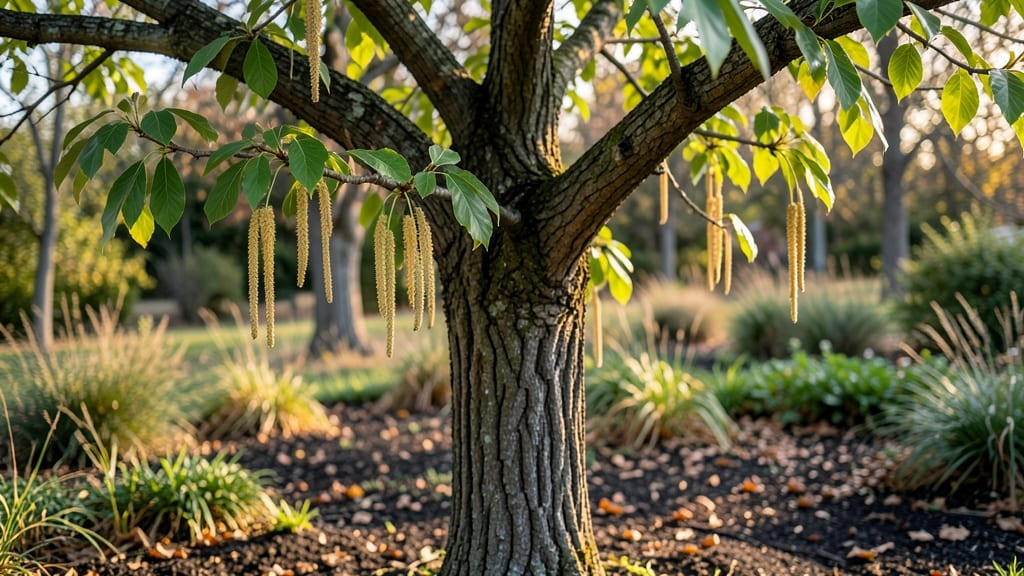
Spring is when your pecan tree decides whether it’ll give you a light harvest or a bountiful one next fall. 🌱 I’ve watched my tree go from bare branches to heavy-laden limbs by paying attention to just three critical spring tasks—pruning, fertilization, and pest checks—before the heat sets in.
The first thing to do is inspect for winter damage: snap-off branches, cracked bark, or dead wood. Prune those out now, but hold off on heavy shaping until after flowering.
A sharp pruner and a clean cut go a long way in preventing disease, and you’ll want to open up the canopy to let sunlight reach the lower branches. Once you’ve cleared out the deadwood, it’s time to feed your tree.
Pecans are heavy feeders, so a balanced 10-10-10 fertilizer spread in early spring (before buds swell) gives them the boost they need. Mulch around the base to keep moisture in and weeds out—just keep it a few inches away from the trunk.
By summer, you’ll see the payoff: vibrant green foliage, fewer pests, and—if you’re lucky—a tree so loaded with nuts it bends the branches. The key is acting now, before the heat and pests move in. Let’s get started!
📚 In This Guide
- What you need
- Instructions
- Tips and common mistakes
- Wrapping up and next steps
What you need
- ● Pruning shears – Bypass pruners (sharp, 6-8" blades) for clean cuts
- ● Loppers – For thicker branches (1.5-2" diameter)
- ● Hand pruning saw – For branches >2" thick (8-10" blade)
- ● Gloves – Heavy-duty, cut-resistant (gardening or pruning gloves)
- ● Disinfectant (70% isopropyl alcohol or bleach solution) – 1 part bleach to 9 parts water
- ○ Pruning sealant (optional but recommended) – Tree wound sealant (e.g., Tanglefoot Tree Wound Pruning Seal)
- ● Fertilizer – Balanced slow-release fertilizer (10-10-10 or 8-3-9 ratio)
- ● Quantity: ~1 lb per inch of trunk diameter (e.g., 5 lbs for a 5" trunk)
- ● Mulch – Organic mulch (shredded bark, pine straw, or compost) – 2-4" layer (keep 6" away from trunk)
- ● Watering can or hose with nozzle – For deep watering (1-2 gallons per tree, 2-3x/week)
- ● Notebook & pen – To track pruning cuts and growth progress
- ● Tree growth regulator (e.g., Paclobutrazol) – To manage excessive growth if needed
- ● Soil test kit – To check pH and nutrient levels (ideal pH: 6.0-7.0 for pecans)
- ● Pest monitoring traps – For early detection of pecan weevils or aphids
- ● Tree food (micronutrients) – Zinc or manganese supplements if soil is deficient
- ● Camera or smartphone – To document flower clusters and early fruit set
Step-by-Step guide to spring pecan tree care for abundant flowering
Spring is when pecan trees wake up—and what you do now determines next year's harvest.
🌱 Step 1: Prune for Airflow and Light
Start by removing any dead, diseased, or crossing branches with clean, sharp pruners. I cut just outside the branch collar where it meets the trunk—this ensures the wound heals faster. Focus on opening the canopy so sunlight reaches the center of the tree. You'll see new growth emerge within 2-3 weeks of proper pruning.
Remove no more than 25% of the tree's foliage in one session—this prevents stress. Thin out crowded branches first, then shape the tree by removing water sprouts and suckers growing from the base. Always prune during dry weather to reduce disease risk.
☀️ Step 2: Apply Fertilizer for Strong Growth
Use a balanced 10-10-10 fertilizer spread evenly under the tree's drip line. Work it into the top 6 inches of soil with a garden fork. Pecan trees need phosphorus for root development and potassium for flower production—this is the foundation for heavy harvests.
Apply fertilizer in early spring, just as new leaves begin to form. Water the area thoroughly after spreading to help nutrients penetrate the soil. Avoid over-fertilizing—too much nitrogen can delay flowering and reduce nut production.
💧 Step 3: Monitor Watering for Healthy Flowering
Water deeply once a week during dry spells, delivering 1-1.5 inches of water per session. Young trees need more frequent watering—every 5-7 days—until their root systems establish. You'll know the soil is moist enough when it feels damp 6 inches down.
Mulch around the base with 2-3 inches of organic mulch, keeping it 6 inches away from the trunk to prevent rot. Mulch retains moisture and regulates soil temperature, which encourages strong root growth and better flowering. Avoid heavy mulch layers—too much can suffocate roots.
✂️ Step 4: Protect Against Pests and Diseases
Inspect the tree regularly for signs of pecan scab, aphids, or borers. Remove any infected leaves or branches immediately and dispose of them in sealed bags. I spray a preventive fungicide in late spring if my area has a history of pecan scab—this keeps the tree healthy for flowering.
Encourage beneficial insects like ladybugs and lacewings by planting nearby flowers like marigolds. These natural predators help control pests without chemicals. Keep an eye out for early signs of trouble—yellowing leaves or sticky residue on branches means pests are already active.
⏰ Step 5: Time Flowering for Optimal Pollination
Pecan trees flower in late spring, usually when temperatures reach 65-75°F consistently. Male flowers appear first as catkins, followed by female flowers that look like tiny green cones. You'll see these develop within 4-6 weeks after proper pruning and fertilization.
To boost pollination, plant a second variety nearby if possible—cross-pollination increases nut production. Avoid heavy pruning during flowering season, as this can stress the tree and reduce harvest potential. Once flowers appear, reduce watering slightly to encourage nut development instead of excessive leaf growth.
Tips & tricks for perfect pecan tree flowering
Took me years of trial and error to learn these tricks—your tree's future harvest depends on getting them right.
Pruning Precision: In Step 1, when you're removing branches, watch for the branch collar where the branch meets the trunk. Cutting too close can damage the tree's natural healing mechanism. Use sharp pruners to make clean cuts, and always cut at a slight angle just outside the branch collar. This small detail makes all the difference in how quickly the tree recovers—you'll notice new growth within those 2-3 weeks mentioned in the instructions.
Fertilizer Timing: The instructions mention applying 10-10-10 fertilizer in early spring, but here's what nobody tells you: the timing is more critical than you think. If you apply it too early, before leaves start forming, the tree won't be able to utilize the nutrients efficiently. Wait until you see the first tiny leaves unfurling—this is your cue that the tree is ready to absorb those nutrients for root development and flower production.
Watering Wisdom: For Step 3, when watering your tree, don't just eyeball it. Use a rain gauge or measuring container to deliver exactly 1-1.5 inches of water per session. I've seen trees stressed from both underwatering and overwatering—both can delay flowering. For young trees, check soil moisture by sticking your finger 6 inches down; if it's dry, it's time to water again. Mulching with 2-3 inches of organic material helps maintain that moisture level between waterings.
Pest Prevention: In Step 4, when inspecting for pests, pay special attention to the undersides of leaves—this is where aphids and mites love to hide. If you notice sticky residue on branches (aphid honeydew), act immediately by spraying with water or introducing beneficial insects. I've found that planting marigolds nearby creates a natural barrier that deters many common pests. This proactive approach saves you from dealing with full-blown infestations later in the season.
Pro Tips for Pecan Tree In Spring
- Took me years of trial and error to learn these tricks—your tree's future harvest depends on getting them right.
- Pruning Precision: In Step 1, when you're removing branches, watch for the branch collar where the branch meets the t...
- Fertilizer Timing: The instructions mention applying 10-10-10 fertilizer in early spring, but here's what nobody tell...
Frequently asked questions
Got questions about nurturing your pecan tree this spring? You’re not alone! Here are some of the most common queries—and their answers—to help you set the stage for a bountiful harvest.
When do pecan trees flower in spring?
Pecan trees typically bloom in late March to early May, depending on your climate zone. Male flowers (catkins) appear first, followed by female flowers (tiny, red structures) a few weeks later. Watch for these vibrant signs—it’s your cue to monitor for pests like pecan nut casebearers!
How cold is too cold for pecan tree flowers?
Pecan flowers are highly sensitive to frost. Temperatures below 28°F (-2°C) can damage or kill blooms, reducing your harvest. If frost is forecasted, cover young trees with frost cloth or use overhead sprinklers to create protective ice layers. Timing matters—spring frost is the #1 threat!
Can I fertilize my pecan tree in spring?
Yes! Spring is the perfect time to fertilize, but do it after flowering (late May to early June) to avoid encouraging late-season growth that won’t harden before winter. Use a balanced 10-10-10 or 8-3-9 fertilizer, following package rates. Avoid over-fertilizing—it can lead to excessive shoot growth at the expense of nuts!
What pests should I watch for on pecan trees in spring?
Spring brings pecan nut casebearers, aphids, and spider mites to the party. Inspect leaves and buds weekly—look for sticky residue (aphids), tiny white cocoons (casebearers), or webbing (mites). Early intervention with neem oil or insecticidal soap works wonders. Pro tip: Prune out infested branches to stop the spread!
Should I prune my pecan tree in spring?
Light pruning in early spring (before buds swell) is safe, but avoid heavy cuts—it stresses the tree. Focus on removing dead, crossing, or diseased branches to improve airflow. Wait until late winter/early spring for major pruning to prevent pest entry. Never prune after flowering—it can reduce nut production!
Wrapping up and next steps
Spring is your pecan tree’s secret weapon—with the right care, you’re setting the stage for a bountiful harvest! 🌱 From pruning to pest watch, every step counts, and your tree is already thanking you for the effort.
Now’s the time to stay consistent: water deeply, monitor blooms, and keep those hungry squirrels at bay.
Ready to reap what you sow? Grab your gloves and head outside—your future pecan pie (or snack stash) is waiting! 🌟 Next up: Track your tree’s progress with our harvest timeline!