
Diseases
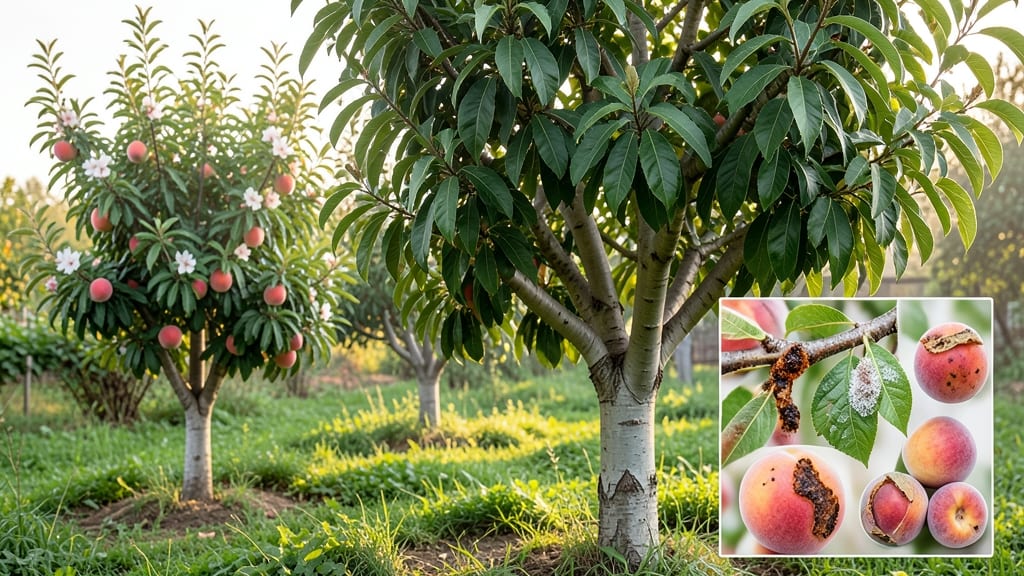
Spotting pictures of peach tree diseases early saves your harvest—here’s what to look for before it’s too late. 🌿 Brown rot, leaf curl, and bacterial spot each leave telltale marks: mummified fruit, twisted leaves, or dark spots with yellow halos.
These aren’t just ugly—they can kill branches or even the whole tree if ignored.
I’ve seen firsthand how quickly brown rot turns a lush peach tree into a skeleton of dead fruit. The fuzzy gray mold appears in wet springs, while leaf curl’s crinkled, puckered leaves show up in early spring.
Bacterial spot? Tiny water-soaked dots that multiply like wildfire when humidity spikes. Each needs different action—some you can prune away, others require fungicide at the right time.
With the right pictures and descriptions, you’ll catch these diseases before they spread. I’ve included side-by-side comparisons of healthy vs. infected leaves, bark, and fruit so you can spot the warning signs fast. The key is acting early—once the damage is done, recovery gets a lot harder.
Whether you’re dealing with a young tree or a mature orchard, these visual guides cut through the guesswork. No more waiting until harvest time to realize something’s wrong—this is how you protect your trees season after season.
Understanding Root Causes
Peach trees, like any other fruit-bearing plant, are susceptible to a range of diseases that can wreak havoc on their health and productivity. But why do these issues arise in the first place?
Let’s break down the key factors that create the perfect storm for peach tree diseases—so you can take proactive steps to protect your orchard or backyard tree.
Fungal diseases—such as peach leaf curl (Taphrina deformans), brown rot (Monilinia fructicola), and peach scab (Cladosporium carpophilum)—thrive when moisture lingers on leaves, fruit, or bark. Here’s why:
- High Humidity & Rainfall: Fungal spores need free water to germinate.
Prolonged dampness (like morning dew or overhead irrigation) creates ideal conditions for spores to infect wounds or healthy tissue. - Poor Air Circulation: Dense foliage or overcrowded trees trap moisture, increasing fungal activity. Think of it like a sauna for fungi! - Warm Temperatures: Most fungal pathogens peak in spring and early summer when temps hover between 60–80°F (15–27°C)—perfect for rapid spore growth.
Actionable Fix: Prune for airflow, water at the base (not overhead), and apply copper fungicides as a preventive measure.
Pests like aphids, scale insects, and mites don’t just sap nutrients—they also damage plant tissue, leaving open wounds where bacteria and fungi can sneak in.
For example: - Bacterial Leaf Spot (Xanthomonas campestris) often enters through chewed leaves or bark. - Peach Twig Borer (Anarsia lineatella) burrows into branches, weakening the tree and inviting secondary infections.
Actionable Fix:
- Monitor for pests regularly (use a magnifying glass if needed!).
- Apply horticultural oil in early spring to smother overwintering insects.
- Remove and destroy heavily infested branches.
A stressed peach tree is like an open invitation for diseases.
Common stress factors include: - Nutrient Deficiencies (e.g., lack of zinc or nitrogen) → Weakened leaves become prime targets for leaf curl. - Improper Pruning → Over-pruning or wounding bark during harsh weather invites bacterial canker. - Drought or Overwatering → Both extremes disrupt the tree’s natural defenses, making it vulnerable to root rot (Phytophthora).
Actionable Fix:
- Test soil annually and amend with compost or balanced fertilizer (look for a 10-10-10 or 6-6-6 ratio).
- Water deeply but infrequently (1–2 inches per week) to avoid soggy roots.
- Avoid late-season pruning—wait until dormancy to minimize stress.
Diseases don’t just spread through the air—they hitchhike on:
- Dirty Pruners: If you cut a diseased branch and then use the same shears on a healthy one, spores or bacteria transfer instantly.
- Old Fruit Mummies: Leftover mummified peaches on the ground harbor brown rot spores and reinfect the next season.
- Infected Mulch: Using untreated wood chips from a diseased tree can introduce pathogens to your soil.
Actionable Fix:
- Sterilize tools with 70% isopropyl alcohol or a 10% bleach solution between cuts.
- Rake up and destroy fallen leaves/fruit (don’t compost them!).
- Choose disease-resistant rootstock if replanting.
Peach trees are tough, but sudden temperature swings or late frosts can shock them into vulnerability:
- Late Spring Freezes: New leaves unfurl in warmth, then get fried by frost—perfect conditions for peach leaf curl.
- Heat Stress: Prolonged 90°F+ (32°C+) weather weakens cells, making them susceptible to sun scald or bacterial infections.
Actionable Fix:
- Use frost cloths in early spring to protect budding leaves.
- Provide shade cloth during heatwaves if growing in hot climates.
- Choose cold-hardy varieties (e.g., ‘Relenta’ or ‘Redhaven’) for your zone.
Ever noticed how diseases seem to spread like wildfire in home orchards or commercial farms?
That’s because: - Overhead Irrigation: Splashes water onto leaves, distributing spores like a fungal game of telephone. - Shared Equipment: Using the same sprayers or tractors across multiple trees without cleaning spreads diseases. - Wildlife Vectors: Birds and squirrels can carry infected fruit from one tree to another.
Actionable Fix:
- Switch to drip irrigation to keep foliage dry.
- Clean equipment with bleach or fungicide between uses.
- Install bird netting to prevent wildlife from feasting on (and spreading) diseased fruit.
Final Thought: Most peach tree diseases are opportunistic—they exploit weaknesses, not create them. By addressing moisture, pests, stress, and sanitation, you can dramatically reduce the risk of infections. Stay vigilant, and your tree will reward you with healthy leaves, blossoms, and fruit! 🍑🌿
Fixing Peach Tree Diseases Step-by-Step
Once you’ve spotted the signs—whether it’s the telltale spots of peach leaf curl, the rusty pustules of rust fungus, or the oozing wounds of bacterial canker—it’s time to act. The good news?
Most peach tree diseases can be managed with a mix of preventive care, targeted treatments, and smart garden practices. Below, we break down how to treat each common disease and keep your tree thriving.
Cause: Taphrina deformans fungus, which thrives in wet, cold springs. Fix:
- 🔪 Prune infected leaves (but not in wet conditions—wait for dry weather).
- 🌿 Apply fungicide (copper-based or sulfur-based) before buds swell in early spring. Reapply after rain.
- 💡 Pro Tip: Space out copper sprays—too much can harm young leaves. Alternate with neem oil for organic control.
Prevent Future Outbreaks: ✅ Choose resistant varieties (e.g., ‘Redhaven’ or ‘Elberta’). ✅ Clean up fallen leaves in autumn to remove fungus spores. ✅ Improve airflow by thinning dense branches.
Cause: Tranzschelia discolor or Tranzschelia pruni-spinosa spores spread via wind and infected plant parts. Fix:
- 🧹 Remove and destroy infected leaves, twigs, and fallen debris immediately.
- 🍄 Spray with fungicide (like myclobutanil or potassium bicarbonate) every 7–10 days during wet seasons.
- 🌡️ Monitor humidity—rust loves damp conditions, so water trees early in the day to let foliage dry.
Prevent Recurrence: ✅ Mulch properly (2–3 inches of wood chips) to reduce soil splashes. ✅ Avoid overhead watering—use drip irrigation instead. ✅ Rotate fungicides to prevent resistance.
Cause: Pseudomonas syringae bacteria, which create oozing cankers and dieback. Fix:
- ⚔️ Prune infected branches 6 inches below the canker (sterilize tools with 70% alcohol or bleach).
- 🧴 Apply a copper-based bactericide (like copper hydroxide) to wounds.
- 🚫 Avoid wounding the tree during wet periods—wait for dry weather.
Prevent Spread: ✅ Disinfect pruning tools between cuts to avoid cross-contamination. ✅ Thin the canopy to improve airflow and reduce moisture retention. ✅ Plant in well-draining soil—waterlogged roots invite bacterial growth.
Cause: Monilinia fructicola fungus, which attacks blossoms, leaves, and fruit. Fix:
- 🌸 Spray fungicide (like captan or thiophanate-methyl) before bloom and again after petal fall.
- 🍑 Remove and destroy infected fruit immediately—don’t compost it!
- 🧼 Sterilize harvesting bins to prevent spore spread.
Prevent Next Year’s Infestation: ✅ Pick up fallen fruit from the ground—even mummified ones harbor spores. ✅ Space trees properly (15–20 feet apart) for better airflow. ✅ Store harvested peaches in a cool, dry place to slow fungal growth.
No matter the disease, healthy trees fight back better.
Follow these year-round tips: - 💧 Water deeply but infrequently (1–2 inches per week) to avoid soggy soil. - 🌿 Feed with balanced fertilizer (10-10-10) in early spring—avoid heavy nitrogen late in the season. - 🔍 Inspect regularly—catch diseases early when they’re easiest to treat!
💡 Final Pro Tip: If your tree is severely infected (e.g., multiple cankers or widespread rust), consult a local arborist—sometimes removal and replacement is the kindest option for your orchard.
With the right approach, your peach tree can bounce back stronger—and next season’s harvest will be sweeter than ever! 🍑✨
Frequently asked questions
What’s the fastest way to identify peach tree diseases from pictures?
Compare your tree’s symptoms to healthy vs. infected leaf/bark/fruit images—look for key markers like puckered leaves (leaf curl), dark spots with yellow halos (bacterial spot), or mummified fruit (brown rot). Use a magnifying glass for tiny details like rust pustules or oozing cankers.
Can I use the same fungicide for all peach tree diseases?
No—fungicides target specific pathogens. For example, copper-based sprays work for bacterial canker but won’t stop rust fungus, which needs myclobutanil. Always check the label and rotate treatments to prevent resistance.
Why do peach tree diseases get worse in wet springs?
Fungal spores need free water to germinate—think of it like a fungal sauna. Wet conditions also slow drying time on leaves, giving bacteria and fungi more time to infect. Overhead irrigation makes it worse by splashing spores around.
Is it safe to compost leaves from a diseased peach tree?
Never compost diseased leaves or fruit—they’ll reinfect your soil with spores. Instead, bag and discard them in yard waste or burn them (if allowed). Even "mummified" peaches harbor brown rot spores.
How do I know if my peach tree is beyond saving?
Watch for multiple cankers girdling the trunk, widespread dieback, or severe rust covering 50%+ of leaves. If the tree can’t produce new growth or support itself, removal may be kinder than watching it decline. Consult an arborist for confirmation.