
Diseases
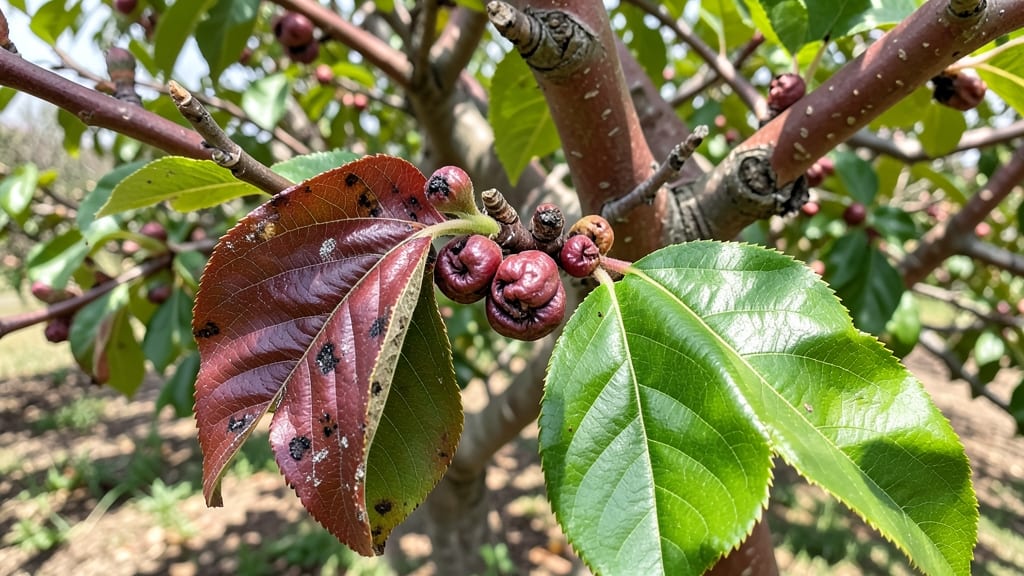
Your peach tree’s wrinkled, reddened leaves aren’t just unsightly—they’re a cry for help. 🌿 Leaf curl disease turns vibrant foliage into twisted, stunted messes by spring, but I’ve learned the 3-step fix that stops it before it spreads.
The key? Acting fast when you spot those telltale curled edges in early spring.
This fungal infection thrives in wet winters, hiding dormant until warm weather wakes it up. Most gardeners panic when they see it, but the truth is simple: pruning, fungicide, and prevention work together like a shield.
I’ve saved trees this way every year—even when the first buds start showing those dreaded red streaks.
By summer, your tree will be back to producing juicy, disease-free fruit if you follow the steps: clean up fallen leaves, apply the right treatment, and time your sprays for maximum protection. The worst part? You’ll never have to watch another peach tree suffer again.
Works for home orchards, backyard trees, or even container-grown peaches. Let’s get those leaves healthy before the next bloom season—your tree’s future depends on it.
Root Causes Of Leaf Curl
Understanding why your peach tree’s leaves develop that telltale wrinkled, reddened, and curled appearance starts with peeling back the layers of microbial mischief and environmental stress.
Leaf curl isn’t just one problem—it’s often a symptom of a few sneaky culprits working together. Let’s break down the science behind the scruffy leaves.
---
The most common trigger for peach tree leaf curl is the **fungus Taphrina deformans—a microscopic plant pathogen that thrives in damp, cool conditions. Here’s how it hijacks your tree:
- Spores in the Wind: In early spring, fungal spores land on young, tender leaves (especially after rain or high humidity).
These spores germinate within 24 hours**, piercing leaf cells and injecting fungal threads (hyphae) that disrupt normal growth. - Hormone Hijacking: The fungus secretes gibberellins, a plant hormone that overstimulates cell division.
Instead of flat, green leaves, your tree produces thickened, curled, and reddened foliage as cells grow uncontrollably. - Weakened Trees as Targets: Stressed trees (from drought, poor soil, or winter injury) are easier prey because their defenses are down.
A healthy tree can resist spores better, but once infected, the fungus spreads aggressively via wind and splashing water.
💡 Pro Tip: Fungal spores overwinter in buds and bark, so if your tree had leaf curl last year, it’s already armed with a built-in infection source for this spring.
---
Not all leaf curl is fungal—sometimes, your tree’s environmental conditions are the real villains. These factors mimic fungal symptoms or weaken the tree enough to invite infections:
- Temperature Swings: Peach trees hate sudden cold snaps followed by warm spells.
When buds break dormancy too early (below 40°F), new leaves emerge vulnerable and stunted, curling as they struggle to adapt. - Excess Moisture: Overwatering or poor drainage causes leaves to pucker and curl as they drown in their own sap.
Fungal spores love soggy leaves, turning a simple watering mistake into a full-blown infection. - Nutrient Deficiencies: A lack of zinc, magnesium, or nitrogen distorts leaf development.
For example: - Zinc deficiency → Small, curled leaves (especially on younger growth). - Magnesium deficiency → Interveinal chlorosis (yellowing between veins) + curling. - Nitrogen starvation → Pale, weak leaves that cup inward like a taco shell.
🌡️ Quick Fix: If your tree is curled but no reddening or fungal signs, check soil moisture and test for pH/nutrients—a simple soil kit can reveal deficiencies.
--- Sometimes, leaf curl is a side effect of pest activity or physical damage that opens the door for fungal infections:
- Aphids & Mites: These sap-sucking pests inject toxins into leaves, causing stunted, curled growth. Their sticky honeydew also attracts sooty mold, which further stresses the tree. - Peach Twig Borers: Larvae chew into branches, disrupting water flow.
The tree’s desperate response is to curl leaves to conserve moisture—leading to a false diagnosis of leaf curl disease. - Hail or Wind Damage: Physical trauma to leaves triggers abnormal growth patterns. If the damage occurs when leaves are young, they may curl permanently as they heal.
🔍 Tell Them Apart: | Cause | Leaf Color | Timing | Other Clues | |-------------------------|----------------------|---------------------------|-----------------------------------| | Fungal Leaf Curl | Bright red/purple | Early spring (bud break) | Starts on youngest leaves | | Nutrient Deficiency | Yellow/green | Any growth period | Affects older leaves too | | Pest Damage | Pale green | After infestation peaks | Sticky residue, visible bugs | | Environmental Stress | Green (no red) | After weather shifts | No fungal signs, uniform curling |
--- Not all peach varieties are equally resilient. Susceptible cultivars (like ‘Elberta’ or ‘Redhaven’) are genetically prone to leaf curl because: - Their cell walls are thinner, making them easier targets for fungal penetration. - They lack natural antifungal compounds found in resistant varieties (e.g., ‘Reliance’ or ‘Contender’). - Grafting issues (if your tree was budded onto a weak rootstock) can also weaken its disease resistance.
🌱 Actionable Insight: If your tree is a high-risk variety, proactive fungicide sprays in late winter (before bud break) can drastically reduce infection rates.
Quick Fixes for Wrinkled, Red Peach Leaves
If your peach tree’s leaves are curling, puckering, or turning a strange reddish hue, don’t panic—there’s a way to turn things around! The key is acting fast and targeting the root cause, whether it’s fungal infections, environmental stress, or pests.
Below are practical, step-by-step solutions tailored to the most common triggers of leaf curl in peach trees, plus prevention tips to keep your tree thriving.
---
**🔥 Symptoms: Thick, waxy, curled leaves with reddish-purple undersides (often appearing in early spring).
#### 🍳 Step 1: Prune Infected Branches - 🔪 Remove severely curled or distorted leaves and small branches with a sterilized pruner (wipe with rubbing alcohol between cuts). - ⏰ Do this in late winter or early spring before buds swell—this stops spores from spreading. - 🗑️ Dispose of pruned material in the trash (not compost) to prevent reinfection.
#### 👨🍳 Step 2: Apply Fungicide - 💡 Best options: Copper-based fungicides (like copper hydroxide) or bacteria-based sprays** (e.g., Serenade or Copper Soap). - ⏰ Timing is critical: Spray before bud break (late winter) and again after harvest (fall) for prevention. - 🌡️ Temperature matters: Apply when temps are above 40°F (4°C) to avoid damaging buds.
#### 🥘 Step 3: Improve Airflow & Sanitation - 🌿 Thin out dense branches to reduce humidity and slow fungal spread. - 🧼 Clean tools and surfaces regularly to avoid cross-contamination. - 💧 Water at the base (avoid wetting leaves) to prevent fungal spores from splashing onto foliage.
--- **🔥 Symptoms: Leaves curl upward, edges brown, or tree looks wilted despite moist soil.
#### 🍳 Step 1: Adjust Watering Habits - 💧 Deep water 1–2 times per week (check soil 2 inches down—if dry, water thoroughly). - 🌧️ Mulch heavily (3–4 inches of wood chips or straw) to retain moisture and regulate soil temp. - ⏰ Avoid overhead watering—use drip irrigation or soaker hoses to keep leaves dry.
#### 👨🍳 Step 2: Shield from Extreme Weather - 🌞 For heat stress: Provide afternoon shade (use shade cloth or plant near taller trees). - ❄️ For cold stress: Wrap the trunk with burlap in winter and avoid late-season fertilizing (which encourages tender new growth). - 🌬️ Protect from wind: Use windbreaks (like a fence or evergreen hedge) if your tree is exposed.
#### 🥘 Step 3: Feed Smartly - 💡 Use a balanced fertilizer (10-10-10 or 6-6-6) in early spring—avoid high-nitrogen fertilizers in summer, which can stress the tree. - 🥗 Add compost around the drip line (not the trunk) to improve soil health gradually.
--- 🔥 Symptoms: Sticky residue (honeydew), curled leaves with tiny webs, or yellowing between veins.
#### 🍳 Step 1: Blast Off Pests with Water - 💦 Spray leaves with a strong jet of water (early morning) to dislodge aphids and mites. - 🌿 Follow up with insecticidal soap** (like Safer Brand Insect Killing Soap)—reapply every 5–7 days for 2 weeks.
#### 👨🍳 Step 2: Introduce Natural Predators - 🐞 Ladybugs, lacewings, or parasitic wasps eat aphids and mites. Buy them online or attract them with neem oil sprays (which also repel pests). - 🌿 Plant companion flowers (like marigolds or dill) near the tree to lure beneficial insects.
#### 🥘 Step 3: Remove Heavy Infestations - 🔪 For scale insects: Scrape them off with a plastic scraper (metal can damage bark). - 🧼 Clean the tree with a horticultural oil spray (like Dormant Oil) in late fall or early spring to smother overwintering pests.
--- - 🌱 Plant resistant varieties (e.g., ‘Redhaven’ or ‘Elberta’ peaches are less prone to leaf curl). - 📅 Prune in late winter to improve airflow and remove weak growth. - 🧼 Sterilize tools after each use to prevent disease spread. - 🌡️ Monitor soil pH (ideal: 6.0–6.5)—test with a kit and amend with lime (to raise pH) or sulfur (to lower it) if needed. - 🍃 Avoid over-fertilizing—too much nitrogen weakens trees and attracts pests.
--- 🎯 Pro Tip: If leaf curl persists after treatment, test for bacterial leaf curl (a less common but serious disease). Symptoms include yellowing veins and stunted growth—this requires removal of the tree to prevent spread.
By tackling the root cause—whether fungal, environmental, or pest-related—your peach tree’s leaves should bounce back within 4–6 weeks. Stay vigilant, and your tree will reward you with juicy, disease-free fruit next season! 🍑✨
Frequently asked questions
Why do peach tree leaves turn red and curl?
The classic reddening and curling is caused by the fungus Taphrina deformans, which thrives in damp spring conditions. This pathogen hijacks plant hormones, causing abnormal cell growth that creates those thick, waxy leaves with reddish-purple undersides. The fungus overwinters in buds and bark, so infected trees need proactive treatment before new growth appears.
Can I still harvest fruit from a peach tree with leaf curl?
Yes, but the fruit quality may suffer. While leaf curl primarily affects foliage, severe infections can reduce fruit size and sweetness. Prune infected branches immediately and apply fungicide to protect current season's crop. The disease rarely kills trees but can weaken them over time if left untreated.
What's the best organic treatment for peach leaf curl?
Copper fungicides (like copper hydroxide) are the most effective organic option. Apply when buds swell but before leaves emerge, repeating every 2-3 weeks during wet springs. For prevention, also remove and destroy infected leaves, and improve air circulation around the tree. Neem oil can help as a supplementary treatment but isn't as powerful against established infections.
Will pruning alone cure peach leaf curl?
Pruning helps but won't cure the disease on its own. You must combine pruning with fungicide treatments to break the fungal cycle. Remove all infected leaves and small branches in late winter, then apply copper-based fungicide before bud break. Without chemical control, spores will reinfect new growth as soon as it emerges.
Can I save a peach tree that's had leaf curl for 3+ years?
It's possible but requires aggressive action. Start with complete pruning of all infected wood, then apply fungicide every 2 weeks during the growing season. Improve tree health through proper watering, mulching, and balanced fertilization. Resistant varieties like 'Reliance' may be your best long-term solution if the tree continues struggling.