
Trees
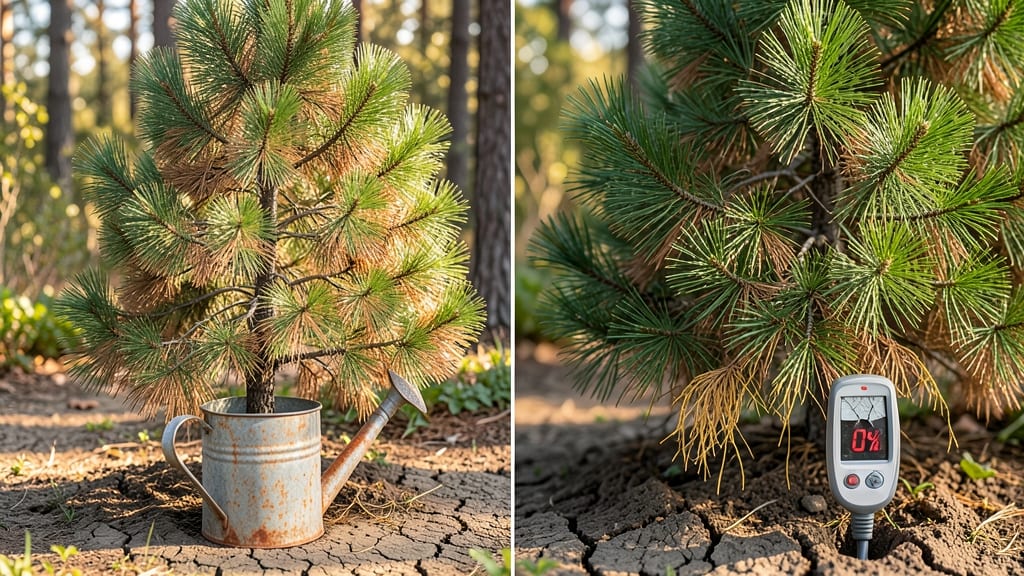
Your pine tree’s drooping needles aren’t just a summer fling—they’re a cry for help. 🌲 Drought stress turns vibrant green into brittle brown faster than you’d think, but the good news?
Three simple watering hacks can bring them back to life. I’ve nursed back more than a few struggling pines with these exact techniques, and the results speak for themselves.
The problem starts when roots can’t reach moisture, causing needles to yellow or drop. Overwatering does just as much damage as underwatering—pines hate soggy feet. The fix? Deep, infrequent watering that mimics natural rain cycles.
A soaker hose or drip irrigation delivers water right to the roots where it counts, not just the topsoil where it evaporates.
Within 4-6 weeks, you’ll see fresh green needles pushing out where brown ones used to be. Mulch helps too—3-4 inches of wood chips keeps moisture locked in and roots cool.
The secret weapon? Watering early morning so the tree drinks up what it needs before the sun turns it into steam.
For long-term resilience, amend the soil with compost to improve drainage and water retention. If the tree still looks sad after a month, it might need deeper help—like an arborist to check for root rot or pests. But for most cases? These hacks work like magic.
Root Causes Of Tree Stress
Understanding why pine trees suffer from drought stress starts with their biology—and the environment they’re forced to endure. Pines are resilient, but extreme conditions push them past their limits. Here’s a breakdown of the key factors triggering stress, explained in scientific terms with actionable insights.
---
Pine trees rely on xylem vessels—microscopic tubes in their roots and stems—to transport water from soil to needles. When drought strikes, soil moisture drops below 30-40% field capacity (the ideal hydration level for most conifers). Here’s how it happens:
- Reduced Soil Water Availability: Sandy or rocky soils drain quickly, leaving roots starved. Clay soils may hold water but can become hydrophobic (water-repellent) during dry spells, preventing absorption. - Transpiration Overload: Pines lose water through stomatal openings in needles.
If roots can’t replenish it fast enough, cells plasmolyze (shrink), disrupting photosynthesis and nutrient transport. - Root Zone Shrinkage: Shallow root systems (common in young pines) struggle to access deeper moisture. Deep taproots in mature pines help, but prolonged drought forces them to metabolize stored starches—their emergency energy reserve—leading to long-term weakness.
Actionable Fix: Mulch with 3-4 inches of organic matter (wood chips, pine needles) to retain moisture and encourage deeper root growth. Avoid compacting soil around the base.
---
Pine needles are adapted to low humidity but falter when temperatures soar. Heat accelerates water loss through cuticular transpiration (water escaping through the needle surface, not just stomata). Key triggers:
- High Vapor Pressure Deficit (VPD): When air is dry and hot, pines lose water 3-5x faster than in cool, humid conditions.
VPD > 2.5 kPa (common in summer afternoons) signals severe stress. - Needle Scorch: Temperatures above 95°F (35°C) can cause oxidative damage to chlorophyll, turning needles brown. This isn’t just cosmetic—it’s a photosynthetic shutdown. - Soil Temperature Spikes: Roots prefer 60-75°F (15-24°C).
Soil above 85°F (30°C) reduces microbial activity, slowing nutrient uptake and increasing ethylene production (a stress hormone that triggers needle drop).
Actionable Fix: Water deeply in early morning or late evening to minimize evaporation. Shade cloth (30-50% coverage) can reduce VPD around young trees.
---
Healthy pine roots need 10-20% pore space in soil for oxygen exchange. Compaction cuts this off, leading to anoxic stress (oxygen deprivation). Causes include:
- Foot Traffic or Machinery: Heavy compaction near the trunk restricts lateral roots, forcing them to grow upward (where they’re vulnerable to drying). - Clay or Hardpan Layers: Subsurface layers act as a barrier, preventing roots from accessing deeper moisture.
Pines may develop "plates"—horizontal roots that girdle the trunk, strangling water flow. - Improper Mulching: Thick mulch layers (>6 inches) can suffocate roots if not kept 6 inches from the trunk, trapping moisture and promoting fungal rot.
Actionable Fix: Aerate compacted soil with a manual aerator or deep fork (12-18 inches) in fall or spring. Mix in compost or peat moss to improve structure.
--- Stressed pines are magnets for opportunistic invaders. Drought weakens defenses, making trees susceptible to: - Fungal Attack: Lophodermium (needle cast) and Fusarium (root rot) thrive in dry, stressed wood.
Fungi like Armillaria (honey fungus) can girdle roots, cutting off water entirely. - Insect Outbreaks: Bark beetles (Dendroctonus spp.) detect stressed pines via monoterpene changes in sap.
A single beetle can introduce blue-stain fungi, blocking xylem and killing the tree in weeks. - Secondary Herbivores: Deer and rabbits target wilting pines for easy meals, stripping bark and exposing cambium to disease.
Actionable Fix: Prune dead branches immediately to limit pest entry. Apply neem oil or horticultural oil in early spring to deter beetles. Avoid over-fertilizing—nitrogen spikes attract pests.
--- Even with ample rainfall, human error can mimic drought stress. Common mistakes: - Surface Watering: Applying water only to the top 2 inches of soil doesn’t reach roots.
Pines need 12-18 inches of moist soil in the root zone. - Infrequent Deep Watering: Light, frequent watering encourages shallow roots.
Pines need 1-2 deep waterings per week (10-15 gallons per inch of trunk diameter) during dry spells. - Wrong Water Source: Salty or alkaline water (common in municipal supplies) builds up sodium in soil, reducing osmotic potential—roots can’t absorb water even if it’s present.
Actionable Fix: Use drip irrigation or soaker hoses to deliver water slowly. Test soil moisture with a soil probe—if it’s dry at 6 inches, water again.
--- Pines rely on macronutrients (N-P-K) and micronutrients (Fe, Mn, Zn) for drought resilience. Deficiencies worsen stress: - Nitrogen (N) Deficiency: Leads to chlorosis (yellow needles) and reduced protein synthesis for root growth.
Pines need 0.5-1% N in soil. - Potassium (K) Shortage: Critical for osmoregulation (balancing water uptake).
Low K causes marginal needle burn and weakens cell membranes. - Magnesium (Mg) Deficiency: Chlorophyll breakdown turns older needles yellow first, reducing photosynthesis by 30-50%. - Boron (B) Toxicity: Over-fertilization or sandy soils can cause dieback in new growth.
Actionable Fix: Conduct a soil test (pH 5.0-6.5 ideal for pines). Amend with slow-release fertilizer (e.g., 10-10-10) in early spring, or use organic options like cottonseed meal (N) or greensand (K).
Reviving Pine Trees After Drought Stress
Now that you understand the root causes of drought stress in pine trees, it’s time to take action. The good news? Most pine trees are resilient, and with the right care, you can help them bounce back to full health.
Below are practical, step-by-step solutions tailored to the most common causes—plus prevention tips to keep your trees thriving long-term.
---
Cause: Shallow watering leads to surface-dry soil, forcing roots to scramble for moisture. Solution: Pine trees need deep, infrequent watering to encourage roots to grow downward where moisture persists. Here’s how to do it right:
- 🔥 Water Slowly & Deeply Use a soaker hose or drip irrigation to deliver water 1–2 inches per week (adjust for clay vs. sandy soil). Let it soak for 30–60 minutes to penetrate 12–18 inches deep.
- 👨🍳 Schedule Like a Pro Water in the early morning (5–9 AM) to reduce evaporation and fungal risks. Avoid evening watering—wet foliage overnight invites disease.
- 🌡️ Check Soil Moisture Stick your finger 4–6 inches deep. If it’s dry, water again. If damp, hold off. Overwatering is just as harmful as underwatering!
💡 Pro Tip: Mulch around the base (2–4 inches of wood chips or pine straw) to retain moisture and regulate soil temperature. Keep mulch 6 inches away from the trunk to prevent rot.
---
Cause: Compacted or nutrient-poor soil weakens roots and reduces drought resilience. Solution: Pine trees thrive in well-draining, slightly acidic soil (pH 4.5–6.0). If yours is lacking, these steps will help:
- ✨ Aerate Compacted Soil Use a manual aerator or garden fork to poke holes 6–12 inches deep in heavily trafficked or clay-heavy areas. This improves water penetration.
- 📊 Feed with the Right Fertilizer Skip fast-release fertilizers—they burn roots.
Instead, use: - Slow-release granular fertilizer (look for low nitrogen, high phosphorus/potassium, like 5-10-10). - Organic options: Composted pine needles, worm castings, or a balanced organic fertilizer (e.g., fish emulsion). - Apply in early spring (when new growth starts) and fall (for root strengthening).
- 🍎 Avoid Over-Fertilizing Too much nitrogen = lush foliage but weak roots. Follow package rates and water thoroughly after applying.
💡 Pro Tip: If your soil is extremely sandy, mix in peat moss or coconut coir to improve water retention without suffocating roots.
---
Cause: Intense sun or drying winds accelerate moisture loss, especially in young or stressed pines. Solution: Shield your trees from windburn and midday heat with these low-effort strategies:
- 🌳 Provide Temporary Shade If possible, install shade cloth (30–50% coverage) on the southwest side of the tree during peak summer months. Remove it in fall to avoid shocking the tree.
- 🔪 Prune Strategically Trim dead or damaged branches (but avoid heavy pruning during drought). Focus on: - Thinning the canopy to improve airflow. - Removing lower branches that compete with roots for water.
- 🌡️ Windbreaks for Young Trees Plant fast-growing shrubs (like boxwood or arborvitae) on the windward side to block harsh gusts. Even a temporary fence with burlap can help.
💡 Pro Tip: Mist young pines lightly in extreme heat (early morning only) to reduce transpiration. Use a sprayer with a fine mist setting—don’t drench them!
---
Once your pine tree recovers, prevent future drought stress with these habits:
- 🌱 Plant in the Right Spot Choose native pine varieties suited to your climate. Avoid low-lying areas where water pools.
- 💧 Establish a Drip Irrigation System Set up automated drip lines for new plantings to ensure consistent moisture without waste.
- 🌡️ Monitor Weather Alerts During heatwaves or drought declarations, increase watering frequency slightly (but never flood).
- 🍂 Mulch Annually Refresh mulch in late winter or early spring to maintain moisture and suppress weeds.
- 🌿 Avoid Soil Compaction Use garden paths or stepping stones to prevent foot traffic from crushing roots.
--- Final Thought: Patience is key—reviving a drought-stressed pine can take 1–2 seasons, but with consistent care, your tree will reward you with vibrant green needles and sturdy growth.
Start with deep watering, then tweak soil and protection as needed. Your pine will thank you for years to come! 🌲💚
Frequently asked questions about pine tree drought stress
How can I tell if my pine tree is suffering from drought stress?
Look for brown or yellow needles that start at the tips and work inward, thin needle growth, or needles that drop prematurely. The tree may also have dry, brittle branches or stunted new growth. Check the soil—if the top 4-6 inches are bone-dry, that’s your first clue.
Can I overwater a pine tree to fix drought stress?
No—overwatering is just as harmful as underwatering! Pines hate soggy roots, which can lead to root rot or fungal infections. Instead, water deeply but infrequently (every 7-10 days in dry climates) to encourage roots to grow downward where moisture lasts.
What’s the best time of day to water a drought-stressed pine?
Water in the early morning (5-9 AM) to reduce evaporation and fungal risks. Avoid evening watering—wet needles overnight invite disease. A soaker hose or drip irrigation delivers water directly to roots where it’s needed most.
Will mulch really help my pine tree recover from drought?
Apply 3-4 inches of organic mulch (wood chips or pine straw) around the base, keeping it 6 inches away from the trunk. This locks in moisture, regulates soil temperature, and discourages weeds. Refresh mulch annually in late winter for best results.
How long does it take to revive a drought-stressed pine tree?
With consistent care, you’ll see improvement in 4-6 weeks—new green needles will push out where brown ones used to be. Full recovery may take 1-2 seasons, especially for mature trees. Patience is key—don’t expect overnight miracles, but stay consistent with deep watering and soil checks.